
Chapel of St. Margaret
(Please allow a few seconds for the video to load)
Welcome to
“The Chapel of St. Margaret” digital experience where history and technology intertwine to bring you something that is immersive and entertaining.
Explore the Chapel
Below, you will find a ‘Paywall’ feature, requesting you to make a donation to be able to enter the page.
Once you are in, you will find
Support a Mission, Explore a Treasure
Your entry helps Missio Malta continue their vital work in missionary lands overseas. By donating, you directly support communities in need while gaining 24-hour full access to this chapel's 3D experience and history.
Learn more about Missio's workAccess is valid for 1 Chapel for 24 hours from the time of donation
OR
360° Panorama
Zoom to full screen to view
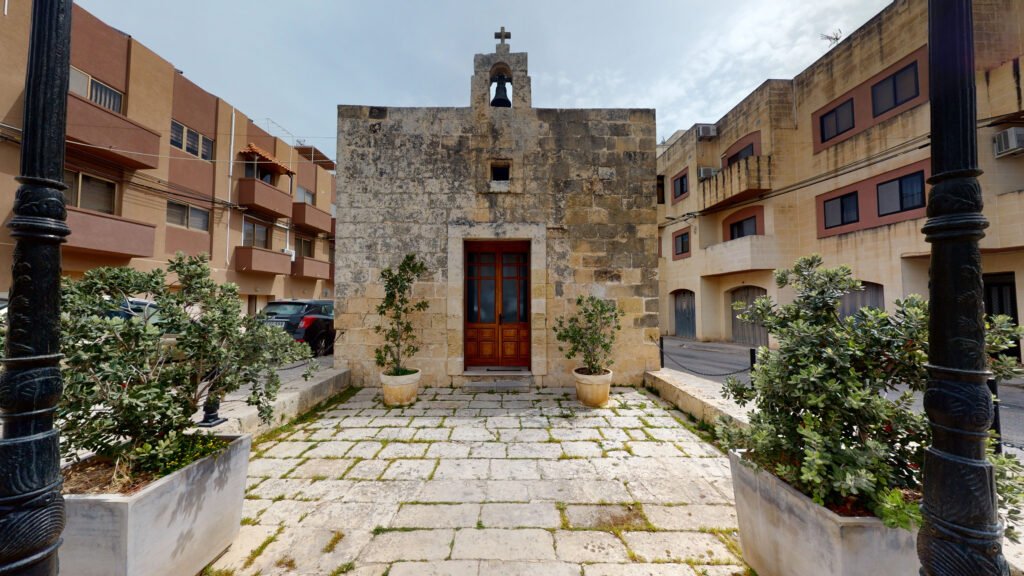
Santa Margerita Chapel is a 16th century chapel, built for farmers working in the surrounding fields.
The chapel was partially damaged during World War II, with serious damage but large portions surviving. Today the church is a landmark in San Gwann, in architectural contrast with the modern housing of the area.
History
The exact date when Saint Margerita Chapel was built is unknown but it was around the event of the Great Siege of Malta. It was mentioned for the first time in an inscription of Monsignor Pietro Dusina in 1575, when he was sent by the papacy to inspect the sparse chapels on the Maltese islands. He found the chapel to be the property of a local man named Salvu Calleja who made sure that a Mass took place in the chapel once a year on the feast day of St. Margaret. However, according to the standards of an inspecting Monsignor, it was not suitable to be a place of worship, as it was not well kept and had no door. He ordered that the chapel not be used until a door was attached to the entrance.
In the inscription it is written:
Sanctae Margaritae.
Visitavit etiam alliam Ecclesiam ruralem sub vocabulo Sanctae Margaritae in pertinentia Bircalcariae,
constructam in contrata Arar,
quae habet altare, caret portis ligneis, rectore,
introitibus, et omnibus alija necessarijs,
sed Salvus Calleja ex devotione sua in die festivitatis in eadem celebrari facit missam rantum.
Dominus mandavit non celebrari, nisi appositis portis ligneis, quibus Ecclesia decenter custodiatur.
Interior of the chapel
Saint Margaret Chapel was deconsecrated in 1605, since in the late 16th century and in the early 17th century attacks by the Ottoman Empire increased and the chapel fell into disuse. It was consecrated again in 1618 by Bishop Baldassare Cagliares. Bishop Michele Girolamo Molina in 1658 observed that it suffered serious neglect while abandoned, and Father Giacomo Pullucino took the initiative to restore the chapel, finishing in 1666. Pullicino died in 1680 and was allowed to be buried inside the chapel, as documented by Bishop Miguel Juan Balaguer Camarasa, the parish priest of Birkirkara. At the time San Gwann was a part of Birkirkara and consequentially San Gwann was originally part of Birkirkara parish, and ecclesiastical decisions were taken there. Following the death of Pullucino his family was also given permission to be interned in the chapel when they died. In 1680 Bishop Molina made a courtesy visit and offered Mass, as did Bishop Joaquín Canaves In 1718.
During World War II several families relocated to San Gwann from the Valletta and the surrounding cities and suburbs, for safety’s sake. The chapel was directly hit during the war, destroying its ceiling and one of the side walls. After the war more families relocated to San Gwann as many of buildings in the cities had suffered serious damage. The chapel’s damaged parts and original architecture were restored.
A parish church dedicated to Our Lady of Lourdes was built in the 1950s, replacing the chapel. Today the chapel is used for adoration, with Masses celebrated less frequently. It is sometimes used for the children of the local schools, for weddings and on the feast of Saint Margaret. Traditionally the chapel was in the middle of farming fields and agricultural lands, but today it is in the middle of an urban zone. The chapel’s building is used as a roundabout and stands proudly as a landmark on its own. In 1994 it was scheduled as a grade 1 national monument by the Malta Environment and Planning Authority] In 2003 a new monument by the name of Kolonna Eterna was installed just in front of the chapel. The two monuments are in contrast, but complement each other in this central area of San Gwann.
St. Margaret of Cortona
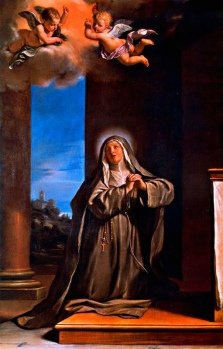 This Magdalen of the Franciscan Order, Saint Margaret of Cortona, came into the world in the year 1247 at Laviano near Cortona in the province of Tuscany. When Saint Margaret of Cortona was 7 years old, she lost her pious mother. She was neglected by her careless father, who married again within a short time, and her unsympathetic stepmother dealt harshly with her, so that when Margaret was 18 years old, she left home to earn her bread among strangers.
Saint Margaret of Cortona was possessed of rare beauty, and ere long this became a snare for her. For the space of 9 years she gave herself up to a life of sin and scandal. Then one day she waited a long time in vain for her accomplice in sin to return home to the place where she lived with him. Presently his dog came to her whining and tugging at her dress. She followed the animal into the heart of the forest, and there she suddenly stood before the blood stained corpse of the unfortunate man; his enemies had murdered him.
At the appalling sight, Margaret of Cortona was stunned like one struck by lightning. Filled with terror she asked herself, “Where is his soul now?” Then and there she firmly resolved in future to be even greater in penance than she had been in sin. Like the prodigal son she returned repentant to her native town of Laviano.
In a penitential garb, her hair cut short, a cord around her neck, she knelt at the door of the church and publicly asked all the congregation to forgive the scandal she had given. Many people were edified at this public humiliation, but her stepmother was all the more embittered at it. She, as well as Margaret’s father, forbade her to enter their home again. This reception severely tempted Margaret to return to the road of vice, but God’s grace sustained her.
Led by divine grace, she repaired to Cortona, made a contrite general confession to a Franciscan there, and submitted to the spiritual direction of her confessor. In a poor little hovel she now lived a secluded life, in penance, tears, and prayer, earning her scanty nourishment by hard manual labor.
Again and again Saint Margaret of Cortona begged for the habit of the Third Order, that she might be recognized by all the world as a penitent. But not until 3 years had elapsed and she had been severely tried, was her wish granted. She received the habit in 1277. Now her fervor increased, and it is almost incredible what rigorous penances she practiced from then on. Day and night she wept over her sins, and often sobs so choked her voice that she could not speak. Satan made use of every wile and snare to cause Margaret to relapse, but prayer, mortification, and humiliation successfully put him to flight.
When finally, after uninterrupted struggling, she had triumphed over every earthly inclination, God assured her that her sins were fully pardoned and granted her special proofs of His knowledge of the innermost secrets of hearts. In many an instance, even when people came from great distances, she recalled grievous sins to their mind, while her exhortations and prayers were instrumental in bringing about conversion. Many souls were released from purgatory upon her prayers. Almighty God wrought many miracles through her even in her lifetime. Health was restored to the sick, a dead boy was raised to life, and at her approach evil spirits shuddered and left those whom they possessed.
Finally, after 23 years of rigorous penance, in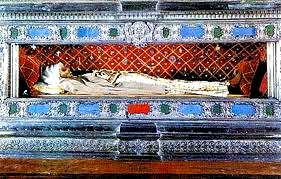 the 50th year of her life, God called the great penitent to the Beatific Vision on February 22, 1297. Her body is preserved in a precious shrine in the Franciscan church at Cortona which bears her name. It is incorrupt even at the present day and frequently emits a pleasant perfume. Several popes have confirmed the public veneration accorded her. Pope Benedict XIII canonized her amid great solemnity in 1728.
*from: The Franciscan Book of Saints, ed. by Marion Habig, ofm.
