
Chapel of Our Lady of Lourdes
(Please allow a few seconds for the video to load)
Welcome to
“The Chapel of Our Lady of Lourdes” digital experience where history and technology intertwine to bring you something that is immersive and entertaining.
Explore the Chapel
Below, you will find a ‘Paywall’ feature, requesting you to make a donation to be able to enter the page.
Once you are in, you will find
Support a Mission, Explore a Treasure
Your entry helps Missio Malta continue their vital work in missionary lands overseas. By donating, you directly support communities in need while gaining 24-hour full access to this chapel's 3D experience and history.
Learn more about Missio's workAccess is valid for 1 Chapel for 24 hours from the time of donation
OR
360° Panorama
Zoom to full screen to view
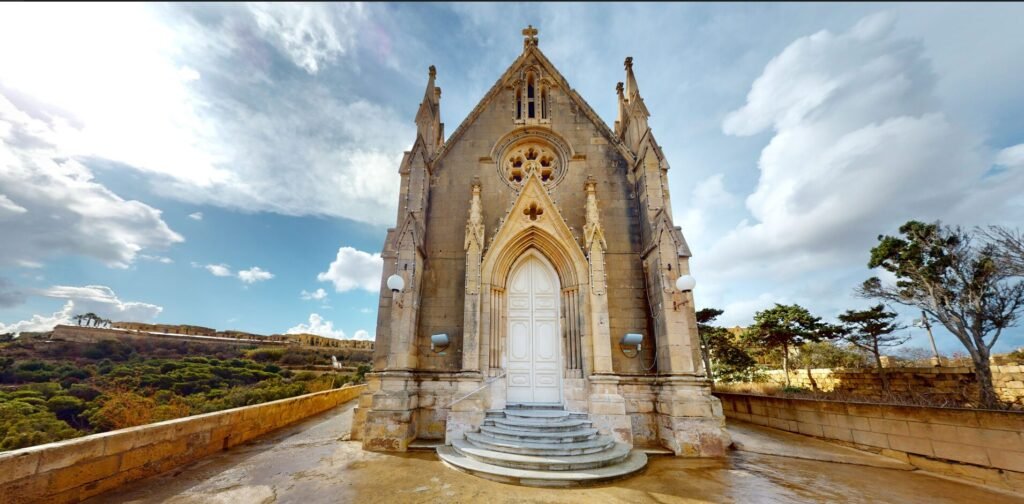
The Chapel of Our Lady of Lourdes was founded after the rock formation just below it was seen to resemble that at Lourdes.
The devotion to Our Lady of Lourdes began on March 25, 1879, when a statue of the Virgin Mary, sculpted by the Maltese sculptor Antonio Busutill, was placed in a natural cavity beneath Tal-Qortin promontory overlooking Mġarr harbour. The statue was blessed by Bishop Pietro Pace on June 3, 1883.
Monsignor Pace urged devotees to raise money to build a chapel in honour of Our Lady. The foundation stone of the gothic-style chapel, designed by Emmanuel Galizia, was laid on June 10, 1888. It was built by master mason Wiġi Vella of Żebbuġ, Gozo. The chapel was blessed on August 27, 1893.
For this Galizia was honoured by the Pope, becoming a Knight of St Gregory the Great. As was the case with his Carmelite Church in Balluta Bay, its neo-Gothicism contrasts sharply with usual Maltese baroque style of church architecture. It could hardly have a more dramatic setting.
Inside, the chapel has a ribbed, Gothic vaulted roof, and is dominated by a statue of the Virgin Mary of Lourdes. This statue was sculpted by Carlo Darmanin and donated by Karolina Mamo-Bruno on 17th September 1893.
The feast of Our Lady of Lourdes is celebrated on February 11, on the anniversary of Our Lady’s first apparition to Bernadette Soubirous. Throughout the feast many people from all over the Island flock to the chapel to hear mass and pray. The Marian apparitions at Lourdes were reported in 1858 by Bernadette Soubirous. She reported 18 apparitions between February 11 and July 16, 1858.
Our Lady of Lourdes: A Sanctuary of Faith and Healing
 Nestled amidst the foothills of the Pyrenees Mountains in southern France lies the captivating town of Lourdes, a destination renowned for its spiritual significance and the remarkable Marian apparitions that occurred there in the mid-19th century.
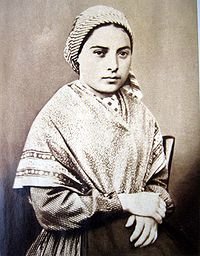
The story of Our Lady of Lourdes unfolds with the extraordinary experiences of a young peasant girl named Bernadette Soubirous. On February 11, 1858, Bernadette, accompanied by her sister and a friend, ventured towards the Massabielle grotto, a secluded cave located along the banks of the Gave de Pau River. As she paused to pray, Bernadette recounted seeing a radiant “Lady” emerge from the grotto’s depths.
Over the following eighteen apparitions, Bernadette engaged in conversations with the mysterious Lady, who described herself as the Immaculate Conception, a title that emphasized her sinlessness. During these encounters, Bernadette was instructed to drink from the grotto’s spring and to dig in the ground, revealing a natural spring that continues to flow to this day.
News of the apparitions spread rapidly, attracting pilgrims from far and wide. The Church, initially skeptical of the claims, launched a thorough investigation, which ultimately concluded that the apparitions were authentic. In 1862, the Catholic Church formally recognized the Marian apparitions and designated Lourdes a place of pilgrimage.
The Sanctuary of Our Lady of Lourdes, a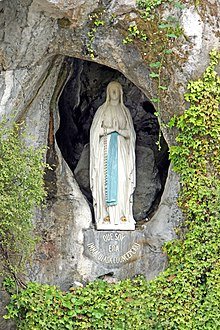 sprawling complex of churches, chapels, and devotional sites, has emerged as a beacon of faith and healing. Millions of pilgrims from all corners of the globe travel to Lourdes each year, seeking spiritual renewal and solace. The site has also been associated with numerous healing miracles, attributed to the water from the grotto spring, which is said to possess restorative properties.
The Basilica of the Immaculate Conception, the largest church in the sanctuary, stands as a testament to the enduring devotion to Our Lady of Lourdes. Its soaring spires and magnificent interior serve as a focal point for pilgrims seeking spiritual inspiration.
The Grotto of Massabielle, the epicenter of the Marian apparitions, remains a revered spot of pilgrimage. Visitors flock to the cave, often kneeling in prayer or dipping their hands and cloths in the spring water, seeking blessings and healing.
The history of Our Lady of Lourdes is a remarkable testament to the power of faith and the enduring presence of the Virgin Mary in the lives of believers. The sanctuary, with its awe-inspiring architecture, healing waters, and stories of miraculous encounters, continues to attract pilgrims from around the world, seeking spiritual solace and the hope of healing amidst the beauty of the Pyrenees Mountains.
