
Chapel of St. James
(Please allow a few seconds for the video to load)
Welcome to
“The Chapel of St. James” digital experience where history and technology intertwine to bring you something that is immersive and entertaining.
Explore the Chapel
Below, you will find a ‘Paywall’ feature, requesting you to make a donation to be able to enter the page.
Once you are in, you will find
Support a Mission, Explore a Treasure
Your entry helps Missio Malta continue their vital work in missionary lands overseas. By donating, you directly support communities in need while gaining 24-hour full access to this chapel's 3D experience and history.
Learn more about Missio's workAccess is valid for 1 Chapel for 24 hours from the time of donation
OR
360° Panorama
Zoom to full screen to view
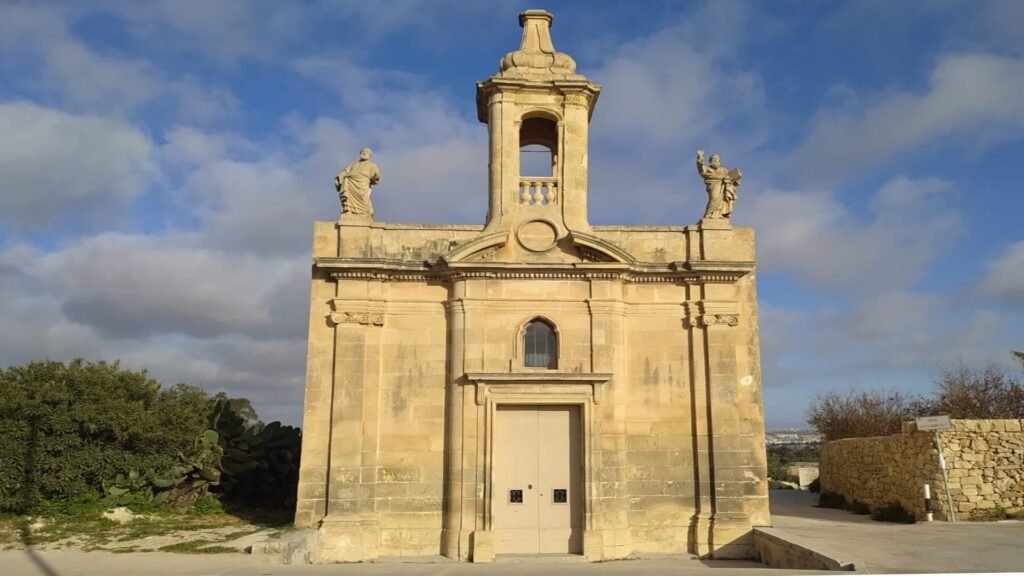
Chapel of St. James
Originally, this church was probably built towards the middle of the 16th century. Bishop Gargallo had desecrated it, but by decree of the same Bishop of 7 November 1613, it was consecrated again after an application made by Pietru Briffa and Ġakbu Psaila. With the death of Ġakbu Psaïla in 1621, despite the new church was not yet built, he left the money in his will so that it can be rebuilt in the same place where it was. But with a decree of the bishop issued two years later, the bishop ordered that the church be rebuilt in the place known as Ħal Fuqani where it is today.
During the visit of bishop Balaguer in 1636, a triptych of St. James together with St. Peter and St. Paul, which was located in this church, is mentioned. With the death of Pietru Briffa in 1687, this church was completely abandoned, but after some years, Girgor Camilleri began to take care of it and restored it again. The church was blessed by the priest Theuma, and the feast of San Ġakbu continued to be held every year.
At the beginning of the 20th century, this church was in a very dilapidated state after having been abandoned for a number of years. Therefore, at the request of Guzeppi Ciappara, it was granted with the patronage of his family by contract of the Notary Francesco Giorgio Schembri of 27 October 1901. It was at this time that the church building was altered and the existing bell tower was built. It was equipped with several pieces of furniture and utensils used in the liturgy. it even had a small pulpit that was used for the feast that began to be celebrated every year. In the middle of the 20th century, the titular picture that we see today was painted, a work by Rafel Bonnići Cali and it is said that there were also two papier-mâché statues, one of Nazzarenu and the other of Santa Rita. Today, the painting is conserved in the sacristy of the Parish Church and was restored a few years ago, while a copy of it was placed in the chapel and was made by Carmelo Montebello.
St. James & The Compostela Pigrimage
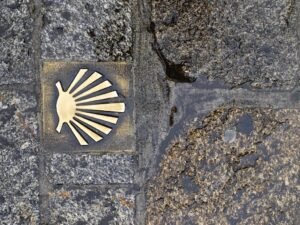
The wind whispered tales of long ago through the ancient stones of Santiago de Compostela, carrying echoes of a saint and a shell. St. James, shrouded in the haze of legends, had left little trace of his life, save for the fervent devotion swirling around his tomb. How he arrived at this final resting place was a mystery, a tapestry woven with faith and the murmur of the sea.
Legend spun a yarn of his travels to Spain, where he planted seeds of faith that yielded a humble harvest. Returning to Jerusalem, he met his end under Herod’s blade. But the story didn’t end there. Two loyal disciples, Theodore and Athanasius, refused to let their mentor’s light fade. They stole his body, a rudderless boat their vessel, and God their navigator. The waves, guided by unseen hands, carried them to the shores of northern Spain, where James found his final peace.
For centuries, his tomb slumbered beneath the weight of time. Then, in the 9th century, his relics were unearthed, igniting a spark that grew into a blazing beacon. The magnificent cathedral rose above Compostela, its heart a silver casket cradling the saint’s bones. His statue, watchful and serene, presided over the sacred space. Word of St. James’ miracles spread like wildfire, drawing pilgrims from every corner of the world. They embarked on arduous journeys, driven by a yearning for his intercession. Each step was a prayer, each mile a testament to their devotion. Their reward? Upon reaching the fabled city, they received the “compostela,” a pilgrim’s passport, and the most treasured souvenir – the scallop shell.
This wasn’t just a trinket; it was a badge of honour, a symbol of resilience and faith. Worn proudly on breast or hat, it resonated with the rhythm of the ocean, a constant reminder of the journey undertaken. More than just decoration, it became a beacon for hospitality, opening doors and hearts along the path.
Even today, the scallop shell whispers its stories to modern pilgrims. It speaks of sacrifice, devotion, and the enduring power of faith. It asks, “Will you walk the path, embrace the challenge, and carry your own shell of resilience?” The answer, echoing through the ages, lies in the hearts of those who dare to answer the call.
