
Chapel of Our Lady of The Sacred Heart
(Please allow a few seconds for the video to load)
Welcome to
“The Chapel of Our Lady of The Sacred Heart” digital experience where history and technology intertwine to bring you an immersive experience.
Explore the Chapel
Below, you will find a ‘Paywall’ feature, requesting you to make a donation to be able to enter the page.
Once you are in, you will find
Support a Mission, Explore a Treasure
Your entry helps Missio Malta continue their vital work in missionary lands overseas. By donating, you directly support communities in need while gaining 24-hour full access to this chapel's 3D experience and history.
Learn more about Missio's workAccess is valid for 1 Chapel for 24 hours from the time of donation
OR
360° Panorama
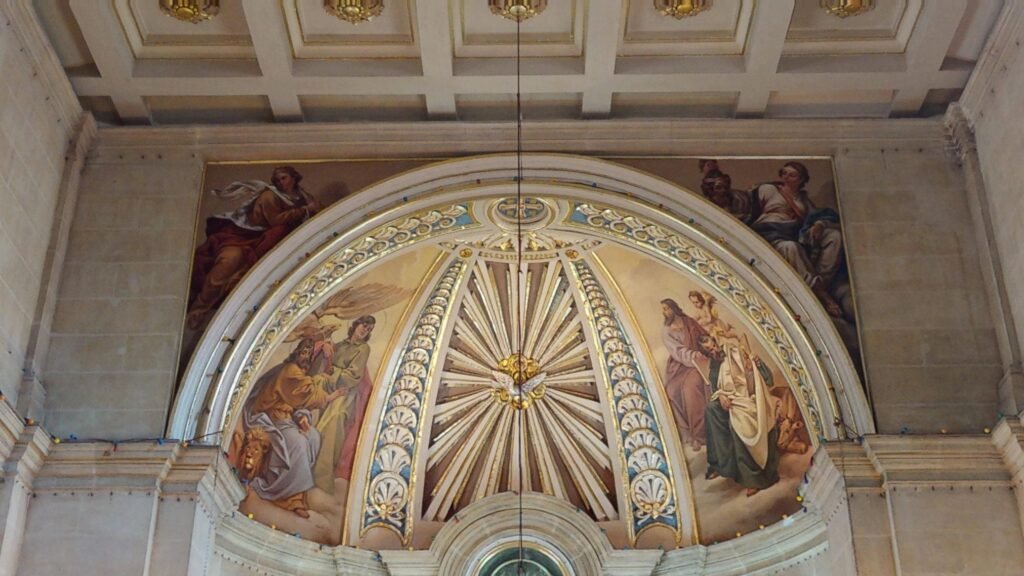
The Chapel of Our Lady of the Sacred Heart (Tas-Sinjura), is a relatively modest yet meaningful devotional structure, reflecting the late 19th to early 20th century spread of Sacred Heart devotion across Malta. This devotion, formally encouraged by the Catholic Church in the 1800s, became deeply rooted in Maltese spirituality, often leading to the construction of small chapels by private benefactors or local families. The chapel was most likely commissioned by a local patron seeking both spiritual merit and a visible expression of faith within the community. Its purpose was to provide a nearby place of prayer for residents, particularly in agricultural zones surrounding Żejtun.
The chapel follows a simple vernacular Maltese design, built using local globigerina limestone. Its façade is restrained, typically featuring a central doorway, a small window or niche, and a modestly elevated parapet. Unlike grand parish churches, chapels of this type were constructed by local masons rather than renowned architects, often funded privately. While no precise construction cost is recorded, such chapels were generally affordable projects relative to larger ecclesiastical buildings. The structure prioritises function over ornament, though subtle decorative elements—such as carved stone framing or a small bell cote—may be present.
The dedication to the Sacred Heart reflects a powerful spiritual movement centred on compassion, sacrifice, and divine love. In Żejtun, a town already rich in religious heritage, the chapel would have complemented parish life by offering an additional site for quiet devotion. It likely played a role in private prayers, small gatherings, and possibly seasonal devotions tied to the Sacred Heart feast. Such chapels also reinforced the Catholic identity of rural Malta, embedding faith into the everyday landscape.
Today, the chapel remains part of Żejtun’s historical fabric, though like many small chapels, it may not be regularly open to the public. Its upkeep is typically overseen either by the local parish or by custodians connected to its original benefactors. While not a major tourist site, it contributes to the layered ecclesiastical heritage that defines the town. Occasional maintenance ensures the structure remains intact, though access can be limited.
There are no widely documented legends tied specifically to this chapel. However, chapels dedicated to the Sacred Heart often carried personal significance for their founders—frequently linked to vows, gratitude for recovery from illness, or protection during difficult times. These private stories, though rarely recorded, form an unseen layer of the chapel’s history.
Inside, the focal point is typically a simple altar dedicated to the Sacred Heart of Jesus, often accompanied by an image or statue depicting Christ revealing His heart as a symbol of divine love. The interior is modest, with minimal embellishment, reflecting its role as a place of intimate prayer rather than ceremony. The exterior’s warm limestone tones blend seamlessly with the surrounding Maltese landscape, giving the chapel a timeless, understated presence.
Our Lady of the Sacred Heart – A Devotion of Love, Trust, and Intercession
Origins of the Devotion
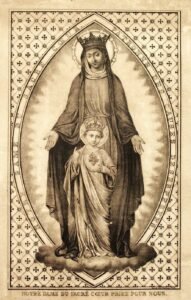 The title Our Lady of the Sacred Heart emerged in 19th-century France, closely linked to the growing devotion to the Sacred Heart of Jesus. It was formally promoted by the French priest Jules Chevalier, founder of the Missionaries of the Sacred Heart. Around 1857, Chevalier sought a way to deepen understanding of Christ’s love, and turned to the Virgin Mary as the one who leads believers directly to the heart of her Son.
Rather than focusing solely on Mary herself, this devotion presents her as a guide—one who brings humanity closer to Christ’s compassion, mercy, and sacrifice. The title emphasises her role not as separate, but as intimately united with the mission of the Sacred Heart.
Life, Meaning, and Spiritual Depth
Unlike apparitions or singular events, this devotion developed through theology and pastoral practice. It centres on a simple yet powerful idea: that Mary, as mother, intercedes for humanity and draws people towards divine love.
In traditional imagery, Mary is often shown presenting or pointing towards the heart of Christ, reinforcing her role as mediator. This symbolism reflects centuries of Catholic belief in her intercessory power, but places it within the emotional and spiritual framework of the Sacred Heart—love offered without condition.
The devotion gained rapid popularity across Europe and beyond, particularly among missionaries, who carried it to distant communities as a message of hope and redemption.
Spread Across the Catholic World
By the late 19th century, the Missionaries of the Sacred Heart had established missions across Africa, the Pacific, and parts of Asia. With them travelled the devotion to Our Lady of the Sacred Heart, often introduced in newly founded churches, schools, and chapels.
In Rome, the devotion found a central home at the Sanctuary of Our Lady of the Sacred Heart near Piazza Navona, becoming a focal point for pilgrims and clergy alike. From there, it continued to spread, embedded within both grand sanctuaries and small rural chapels.
Connection to Malta
Malta’s strong Catholic identity made it particularly receptive to devotions centred on the Sacred Heart. From the late 19th century onwards, the Sacred Heart became one of the most recognisable themes in Maltese religious life, appearing in homes, churches, and roadside chapels.
The title Our Lady of the Sacred Heart naturally followed. While not as widespread as other Marian titles such as Our Lady of Victories or Our Lady of Mount Carmel, it appears in smaller chapels and private dedications, particularly in towns like Żejtun. These chapels reflect the same pattern seen across Europe: local patrons expressing personal devotion through intimate places of worship.
The Maltese interpretation remains faithful to its origins—Mary as a quiet but powerful guide, leading believers towards Christ.
Cultural and Religious Significance
The devotion bridges two of the most important elements of Catholic spirituality: Marian intercession and the Sacred Heart of Jesus. It offers a deeply human perspective on faith, centred on compassion, trust, and closeness rather than formality.
For communities, it provided reassurance—a belief that divine love is accessible, and that Mary stands as an advocate for those who seek it. This explains its lasting appeal, particularly in smaller communities where personal devotion often carries as much weight as public ceremony.
Visual Identity and Artistic Tradition
Art associated with Our Lady of the Sacred Heart is distinctive. Mary is typically depicted with calm authority, often gesturing towards Christ’s heart, which is shown radiant and exposed as a symbol of divine love. The composition draws the viewer’s attention away from ornament and towards meaning.
In chapels and churches, statues and paintings are usually modest in scale but rich in symbolism. The use of warm tones, soft expressions, and balanced composition reinforces the central message: an invitation to approach, rather than to stand in awe.
