
Chapel of Our Lady of Mercy
(Please allow a few seconds for the video to load)
Welcome to
“The Chapel of Our Lady of Mercy” digital experience where history and technology intertwine to bring you an immersive experience.
Explore the Chapel
Below, you will find a ‘Paywall’ feature, requesting you to make a donation to be able to enter the page.
Once you are in, you will find
Support a Mission, Explore a Treasure
Your entry helps Missio Malta continue their vital work in missionary lands overseas. By donating, you directly support communities in need while gaining 24-hour full access to this chapel's 3D experience and history.
Learn more about Missio's workAccess is valid for 1 Chapel for 24 hours from the time of donation
OR
360° Panorama
Zoom to full screen to view
Chapel of Our Lady of Mercy
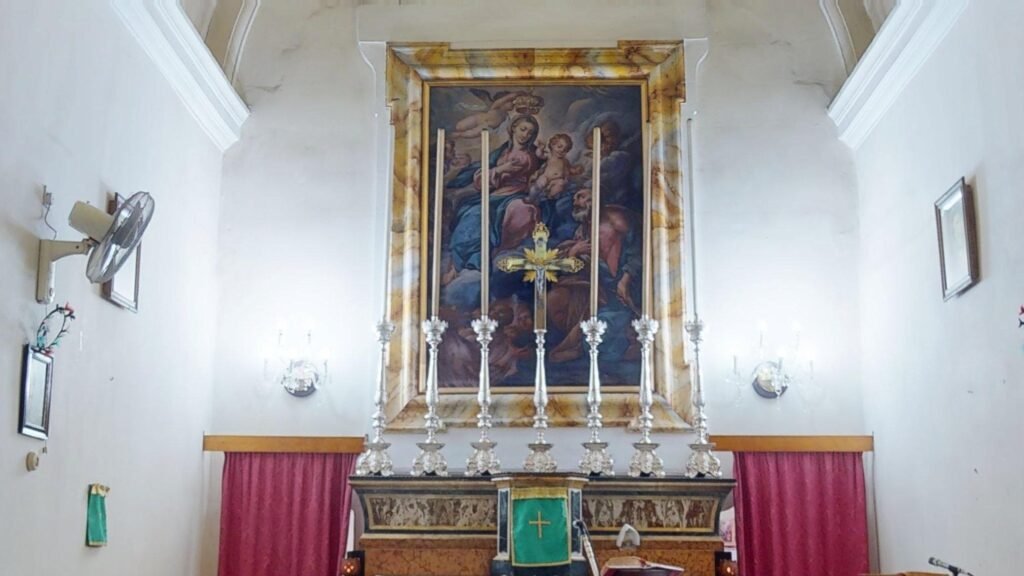
The Chapel of Our Lady of Mercy in Xewkija is a modest yet historically meaningful rural chapel reflecting the deep Marian devotion of Gozo. Its origins are generally traced to the late seventeenth or early eighteenth century, a period marked by the proliferation of small chapels across the Maltese Islands. These were often commissioned by local landowners or devout families seeking to provide accessible places of worship for nearby farmers and villagers. Although precise archival details remain limited, it is widely accepted that the chapel was built through private patronage rather than direct ecclesiastical funding, serving both spiritual and practical needs of the surrounding agricultural community.
Construction Details
Constructed in traditional Maltese limestone, the chapel follows a simple rectangular plan with a modest façade, typical of rural devotional architecture. The design prioritises function over grandeur, with a single nave leading to a small altar space. The builders were likely local masons and craftsmen, skilled in the use of soft Globigerina limestone, which allowed for efficient carving and shaping. There is no documented construction cost, though such chapels were generally inexpensive compared to parish churches. The architectural style is restrained, with subtle Baroque influences evident in the proportions and altar design. No major incidents during construction are recorded, suggesting a straightforward building process.
Cultural and Religious Significance
The chapel has long served as a focal point for local devotion to Our Lady of Mercy, a title associated with compassion and protection. It would have hosted occasional Masses, private prayer, and devotional practices, particularly among farming families working nearby fields. Chapels like this played an essential role in maintaining religious life in dispersed rural areas, reinforcing both faith and community identity. While not associated with large-scale feasts, its presence contributes to the broader network of sacred sites that define Gozitan religious culture.
Present-Day Context
Today, the chapel remains a valued heritage site within Xewkija. Although not in regular liturgical use, it is maintained as part of the island’s cultural and historical landscape. Responsibility for its upkeep typically falls under ecclesiastical authorities, sometimes supported by local heritage initiatives. Its condition is generally stable, with periodic conservation ensuring the preservation of its structure and character.
Unique Stories or Legends
As with many rural chapels in Gozo, local oral tradition speaks of personal prayers answered and quiet acts of devotion rather than dramatic legends. The chapel’s enduring presence itself is often seen as a testament to the faith of generations who relied on it during times of hardship, particularly in an agrarian context where divine protection was deeply sought.
Visual and Artistic Features
Externally, the chapel presents a simple façade with a central doorway and modest architectural detailing. Inside, the focal point is the altar dedicated to Our Lady of Mercy, likely featuring a devotional painting or statue depicting the Virgin in a protective role. Decorative elements are minimal but purposeful, with soft stone surfaces and a calm, intimate atmosphere that encourages reflection. The restrained aesthetic enhances its authenticity as a rural place of worship.
Our Lady of Mercy in Malta and Gozo: A Devotion of Protection, Freedom and Hope
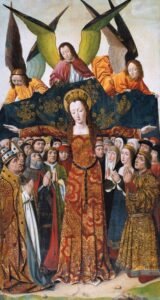 The title Our Lady of Mercy, also known as Our Lady of Ransom, has its roots in medieval Spain. It is closely linked to the founding of the Mercedarian Order in 1218 by Saint Peter Nolasco. At a time when Christians were frequently captured during conflicts in the Mediterranean, the Order was established to ransom captives and restore them to freedom.
The imagery of Our Lady of Mercy often shows the Virgin Mary extending her cloak over the faithful, a powerful symbol of protection and compassion. This idea of shelter and deliverance would later resonate strongly in maritime communities across the Mediterranean, including Malta.
Arrival and Growth in Malta and Gozo
The devotion reached Malta through centuries of close ties with southern Europe, particularly Spain and Sicily. During the period of the Knights Hospitaller, Marian devotion flourished across the islands, with various titles of the Virgin gaining local significance.
In rural Gozo, where life was closely tied to the land and sea, the message of mercy and protection found a natural home. Small chapels dedicated to Our Lady of Mercy, such as the one in Xewkija, were often built by families or local benefactors. These chapels provided a spiritual refuge for farmers, sailors, and villagers who faced the uncertainties of nature and livelihood.
Life, Belief and Daily Devotion
The people who turned to Our Lady of Mercy in Malta and Gozo did so with a deeply practical faith. For farmers, mercy meant rain at the right time and protection from hardship. For fishermen and sailors, it meant safe passage across unpredictable seas.
This devotion was not grand or ceremonial alone. It lived in quiet prayer, candlelight, and whispered petitions. Chapels were often visited before the start of a working day or during moments of difficulty. The Virgin was seen not as distant, but as a constant presence watching over daily life.
Cultural and Historical SignificanceThe title of Our Lady of Mercy carries particular weight in Malta’s historical context. The islands have long stood at the crossroads of conflict and trade, where the threat of capture or loss was very real. The original mission of the Mercedarians, freeing captives, would have held clear meaning in a society shaped by corsair raids and maritime danger.
Although the Mercedarian Order did not have a dominant institutional presence in Malta, its spiritual message travelled through art, prayer, and tradition. Over time, the devotion became part of the broader Maltese Marian identity, alongside other well known titles.
Artistic and Symbolic Expression
In Maltese and Gozitan chapels, Our Lady of Mercy is usually depicted in a calm and protective stance. The mantle is the key symbol, representing shelter and intercession. Interiors tend to be simple, allowing the focus to remain on the figure of the Virgin and her role as protector.
Even in modest chapels, the artistic expression carries emotional depth. The imagery connects directly with the lived experiences of those who prayed there.
Enduring Presence Today
Today, the devotion to Our Lady of Mercy remains quietly embedded in Malta and Gozo. While larger feasts and parish celebrations often centre on other Marian titles, these smaller dedications continue to form part of the islands’ spiritual landscape.
Chapels dedicated to Our Lady of Mercy stand as reminders of a time when faith was closely woven into survival, work, and community. Their continued preservation reflects not only religious respect but also a recognition of their cultural value.
