
Chapel of St. Anthony the Abbot
(Please allow a few seconds for the video to load)
Welcome to
“The Chapel of St. Anthony the Abbot” digital experience where history and technology intertwine to bring you an immersive experience.
Explore the Chapel
Below, you will find a ‘Paywall’ feature, requesting you to make a donation to be able to enter the page.
Once you are in, you will find
Support a Mission, Explore a Treasure
Your entry helps Missio Malta continue their vital work in missionary lands overseas. By donating, you directly support communities in need while gaining 24-hour full access to this chapel's 3D experience and history.
Learn more about Missio's workAccess is valid for 1 Chapel for 24 hours from the time of donation
OR
360° Panorama
Zoom to full screen to view
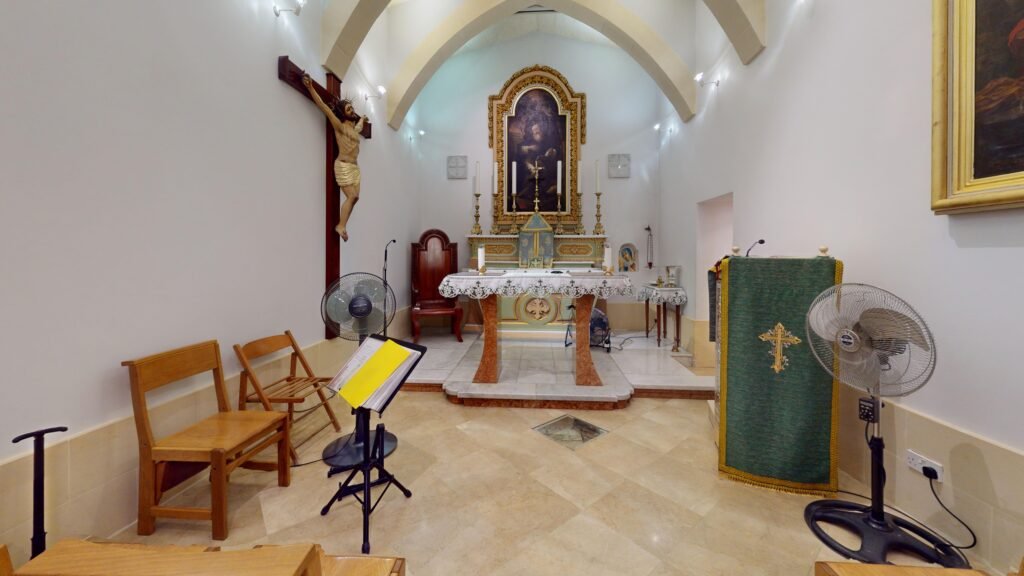
Chapel of St Anthony the Abbot.
The Chapel of St Anthony the Abbot in Xagħra is one of the lesser-known rural chapels of Gozo, yet it reflects the deep-rooted devotional life of the island. The chapel is believed to have been constructed during the late 17th or early 18th century, a period marked by the spread of small countryside chapels funded by local benefactors. These chapels were typically commissioned by landowners or devout families seeking to provide accessible places of worship for farmers working distant fields. Its dedication to St Anthony the Abbot, patron saint of animals and rural life, reflects the agrarian character of the surrounding area.
Construction Details
Built using locally quarried limestone, the chapel follows the traditional Maltese vernacular ecclesiastical style. Its modest façade is characterised by simplicity, often featuring a rectangular doorway, a small central window, and a bell cote crowning the structure. While no precise construction cost survives in records, chapels of this type were usually modest investments, relying on local masons and craftsmen rather than formally documented architects. The labour would have been community-based, involving skilled stoneworkers and artisans familiar with ecclesiastical ornamentation. Structurally, the chapel was designed for durability, with thick walls to withstand the island’s climatic conditions.
Cultural and Religious Significance
The chapel served as a spiritual focal point for rural inhabitants who could not easily access the parish church. Devotion to St Anthony the Abbot was particularly significant among farmers, who sought his protection over livestock and agricultural prosperity. Feast day observances, though modest, would have included prayer gatherings and blessings. Such chapels contributed to the decentralisation of religious life in Gozo, reinforcing faith within everyday rural activity. They also represent a wider Maltese tradition of embedding religious devotion within the landscape.
Present-Day Context
Today, the chapel stands as a heritage structure, valued more for its historical and cultural significance than for regular liturgical use. It is generally maintained under ecclesiastical oversight, often with support from local heritage enthusiasts. While not always open daily, it forms part of the broader network of chapels documented and appreciated through cultural initiatives. Its condition is typically stable, though like many small chapels, it depends on periodic conservation efforts to preserve its fabric.
Unique Stories and Legends
As with many rural chapels in Gozo, local oral tradition associates the site with protective blessings over fields and animals. Though no widely recorded legend is formally documented, such chapels often carry anecdotal accounts of answered prayers, particularly relating to livestock health and agricultural success, reinforcing the saint’s symbolic role.
Visual and Artistic Features
The chapel interior is understated, usually consisting of a single altar dedicated to St Anthony the Abbot. The titular painting or statue typically depicts the saint with his characteristic staff and a pig, symbolising his patronage. Decorative elements are minimal, focusing attention on devotion rather than grandeur. The exterior’s weathered limestone gives the chapel a timeless presence within the Gozitan landscape.
St Anthony the Abbot: The Desert Father Who Shaped Christian Devotion
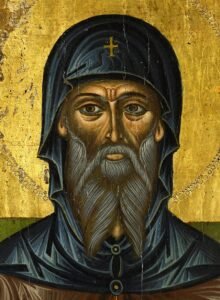 St Anthony the Abbot, often called Anthony the Great, was born around AD 251 in Egypt during a time of great change within the Roman world. Raised in a wealthy Christian family, he inherited land and comfort, yet chose a radically different path. Following the words of the Gospel, he gave away his possessions and withdrew into the desert, seeking a life of prayer, solitude and discipline. In doing so, he became one of the earliest and most influential figures of Christian monasticism.
Anthony’s life unfolded in the harsh landscapes of the Egyptian desert, where he lived for decades in isolation. His reputation grew as people sought his guidance, drawn by his wisdom and unwavering faith. Though he avoided public life, communities formed around him, and his example inspired the development of organised monastic living. His story was later recorded by Athanasius of Alexandria, helping to spread his influence across Europe and the Mediterranean.
One of the most enduring aspects of his legacy is the account of his spiritual struggles, often described as the “Temptations of St Anthony”. These stories tell of intense trials, both physical and spiritual, symbolising the battle between good and evil. Artists across centuries depicted these scenes, turning Anthony into a powerful symbol of perseverance and inner strength. He is typically shown with a staff, a bell, and a pig, the latter reflecting his association with animals and rural life.
St Anthony became the patron saint of animals, farmers and those suffering from skin diseases. His feast day, celebrated on 17 January, is still marked in many countries with the blessing of animals, a tradition that has found a lasting place in Maltese culture. In Malta and Gozo, devotion to St Anthony the Abbot is closely tied to rural communities, where livestock once formed the backbone of daily life. Chapels dedicated to him, such as those found in the Gozitan countryside, reflect a long-standing belief in his protective care over fields and animals.
The Maltese connection is particularly visible in traditional village practices, where farmers would bring their animals to be blessed, seeking health and protection. This echoes ancient customs linked to the saint’s intercession. His influence also appears in local art and statuary, often placed within small chapels that served agricultural communities.
Beyond folklore and tradition, St Anthony’s legacy lies in his example of simplicity and resolve. He did not found an institution, yet his way of life inspired countless others to seek spiritual meaning beyond material wealth. From the deserts of Egypt to the quiet chapels of Malta, his story continues to resonate, bridging centuries of faith, culture and human experience.
