
Chapel of The Immaculate Conception
(Please allow a few seconds for the video to load)
Welcome to
“The Chapel of The Immaculate Conception” digital experience where history and technology intertwine to bring you an immersive experience.
Explore the Chapel
Below, you will find a ‘Paywall’ feature, requesting you to make a donation to be able to enter the page.
Once you are in, you will find
Support a Mission, Explore a Treasure
Your entry helps Missio Malta continue their vital work in missionary lands overseas. By donating, you directly support communities in need while gaining 24-hour full access to this chapel's 3D experience and history.
Learn more about Missio's workAccess is valid for 1 Chapel for 24 hours from the time of donation
OR
360° Panorama
Zoom to full screen to view
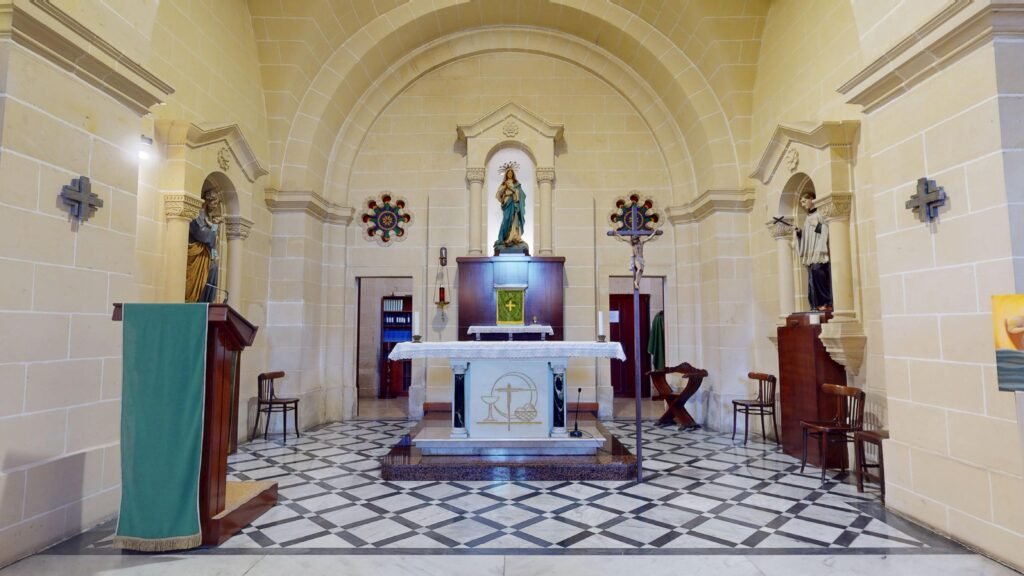
Chapel of the Immaculate Conception, Victoria
The Chapel of the Immaculate Conception is located within the Seminary complex in Victoria, Gozo, closely tied to the development of ecclesiastical education on the island. The Gozo Seminary itself was formally established in the 19th century following the creation of the Roman Catholic Diocese of Gozo in 1864. The chapel was built shortly thereafter as an integral spiritual centre for the formation of clergy.
Its dedication to the Immaculate Conception reflects strong Marian devotion in Malta, particularly during a period when the doctrine had recently been proclaimed in 1854. The chapel was intended primarily for seminarians, providing a space for daily Mass, prayer, and spiritual discipline within the seminary environment.
Construction Details
The chapel forms part of the Seminary’s architectural complex rather than standing as an independent rural structure. Built in local limestone, it follows restrained ecclesiastical design principles suited to an educational institution. While specific records of cost and individual craftsmen are limited, construction would have involved local masons and artisans working under diocesan supervision.
Architecturally, the chapel reflects late 19th century ecclesiastical style with classical proportions, balanced symmetry, and modest Baroque influence. The interior is structured around a single nave, designed for clarity and focus rather than grandeur. Its scale reflects its intended use by a relatively small religious community. No major construction incidents are recorded, suggesting a straightforward build within an established institutional framework.
Cultural and Religious Significance
The chapel has played a central role in the religious life of Gozo through its connection to priestly formation. Generations of Gozitan clergy would have received part of their spiritual training within this space, making it a place of quiet but lasting influence on the island’s pastoral life.
The dedication to the Immaculate Conception aligns with Malta’s long-standing Marian identity, visible in numerous churches and feasts across the islands. While not a public parish church, the chapel contributes significantly to the spiritual continuity of the local Church by shaping those who would later serve in parishes throughout Gozo and Malta.
Present-Day Context
Today, the chapel remains part of the Seminary complex and continues to function as a place of worship, although its use is largely internal. It is maintained under the care of the Diocese of Gozo and preserved as part of the island’s ecclesiastical heritage.
The building is generally in good condition, with periodic conservation ensuring the protection of its architectural and artistic elements. While not a major tourist site, it holds quiet importance within the religious and cultural fabric of Victoria.
Unique Stories or Legends
Unlike many rural chapels, the Seminary chapel is not strongly associated with folklore. Its significance lies instead in lived experience. Many Gozitan priests recall it as a place of reflection, discipline, and personal calling. This continuity of memory gives the chapel a different kind of narrative, rooted in vocation rather than legend.
Visual and Artistic Features
The chapel’s exterior is integrated within the Seminary complex, presenting a modest and harmonious façade. Inside, the focus is on the main altar dedicated to the Immaculate Conception, often featuring a painting or statue of the Virgin Mary in serene and elevated form.
Decorative elements are refined rather than elaborate, with attention given to proportion, light, and clarity. The interior atmosphere is calm and contemplative, suited to prayer and study. Subtle ornamental details, including stone mouldings and liturgical furnishings, reflect the craftsmanship typical of Gozo’s ecclesiastical buildings of the period.
The Seminary of Victoria, Gozo: Formation, Faith and the Making of a Diocese
A New Beginning for Gozo
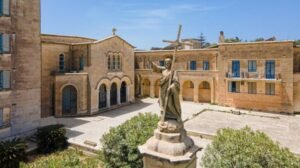 The story of the Seminary in Victoria begins with a turning point in Gozitan history. In 1864, the island was granted its own ecclesiastical identity with the establishment of the Roman Catholic Diocese of Gozo. This moment created an immediate need for local priestly formation, no longer dependent on Malta.
The Seminary was founded soon after, giving Gozo a centre for education, discipline and spiritual life. It became both a school and a place of vocation, shaping young men for service within their own communities.
Building a Place of Formation
Constructed in the late 19th century, the Seminary complex reflects the practical yet dignified style of the period. Built in local limestone, its structure combines simplicity with quiet authority. Classrooms, living quarters and the central chapel were arranged to support both academic and spiritual formation.
The Chapel of the Immaculate Conception forms the heart of the building. Here, daily Mass and prayer anchored the rhythm of life. The architectural approach avoided excess, focusing instead on proportion, light and calm. It was designed not to impress, but to guide.
Local craftsmen and builders were responsible for its construction, working under the direction of the Diocese. While there are no widely recorded costs or named architects, the building stands as a fine example of Gozo’s ecclesiastical craftsmanship.
Life Within the Walls
Life in the Seminary followed a steady pattern. Days were shaped by study, prayer, silence and discipline. Generations of Gozitan clergy passed through its halls, carrying its influence into parishes across the island.
The Seminary was not only a religious institution but also a centre of learning. It provided education at a time when opportunities were limited, helping to shape both spiritual leaders and educated citizens. Its role extended quietly into the social fabric of Gozo.
Connections with Malta remained strong. While Gozo had its own Diocese, it shared traditions, liturgical practices and cultural identity with the wider Maltese Church. The Seminary became part of this broader religious landscape.
Challenges and Change
Like many seminaries across Europe, the institution faced change over time. Fewer vocations and shifting educational structures altered its original role. Parts of the Seminary adapted to new uses, while others retained their traditional purpose.
Maintenance and conservation became important as the building aged. Efforts have been made to preserve its structure, ensuring that its architectural and historical value is not lost. The balance between use and preservation continues to shape its future.
A Quiet Legacy
Today, the Seminary remains a significant part of Gozo’s heritage. Even where its original function has evolved, its presence is deeply felt. It stands as a reminder of a time when faith, education and community were closely bound.
The Chapel of the Immaculate Conception continues to offer a place of reflection within the complex. The wider building, though quieter than before, still carries the memory of voices, study and prayer.
The Seminary is not defined by grandeur, but by continuity. It reflects the story of Gozo itself, steady, rooted and shaped by faith.
