
Church of The Good Shepherd
(Please allow a few seconds for the video to load)
Welcome to
“The Church of The Good Shepherd” digital experience where history and technology intertwine to bring you an immersive experience.
Explore the Chapel
Below, you will find a ‘Paywall’ feature, requesting you to make a donation to be able to enter the page.
Once you are in, you will find
Support a Mission, Explore a Treasure
Your entry helps Missio Malta continue their vital work in missionary lands overseas. By donating, you directly support communities in need while gaining 24-hour full access to this chapel's 3D experience and history.
Learn more about Missio's workAccess is valid for 1 Chapel for 24 hours from the time of donation
OR
360° Panorama
Zoom to full screen to view
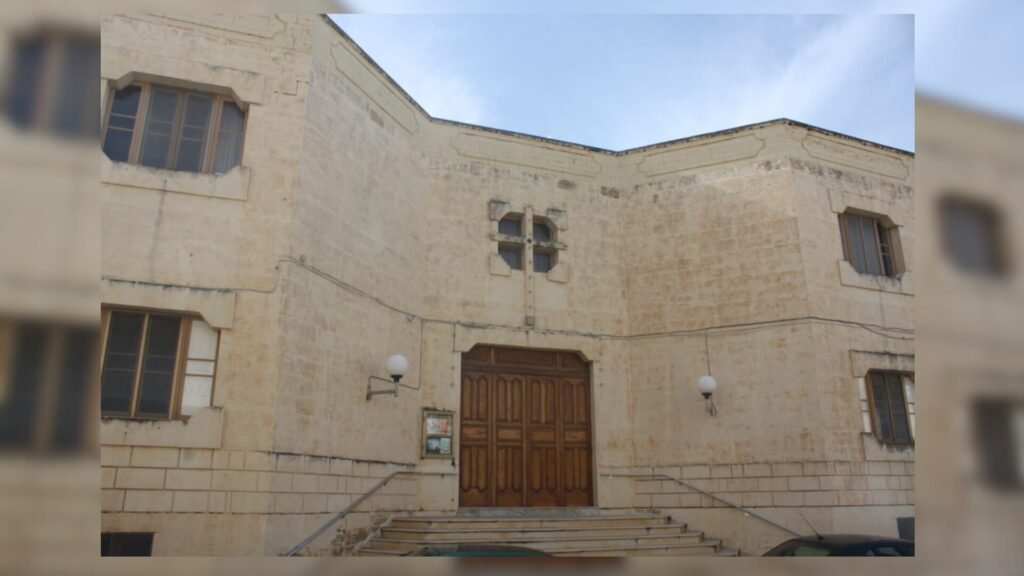
Church of the Good Shepherd.
Nestled in the heart of Taċ-Ċawla, a modern suburb on the outskirts of Victoria (Rabat), Gozo, the Church of the Good Shepherd stands as a symbol of pastoral care, spiritual community, and architectural simplicity. Though not centuries old like many of Gozo’s churches, this modest chapel has played a profound role in shaping the cultural and religious identity of its neighbourhood.
Origins Rooted in Vision
The Church of the Good Shepherd was established in response to rapid urban expansion in the 1970s. It was spearheaded by Bishop Nikol Joseph Cauchi, who saw the need to provide both housing and spiritual services to the growing population of Victoria’s outskirts. Located at the corner of Triq il-31 ta’ Marzu 1979 and Triq Sir Pawlu Boffa, the chapel was blessed and opened on 10 May 1981.
What made the project unique was its dual mission: addressing both the material needs of families through affordable housing and their spiritual welfare through accessible worship. The initiative reflected the Church’s commitment to modern pastoral outreach – bringing the church to the people rather than the other way around.
Construction and Design
Designed by renowned architects Arthur Stuart Mortimer and Roger de Giorgio, the Church of the Good Shepherd embraces a simple modernist style. Constructed from traditional Maltese limestone, the building is compact, with a flat roofline and a cross-shaped window above the main door that allows natural light to fill the interior.
Notably, the chapel was built without a bell tower, instead using a pioneering electronic bell system that chimed digitally – a novelty in Gozo at the time. The interior is minimalist yet spiritually focused, with plain stone walls, wooden pews, a central altar, and modest religious artwork, including a statue of Christ the Good Shepherd.
A Centre for Faith and Community
From the outset, the chapel served more than just liturgical purposes. It became a pastoral centre – a true hub for community life. Under the leadership of its first rector, Fr Tarcisio Camilleri, the chapel hosted catechism classes, social gatherings, and even recreational activities like table tennis tournaments for local youths.
Over time, the Good Shepherd chapel evolved into an anchor of daily life for the residents of Taċ-Ċawla. The feast of the Good Shepherd (Fourth Sunday of Easter) is observed with devotion, and the chapel’s small but committed choir continues to enrich the spiritual atmosphere during Masses.
A Modern Legacy
In recent years, the site has seen further investment. The adjacent Good Shepherd Pastoral Centre now includes a recreational park, synthetic football pitch, and an eco-friendly water reservoir, part of a broader initiative to promote community wellness and sustainability.
As of 2024, the chapel was granted official permission to conduct baptisms, weddings, and funerals, elevating its pastoral role even further. It continues to be run by a dedicated rector, with Fr Eddie Zammit among the latest clergy serving the community.
Despite being relatively new, the Church of the Good Shepherd is now a registered cultural property and holds a unique place in Gozo’s ecclesiastical landscape. It is a living example of how modern architecture, spiritual leadership, and social foresight can come together to serve generations of families.
The Good Shepherd: An Enduring Symbol of Compassion Through Time and Faith.
Origins and Biblical Foundations
The concept of the Good Shepherd originates from the Gospel of John, where Jesus declares:
“I am the good shepherd. The good shepherd lays down his life for the sheep.”
— John 10:11
This metaphor portrays Jesus as the devoted guardian who knows each of his sheep intimately and is willing to sacrifice himself for their well-being. The imagery also resonates with passages from Psalm 23 and Ezekiel 34, where God is depicted as a shepherd tending to his flock.
The Good Shepherd in Early Christian Art
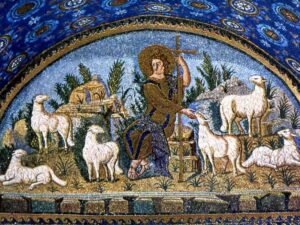 In the early centuries of Christianity, when overt religious symbols were often suppressed, the Good Shepherd emerged as a subtle yet powerful representation of Christ. Artworks from this period frequently depict a youthful shepherd carrying a lamb on his shoulders, a motif borrowed from the pagan “kriophoros” figure but reinterpreted within a Christian context.
Notable examples include frescoes in the Roman catacombs, such as those of Priscilla and Domitilla, dating back to the 3rd century. These images served as clandestine affirmations of faith and hope in eternal life.
One of the most renowned representations is the mosaic in the Mausoleum of Galla Placidia in Ravenna, Italy, from around 425 AD. Here, Christ is portrayed in a pastoral setting, surrounded by sheep, symbolizing his role as the spiritual shepherd of humanity.
Connections to Malta
Malta’s rich Christian heritage, dating back to the shipwreck of Saint Paul as recounted in the Acts of the Apostles, has fostered a deep reverence for Christian symbols, including the Good Shepherd. While specific artworks depicting the Good Shepherd are not extensively documented in Malta, the theme resonates in the island’s religious culture.
The Good Shepherd remains a profound symbol of compassion, guidance, and sacrifice, resonating across centuries and cultures. Its presence in art and theology continues to inspire and comfort, embodying the enduring relationship between the divine and humanity.
