
Church of Our Lady of Pompeii
(Please allow a few seconds for the video to load)
Welcome to
“The Church of Our Lady of Pompeii” digital experience where history and technology intertwine to bring you an immersive experience.
Explore the Chapel
Below, you will find a ‘Paywall’ feature, requesting you to make a donation to be able to enter the page.
Once you are in, you will find
Support a Mission, Explore a Treasure
Your entry helps Missio Malta continue their vital work in missionary lands overseas. By donating, you directly support communities in need while gaining 24-hour full access to this chapel's 3D experience and history.
Learn more about Missio's workAccess is valid for 1 Chapel for 24 hours from the time of donation
OR
360° Panorama
Zoom to full screen to view
Church of Our Lady of Pompeii
The Church of Our Lady of Pompeii was founded as part of the Dominican Sisters’ Convent in Victoria, Gozo. Its origins go back to 1889, when local philanthropist Carolina Cauchi established the convent with the help of Gozo’s Bishop Pietro Pace.
In response to growing devotion to Our Lady of the Rosary of Pompeii, construction of the chapel began in 1895. It was completed and officially opened on March 25, 1900, coinciding with the Feast of the Annunciation. The chapel was designed to serve both the sisters’ spiritual life and the broader Gozitan community.
Architectural Features
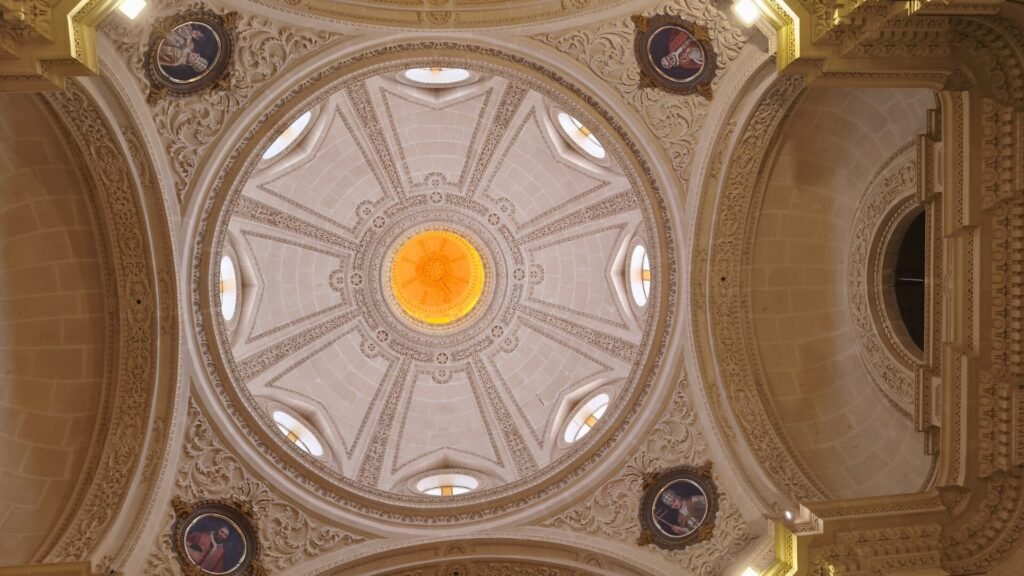
Designed by Vincenzo Mercieca, the church features classic Baroque architecture, with a limestone façade, pilasters, a curved pediment, and the symbolic Eye of Providence above the main doorway. The interior includes a marble altar, a modest dome, and richly detailed artwork that reflects the Dominican tradition.
Consecrated in 1923, the church is physically attached to the convent and has served as a centre of devotion, education, and charity for over a century.
Spiritual and Cultural Importance
Though not a parish church, the sanctuary is a key religious site in Gozo. It holds annual feast celebrations on May 8 and the first Sunday in October, featuring special Masses, processions, and recitations of the Supplica prayer to Our Lady of Pompeii.
The Dominican Sisters have long supported education and healthcare on the island, founding an infant school in 1914 and helping at Gozo’s Isolation Hospital. Their work continues today through a childcare centre within the convent complex.
A major milestone came in 1966, when the church’s titular painting was canonically crowned, a rare honour in Malta and Gozo. The celebration drew crowds from across the island, cementing the chapel’s spiritual status.
Present-Day Role
Today, the Church of Our Lady of Pompeii remains fully active. It is managed by the Dominican Sisters, with Masses celebrated regularly and the church open to the public for quiet prayer.
The chapel is a beloved part of the Victoria community, drawing pilgrims and locals for special feasts and daily devotions. It underwent restorations after storm damage in 2009 and again in 2025, when lightning struck the dome’s lantern—an incident that highlighted both the chapel’s vulnerability and the community’s dedication to preserving it.
Unique Local Stories
This church is rich with stories that add to its cultural charm:
- A statue of Our Lady of the Rosary, originally ordered for Gozo Cathedral, was rejected and found its home here. Sculptor Wistin Camilleri modified it, and it became one of the church’s most beloved figures.
- Founder Carolina Cauchi was buried in the Gozo Cathedral, a symbol of humility and recognition of her contributions to the island.
- During World War II, the convent and church were spared from bombing—an event many consider miraculous.
- In 1950, a neighbour broadcast the Pope’s proclamation of the Assumption dogma via loudspeaker so the sisters, without a radio, could hear it—an enduring example of community support.
In 2007, the church and Cauchi were honoured on a commemorative Maltapost stamp, further embedding them in national memory.
Art and Decoration
Despite its small size, the church is home to some of Malta’s most treasured sacred art:
- The main altarpiece, by Lazzaro Pisani, depicts the Virgin Mary handing rosaries to St. Dominic and St. Catherine of Siena. This painting was crowned in 1966.
- Pisani also created side altar paintings of St. Vincent Ferrer, St. Thomas Aquinas, St. Joseph, St. Raphael, and St. Expeditus.
- A unique painting of the Holy Name of God by Giuseppe Calì was gifted by the Dominican Fathers of Valletta.
- Statues of Our Lady of the Rosary and St. Dominic add sculptural beauty and devotional depth.
Together, these artworks form a miniature museum of Maltese sacred art, elevating the church’s spiritual ambiance and drawing art lovers and pilgrims alike.
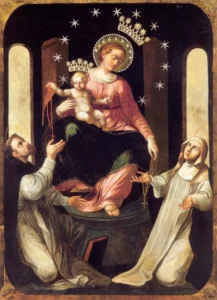 In the late 19th century, amid the ruins of ancient Pompeii, a remarkable story began to unfold — one that would bring thousands of people to kneel in prayer before a once-forgotten image of the Virgin Mary. What is now known as the Miracle of Pompeii did not begin with thunder and lightning, but with a man burdened by his past and searching for a way to make peace with it.