
Chapel of St. Joseph (Don Bosco)
(Please allow a few seconds for the video to load)
Welcome to
“The Chapel of St. Joseph” digital experience where history and technology intertwine to bring you an immersive experience.
Explore the Chapel
Below, you will find a ‘Paywall’ feature, requesting you to make a donation to be able to enter the page.
Once you are in, you will find
Support a Mission, Explore a Treasure
Your entry helps Missio Malta continue their vital work in missionary lands overseas. By donating, you directly support communities in need while gaining 24-hour full access to this chapel's 3D experience and history.
Learn more about Missio's workAccess is valid for 1 Chapel for 24 hours from the time of donation
OR
360° Panorama
Zoom to full screen to view
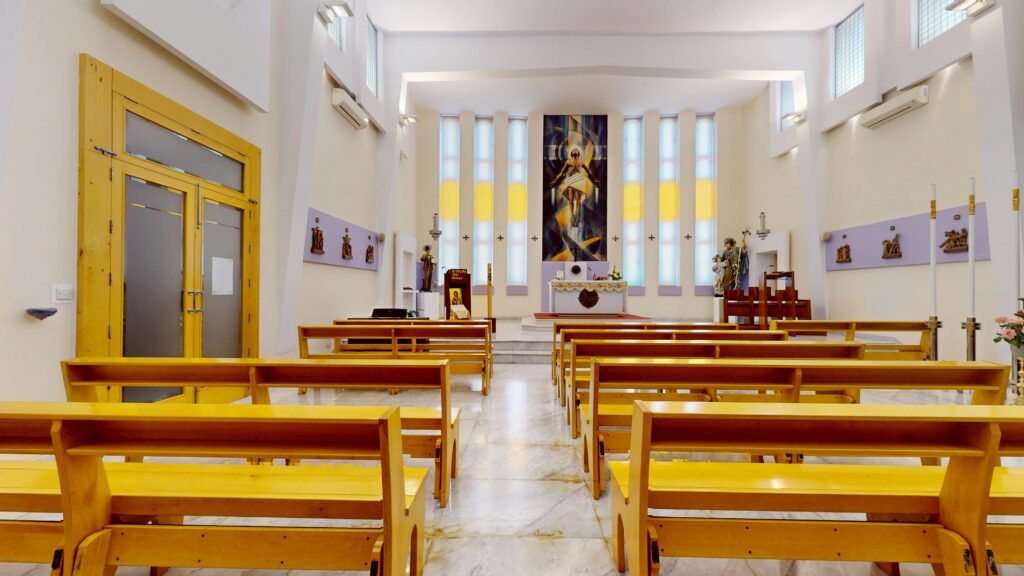
Chapel of St. Joseph (Don Bosco Oratory)
The Chapel of St. Joseph at the Don Bosco Oratory in Victoria, Gozo, is a modest yet meaningful landmark blending history, faith, and youth culture. Founded in 1934 by Fr. Paul Micallef as part of the first Don Bosco youth centre in Gozo, the oratory initially operated out of small houses without a dedicated chapel. Early oratory members attended Mass at nearby churches until a permanent solution could be built. The oratory’s mission – inspired by St. John Bosco – was to create a safe haven for children and youths, integrating spiritual formation, education, and recreation. By 1949, a purpose-built Oratorju Don Bosco complex opened in the heart of Victoria, complete with a theatre and classrooms. However, the chapel envisioned as the spiritual heart of the complex was only realized in the 1960s.
Construction and Architecture: In 1964, plans were drawn to erect a chapel on the oratory grounds, funded partly by government compensation from a demolished old chapel of St. Joseph in town. Architect Joseph Mizzi designed a simple, modern chapel to complement the oratory’s existing building. Construction began in late 1963 on the site known as “Pjazza Fuq it-Tomba” – formerly a medieval cemetery. This site choice added a layer of sacred history, as workers uncovered old tombs during excavation. The Chapel of St. Joseph was completed and blessed in January 1965, fulfilling a long-held dream. Its architecture is straightforward 20th-century: a rectangular nave with plain limestone walls and a subtle façade. The exterior features a minimalist design with a single cross and the name of St. Joseph, reflecting the chapel’s dedication. Over the entrance today stands a statue of St. John Bosco, unveiled in 2015, which links the chapel visually to the oratory’s patron saint.
Inside, the chapel is bright and unadorned, designed to be welcoming to young people. A series of broad arches span the ceiling, and high-set windows or skylights bring in natural light. The interior palette is light cream and white, creating an atmosphere of simplicity and peace. The sanctuary is modest, with a white marble altar at center stage. Flanking it are statues of St. Joseph (patron of the chapel) and St. John Bosco (patron of the oratory), symbolically uniting the two patrons. The chapel’s most striking artistic feature is a large altarpiece painting of the Risen Christ, installed in 2001. This contemporary painting by local artist John Grima shows Christ in radiant glory and is known as “Kristu Rxoxt” (the Risen Christ). Its dynamic, modern style immediately draws the eye and has become the focal point of the chapel’s interior, replacing a traditional image of St. Joseph that previously occupied the space. The overall design is functional and unpretentious – very much in line with Don Bosco’s ethos that sacred spaces for youth should be beautiful yet not overly lavish.
Historical and Cultural Significance: The Chapel of St. Joseph has been the spiritual heart of the Don Bosco Oratory for decades. It served as the venue for countless Masses, catechism classes, and prayers for generations of Gozitan youth. This chapel is where young people learned to altar-serve, sing in choir, and practice an active faith outside their home parishes. The Don Bosco Oratory as a whole became a vital institution in Gozo, known for its mix of religion, education, and entertainment. The adjacent Don Bosco Theatre is one of Gozo’s principal stages for drama and cinema, and many of its productions – from Christmas pageants to Easter plays – have religious themes or are fundraisers for the oratory’s work. Before or after such events, attendees often gather in the chapel for a short prayer, underscoring how seamlessly faith is woven into cultural life here.
The chapel also holds an annual celebration for the feast of St. John Bosco (31 January). On this day, the oratory community comes together for a festive Mass in the chapel, often led by the Bishop of Gozo or the Oratory Director, to honor the legacy of Don Bosco. This is followed by youth concerts, exhibitions, or even a small procession through Victoria’s streets with Don Bosco’s statue – a joyful event that starts and ends at the chapel. In May, the chapel marks the feast of St. Joseph the Worker and also participates in honoring Mary Help of Christians (a devotion encouraged by Don Bosco) with special prayers. Through such celebrations, the chapel has enriched Gozo’s religious calendar beyond the usual parish feasts.
Community and Continuity: Management of the chapel and oratory has evolved over time. Originally guided by Salesian priests, the oratory was later entrusted to diocesan clergy after 1965. Beloved figures like Mgr. Carmelo Mercieca led the oratory for many years, ensuring that Don Bosco’s spirit remained alive in Gozo. Today a diocesan priest (the Director, currently Fr. Effie Masini) along with a committee of lay volunteers run the centre. They oversee not only liturgical functions in the chapel but also the educational and social programs that happen in the oratory building. The chapel’s continued upkeep and improvements are a testament to the community’s dedication. A major restoration in 2003-2005 addressed structural issues and updated the aesthetics: the building was reinforced, a fresh facade built, new flooring laid, and the interior refurbished under the artistic direction of John Grima. After this facelift, the chapel was re-blessed and rededicated, ready for 21st-century service.
The oratory complex around the chapel is bustling. On any given afternoon, one might find children in the library or computer room, teens playing football on the rooftop pitch, and a catechism session or youth group meeting in a hall. Later, many of them gather in the chapel for a moment of reflection or Mass. In this way, the chapel actively supports the oratory’s mission to nurture holistic development – tending to the spiritual well-being of the young alongside their social and intellectual growth.
Treasured Stories and Features: The Chapel of St. Joseph carries with it a collection of charming stories. Locals recount how Fr. Micallef missed the oratory’s 1934 opening because he went to Rome for Don Bosco’s canonization – a story that highlights the founder’s priorities and is now part of the oratory’s lore. The chapel’s site, once a graveyard, also generated folk tales: older residents jokingly claim the lively oratory “chased away the ghosts” of Pjazza Tomba. Another anecdote remembers the 1949 visit of Our Lady of Fátima’s pilgrim statue to the temporary oratory chapel, just weeks after the complex opened – a moment of great pride and spiritual fervor for the community.
From an artistic perspective, the chapel’s interior is home to meaningful pieces. The Don Bosco statue by Wistin Camilleri (dating to 1936) is possibly the oldest representation of Don Bosco in Malta, and it still inspires devotion. The Way of the Cross lining the walls provides a catechetical visual aid for Lenten devotions, designed in a simple, modern relief style that young people can easily relate to. Every item, from the sleek ambo (pulpit) to the decorative candle stands, has been chosen to be in harmony with the chapel’s contemporary yet reverent style.
Present Use: Today, the Chapel of St. Joseph is an active worship space. It hosts regular weekly Masses (especially a Sunday morning Mass) and is open daily for anyone seeking quiet prayer in Victoria’s town center. The congregation is often a mix of oratory youth, alumni (many grown with children of their own), and parishioners from around Gozo drawn by the chapel’s youthful liturgies. The atmosphere at services is notably warm and participatory – guitars and youthful voices frequently lead the hymns, and the ethos is one of a big family gathering.
The chapel also plays a role in broader community events. It has been a venue for the Gaulitana music festival, offering its acoustics for intimate classical concerts. It serves as a starting or end point for charity walks, youth pilgrimages, and even as a studio for the oratory’s media initiatives (like recording a Christmas message by the altar). As such, the space is versatile and very much integrated with community life.
In summary, the Chapel of St. Joseph (Don Bosco) in Gozo stands as a symbol of continuity and care. Architecturally simple but filled with heartfelt significance, it encapsulates a unique story: how a small island embraced the vision of St. John Bosco, built a chapel on an old cemetery, and turned it into a vibrant centre of faith and culture for its young people. From its historical foundations and construction to its cultural celebrations and present-day service, the chapel remains a beacon of hope and joy in Victoria. It’s not just a relic of the past – it’s a living workshop of Don Bosco’s dream, still unfolding with every new generation that walks through its doors.
➡️ Read the full history here.
Don Bosco: The Saint Who Dreamt of Saving Boys
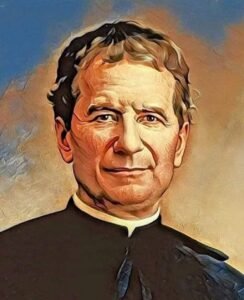 Saint John Bosco, affectionately known as Don Bosco, was a 19th-century Italian priest and educator whose life story is as compelling as it is inspiring. Born on 16 August 1815 in the hamlet of Becchi, near Castelnuovo d’Asti in northern Italy, he was raised in poverty by his mother, Margherita Occhiena, after his father’s death when John was just two years old.
A Calling from a Dream
At the age of nine, John experienced a vivid dream that would shape his life’s mission. In it, he found himself amidst a group of unruly boys, attempting to calm them through force. A majestic figure appeared, instructing him to lead with kindness and love rather than punishment. This dream instilled in him a profound sense of purpose: to dedicate his life to the betterment of youth.
The Salesian Mission
Ordained as a priest in 1841, Don Bosco began working in Turin, a city grappling with the challenges of industrialization. He was deeply moved by the plight of young boys who were homeless, unemployed, or incarcerated. In response, he developed the “Preventive System” of education, emphasizing reason, religion, and loving-kindness over punishment.
In 1859, he founded the Society of St. Francis de Sales, commonly known as the Salesians, to continue his work. Later, alongside Maria Domenica Mazzarello, he established the Institute of the Daughters of Mary Help of Christians, focusing on the education of girls.
Don Bosco’s Legacy in Malta
Don Bosco’s influence extended to Malta, where his educational philosophy took root. The Salesians established several institutions, including the Savio College in Dingli, founded in 1968, which continues to provide holistic education to boys aged 11 to 16.
In Sliema, the Salesian Oratory became a hub for youth activities, offering spiritual guidance and recreational opportunities. The Friends of Don Bosco, a Maltese federation affiliated with the World Confederation of Past Pupils of Don Bosco, plays a pivotal role in promoting his values and supporting Salesian initiatives across the island.
A Saint for the Youth
Don Bosco’s unwavering commitment to the welfare of young people earned him widespread admiration. He was canonized by Pope Pius XI in 1934, and in 1988, Pope John Paul II proclaimed him the “Father and Teacher of Youth.”
Today, his legacy lives on through the global network of Salesian institutions dedicated to education and youth development, including those in Malta.
