
Chapel of Our Lady of The Rosary
(Please allow a few seconds for the video to load)
Welcome to
“The Chapel of Our Lady of The Rosary” digital experience where history and technology intertwine to bring you something that is immersive and entertaining.
Explore the Chapel
Below, you will find a ‘Paywall’ feature, requesting you to make a donation to be able to enter the page.
Once you are in, you will find
Support a Mission, Explore a Treasure
Your entry helps Missio Malta continue their vital work in missionary lands overseas. By donating, you directly support communities in need while gaining 24-hour full access to this chapel's 3D experience and history.
Learn more about Missio's workAccess is valid for 1 Chapel for 24 hours from the time of donation
OR
360° Panorama
Zoom to full screen to view
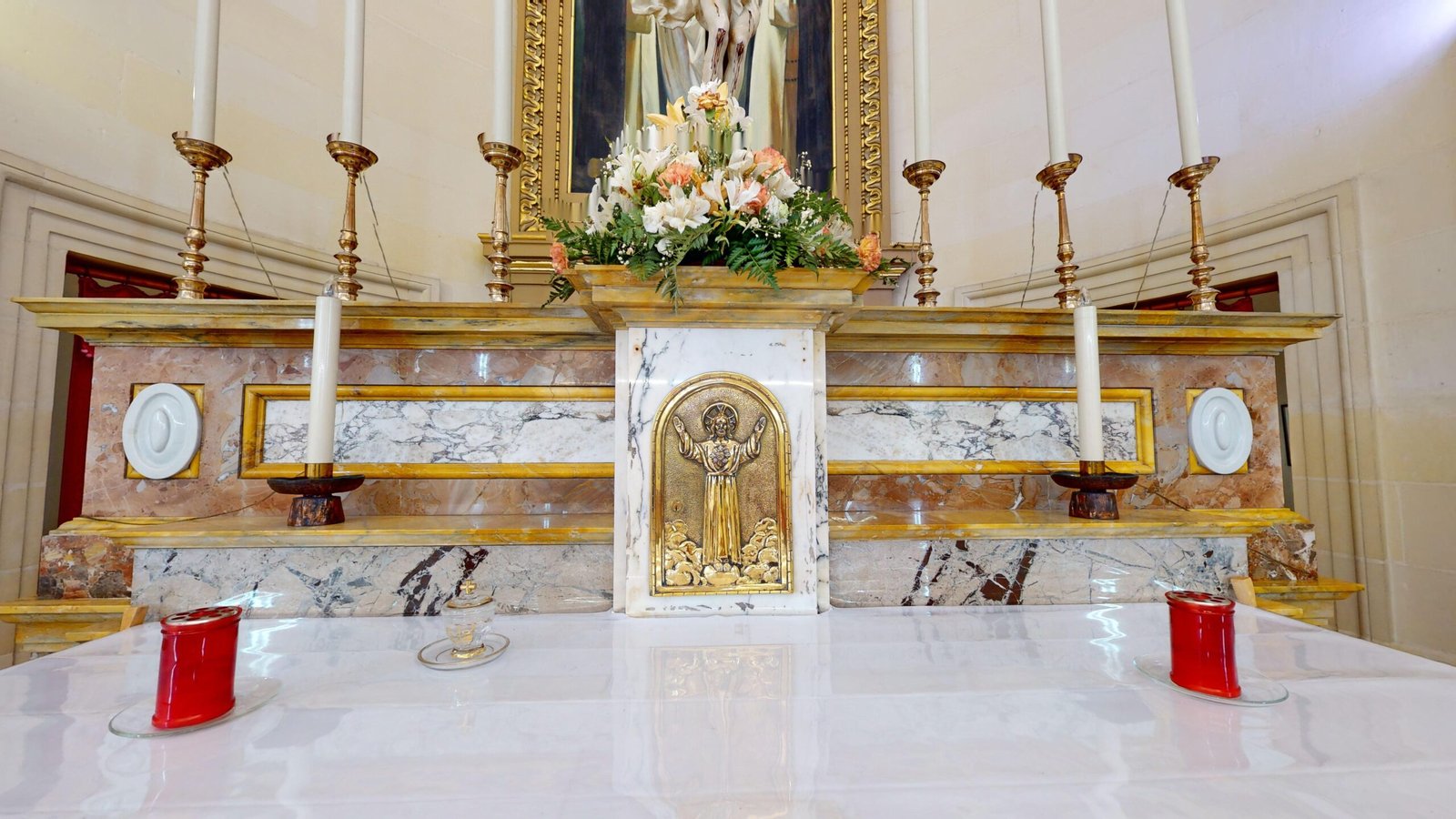
Chapel of Our Lady of The Rosary
The Chapel of Madonna tar-Rużarju, situated within the Apap Institute in Santa Venera, is a significant religious and cultural landmark. Dedicated to Our Lady of the Rosary, it has served as a centre for worship and community gatherings for decades.
Historical Background
The chapel was established post-World War II, aligning with the Dominican Sisters’ mission to care for children, the elderly, and the sick. The Apap Institute, which houses the chapel, was founded during this period to provide a sanctuary for those in need, reflecting the Dominican Order’s commitment to service and spiritual guidance.
Construction Details
Specific details regarding the construction cost, architects, and artisans involved in building the chapel are not readily available. However, its architectural style is consistent with traditional Maltese ecclesiastical designs, featuring modest yet reverent elements that create a serene environment for worship. The use of local limestone and simple decorative motifs aligns with the aesthetic principles of Maltese chapels from that era.
Cultural and Religious Significance
The chapel has played a vital role in the spiritual life of Santa Venera’s community. It has been a venue for daily Masses, rosary recitations, and other religious ceremonies, fostering a sense of unity and devotion among parishioners. Its association with the Dominican Sisters underscores its importance in promoting religious education and charitable works, thereby contributing to the cultural and spiritual heritage of the area.
Present-Day Context
As of October 2024, the Apap Institute, including the chapel, is undergoing significant changes. The Dominican Sisters have decided to cease their operations at the institute due to declining vocations and the substantial investment required to refurbish the 80-year-old building. Consequently, the 30 elderly residents are being relocated to another residence in Buġibba, and the future of the chapel remains uncertain.
Unique Stories or Legends
While specific legends or folklore directly associated with the chapel are not documented, its longstanding presence within the Apap Institute has made it a repository of personal stories and memories for the residents and the Dominican Sisters. These narratives contribute to the chapel’s rich tapestry of communal and spiritual experiences.
Visual and Artistic Features
The chapel’s interior is characterised by its simplicity and reverence. An altar dedicated to Our Lady of the Rosary serves as the focal point, adorned with religious iconography that reflects the Dominican devotion to the Rosary. Traditional Maltese ecclesiastical elements, such as limestone walls and modest decorative features, create an atmosphere conducive to contemplation and prayer.
In summary, the Chapel of Madonna tar-Rużarju stands as a testament to the Dominican Sisters’ enduring commitment to faith and service in Malta. Its historical significance, coupled with its role in the community, underscores its importance as a cultural and spiritual landmark in Santa Venera.
Our Lady of the Rosary: A Journey Through Faith, Devotion, and Triumph
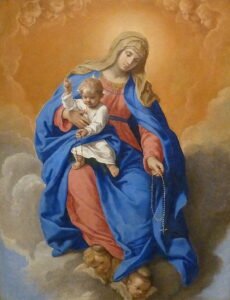 Our Lady of the Rosary is a title of the Virgin Mary that underscores her role in promoting devotion through the recitation of the Holy Rosary. The feast day, celebrated on October 7, has its roots in a significant historical event and is tied to profound spiritual practices. Here’s a detailed account of the significance of Our Lady of the Rosary and the Holy Rosary itself.
The Battle of Lepanto (1571)
The feast of Our Lady of the Rosary commemorates the pivotal victory of the Christian naval forces of the Holy League over the Ottoman fleet in the Battle of Lepanto. Pope Pius V urged the faithful to pray the Rosary for victory. The Christian forces, though outnumbered, achieved an unexpected triumph attributed to Mary’s intercession.
Following the victory, Pope Pius V instituted the feast of “Our Lady of Victory,” which later became “Our Lady of the Rosary.”
The Rosary as a Weapon of Prayer
The Rosary is often referred to as a “spiritual sword” against evil. St. Dominic, to whom Mary is said to have revealed the Rosary in the 13th century, used it as a powerful tool to combat heresies. Each prayer bead is a step closer to meditating on the life, death, and resurrection of Jesus Christ, with Mary as the guide.
A Journey Through Christ’s Life
The Rosary’s mysteries (Joyful, Sorrowful, Glorious, and Luminous) lead the faithful through key events in the lives of Jesus and Mary. It’s not merely repetitive prayer but a meditative experience that unites the soul to God.
A Symbol of Marian Devotion
The Rosary highlights Mary’s role as the Mother of God and her intercession for humanity. It reminds believers of her humility, faith, and obedience to God’s will.
The Story of St. Dominic and the Rosary
According to tradition, in 1206, Mary appeared to St. Dominic in Prouille, France, during a time of spiritual crisis caused by the Albigensian heresy. She gave him the Rosary as a means to convert sinners and encourage prayer. St. Dominic’s preaching with the Rosary led to many conversions and strengthened the faith of Christians.
Peace and Protection
Many Popes, saints, and Marian apparitions (such as Fatima) have promoted the Rosary as a source of peace and protection. During World War II, and other global crises, Catholics turned to the Rosary for solace.
Conversion of Sinners
At Fatima (1917), Mary urged the world to pray the Rosary daily for the conversion of sinners and world peace. Her message emphasised the Rosary’s power in transforming lives.
Miraculous Power
Numerous miracles are attributed to praying the Rosary, from physical healings to protection in dangerous situations. A famous modern example is the Hiroshima survivors: Jesuit priests survived the atomic bomb in 1945, reportedly due to their consistent recitation of the Rosary.
Rosary Beads in Art and Culture
The Rosary has been a subject in Christian art for centuries, often depicted in the hands of saints and the Virgin Mary. Its design—decades of beads—represents spiritual simplicity and profound depth.
