
Sanctuary of St. Publius
(Please allow a few seconds for the video to load)
Welcome to
“The Sanctuary of St. Publius” digital experience where history and technology intertwine to bring you an immersive experience.
Explore the Chapel
Below, you will find a ‘Paywall’ feature, requesting you to make a donation to be able to enter the page.
Once you are in, you will find
Support a Mission, Explore a Treasure
Your entry helps Missio Malta continue their vital work in missionary lands overseas. By donating, you directly support communities in need while gaining 24-hour full access to this chapel's 3D experience and history.
Learn more about Missio's workAccess is valid for 1 Chapel for 24 hours from the time of donation
OR
360° Panorama
Zoom to full screen to view
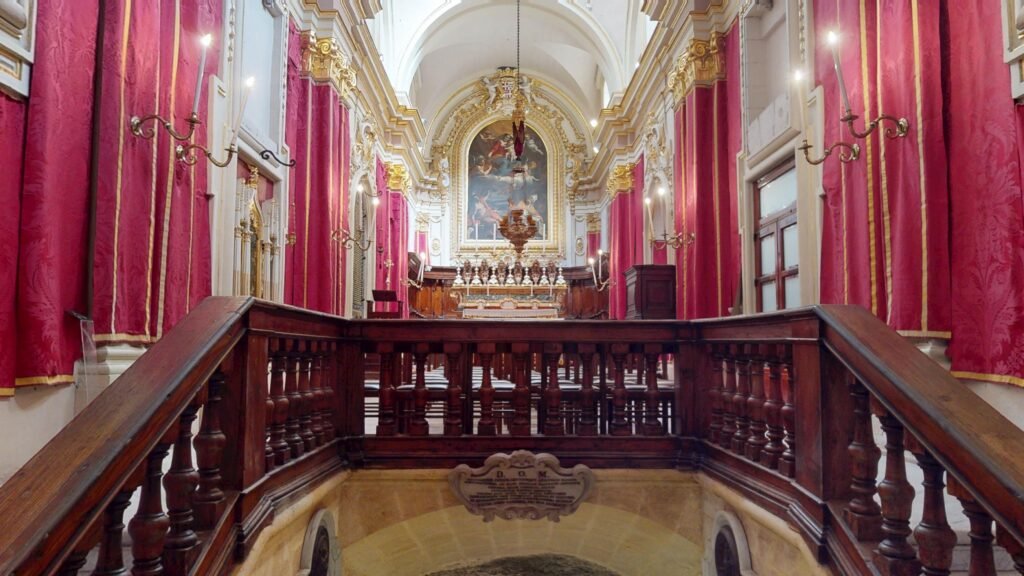
Church of St Publius, Rabat: Malta’s Pauline Sanctuary Above St Paul’s Grotto
Historical Background
The Church, or Sanctuary, of St Publius forms part of the great Pauline complex beside the Parish Basilica of St Paul in Rabat. It was added to the Church of St Paul in 1617, directly above and beside St Paul’s Grotto, after the Knights of the Order of St John took responsibility for the site. Their aim was to protect the grotto, organise devotion, receive pilgrims, and strengthen Malta’s identity as the island converted by St Paul after his shipwreck in AD 60.
The sanctuary is dedicated to St Publius, the Roman governor of Malta who, according to tradition, welcomed St Paul and whose father was healed by him. Publius later became Malta’s first bishop, making this small church one of the most meaningful places in the Maltese Christian story.
Construction and Architecture
The sanctuary was built by the Knights of St John. No reliable published construction cost has been found. Its architecture belongs to the early Baroque religious language of seventeenth-century Malta. It is annexed to the larger St Paul’s Church, and the shared façade was carefully composed so that the basilica, the St Publius entrance, and the sacred grotto complex retained visual dignity. The eight-pointed cross appears throughout the sanctuary, showing the Order’s patronage.
A side chapel dedicated to the Blessed Sacrament was added in 1753, decorated with rich stonework and a Last Supper by Francesco Zahra.
Cultural and Religious Significance
This church is not merely an annex. It is the ceremonial threshold to St Paul’s Grotto, one of Malta’s oldest and most venerated pilgrimage sites. The grotto has received popes, pilgrims, travellers, and rulers, including St John Paul II, Benedict XVI and Pope Francis. Its meaning lies in the Maltese belief that Christianity took root here, transforming Rabat into a national centre of Pauline devotion.
Artistic and Visual Features
The principal altarpiece is by Mattia Preti, showing the Virgin and Child with St John the Baptist and St Publius. Other paintings show St Publius preaching, his martyrdom, his baptism, and his consecration as Bishop of Malta. Portraits of Grand Master Alof de Wignacourt and Pope Paul V recall the major patrons of the grotto’s cult.
Present-Day Context and Legends
Today the sanctuary forms part of the Wignacourt Museum and St Paul’s Basilica complex. It remains a place of prayer, heritage, and cultural tourism. Its enduring legend is the Pauline story itself: the shipwreck, the viper miracle, the healing of Publius’ father, and Malta’s first encounter with Christianity.
St Publius of Malta: The First Shepherd of the Islands
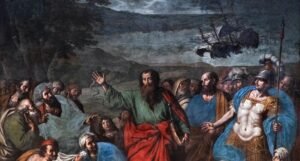 Saint Publius is widely regarded as the first Bishop of Malta and one of the island’s earliest Christian figures. His story is closely tied to the arrival of Saint Paul the Apostle, whose shipwreck on Malta around 60 AD marked a turning point in the island’s religious history.
According to early Christian tradition and the Acts of the Apostles, Publius was the chief Roman official on the island at the time, often described as the “chief man of the island”. He welcomed Paul and his companions with notable hospitality after the shipwreck, offering them shelter for three days. During this time, Paul is said to have healed Publius’s father from illness, an event that deeply influenced Publius and those around him.
Conversion and Role in Early Christianity
Following these events, Publius is believed to have embraced Christianity and played a central role in its spread across Malta. Tradition holds that he became the island’s first bishop, guiding a newly formed Christian community during a time when the faith was still emerging within the Roman Empire.
His leadership is associated with the early establishment of Christian worship in Malta, laying foundations that would shape the island’s enduring Catholic identity. Some accounts suggest that he later travelled to Athens, where he continued his episcopal mission and ultimately suffered martyrdom, although these details remain rooted in tradition rather than documented history.
Cultural and Religious Significance in Malta
St Publius holds a unique place in Maltese identity. He is venerated as the first Maltese saint and is closely linked with the origins of Christianity on the islands. His story represents a moment when Malta moved from a pagan Roman outpost to a land shaped by Christian belief.
The saint is honoured with great devotion, particularly in Floriana and Rabat. In Floriana, the annual feast of St Publius is one of the most important religious celebrations in the country, marked by processions, music, and strong community participation. Rabat, traditionally associated with his residence, also preserves his legacy through churches and local devotion.
Legacy and Enduring Story
The story of St Publius is inseparable from Malta’s Christian heritage. His encounter with St Paul symbolises openness, faith, and transformation. Whether viewed through history or tradition, his figure stands at the very beginning of Malta’s spiritual journey.
Today, statues, churches, and annual feasts continue to honour his memory, keeping alive a narrative that links Malta directly to the earliest days of Christianity in the Mediterranean.
