
Chapel of St. Mary (tal-Qrejca)
(Please allow a few seconds for the video to load)
Welcome to
“The Chapel of St. Mary (tal-Qrejca)” digital experience where history and technology intertwine to bring you an immersive experience.
Explore the Chapel
Below, you will find a ‘Paywall’ feature, requesting you to make a donation to be able to enter the page.
Once you are in, you will find
Support a Mission, Explore a Treasure
Your entry helps Missio Malta continue their vital work in missionary lands overseas. By donating, you directly support communities in need while gaining 24-hour full access to this chapel's 3D experience and history.
Learn more about Missio's workAccess is valid for 1 Chapel for 24 hours from the time of donation
OR
360° Panorama
Zoom to full screen to view
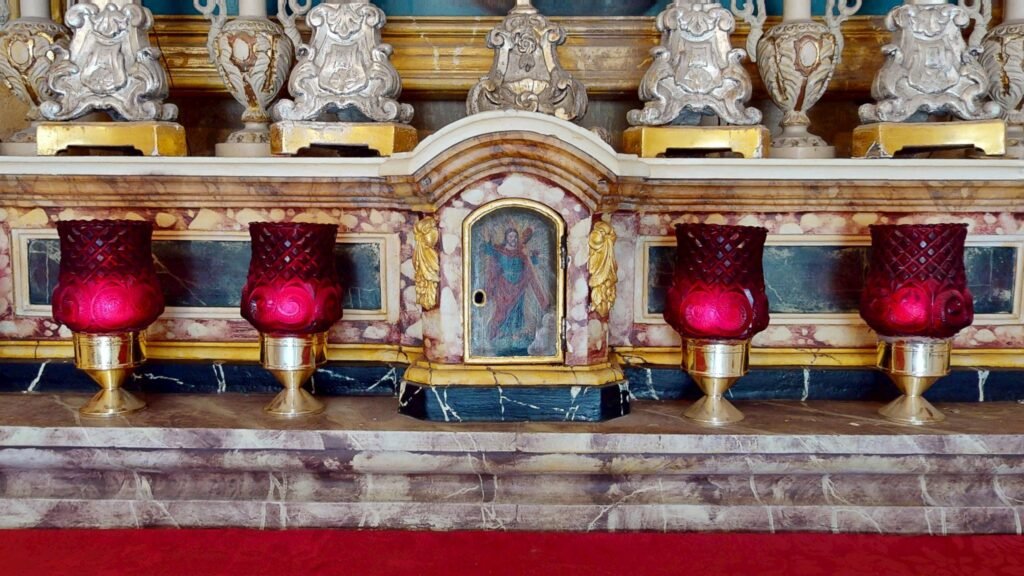
Chapel of St. Mary (Tal-Qrejċa), Qormi – A Hidden Marian Gem in the Village Core
The Chapel of St. Mary, known as Tal-Qrejċa, is located within the urban fabric of Qormi, embedded among the town’s historic streets rather than in a rural setting. Its origins likely date to the 17th century, a period when small neighbourhood chapels were established to serve densely populated communities.
The name Tal-Qrejċa is thought to derive from a local family or area designation, pointing to private patronage. Such chapels were commonly founded by benefactors as acts of devotion, providing a nearby place of worship for residents who lived at a distance from the main parish church.
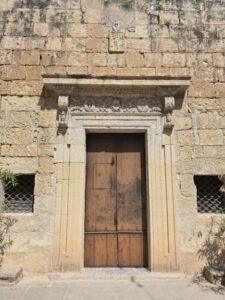
Constructed in traditional Maltese limestone, the chapel reflects the restrained architectural style typical of small urban chapels. The façade is modest yet proportionate, usually consisting of a central doorway, a small window, and a simple bell-cote above.
The interior follows a single-nave layout leading to a stone altar. While no specific architect is recorded, the structure was almost certainly built by skilled local masons using established techniques of the time. Over the centuries, the chapel has likely undergone maintenance and minor alterations to preserve its structure within the evolving streetscape.
Situated within the heart of Qormi, Tal-Qrejċa would have served as a convenient devotional space for residents of the surrounding neighbourhood. In an era when daily life revolved around close-knit communities, such chapels played an important role in sustaining religious practice at a local level.
Its dedication to the Virgin Mary aligns with Malta’s strong Marian traditions, and it may have been associated with small-scale feasts, neighbourhood prayers, or private acts of devotion. The chapel contributed to the spiritual rhythm of the village, complementing the larger parish church rather than replacing it.
Today, the chapel remains part of Qormi’s historic core, often overlooked due to its modest scale and integration into the surrounding buildings. While not always open, it stands as a preserved element of the town’s religious and architectural heritage.
Its continued existence highlights the importance of safeguarding smaller chapels that reflect everyday religious life, rather than monumental ecclesiastical architecture alone.
Although no widely recorded legends are specifically tied to Tal-Qrejċa, chapels within village centres were often linked to personal vows and quiet acts of faith. They served as places where individuals sought intercession, gave thanks, or marked significant moments in their lives.
The chapel’s exterior is characterised by its simple limestone façade, harmonising with the surrounding urban environment. Its understated presence allows it to blend seamlessly into the village streets.
Inside, the main altar dedicated to the Virgin Mary forms the focal point, possibly adorned with a devotional painting or statue. The interior is modest, with minimal decoration, creating an intimate and reflective atmosphere suited to personal prayer.
Built in Faith: How Malta’s Chapels Came to Life
A Landscape Shaped by Devotion
 Across Malta, chapels appear in fields, village corners, and along old paths. These were not grand statements of power, but expressions of everyday faith. From the late medieval period through the time of the Order of Saint John, communities and individuals alike built small sanctuaries to bring prayer closer to daily life.
Who Built Them – And Why
Most chapels were not commissioned by bishops or noble institutions, but by ordinary people with means—farmers, merchants, or local benefactors. A vow might inspire construction: recovery from illness, survival during plague, or gratitude for a good harvest.
Others were built to serve remote communities, long before roads made parish churches easily accessible. In many cases, a family funded the chapel and retained certain rights over its use, including burial privileges or the appointment of a priest.
The Stone That Shaped Malta
The story of Malta’s chapels is inseparable from its stone. Builders used globigerina limestone, a soft, golden material that could be cut with simple tools yet hardened over time.
Blocks were quarried locally, shaped by hand, and laid with remarkable precision. There were no large construction firms—just skilled masons, often working within their own villages. The same hands that built farmhouses and boundary walls shaped chapels that still stand centuries later.
How a Chapel Took Form
Construction began with a cleared plot and a simple plan. Most chapels followed a rectangular layout with a single nave and a small apse or altar space. Foundations were shallow but carefully laid, suited to Malta’s rocky ground.
Walls rose course by course, each stone fitted tightly without modern cement. Wooden beams or stone slabs formed the roof, later sealed with lime-based materials to keep out rain.
The façade was often the most expressive part: a central doorway, a small window, and sometimes a bell-cote. Even the simplest chapel carried a quiet sense of proportion and balance.
Craftsmanship and Detail
Inside, attention turned to the altar—the spiritual heart of the chapel. This might include a painted image, a statue, or a carved niche dedicated to a saint. Though modest, these features were often the work of skilled artisans.
Bell-cotes, though small, were carefully shaped, allowing a single bell to call nearby residents to prayer. Even in simplicity, there was pride in workmanship.
The Influence of Faith and Order
During the rule of the Order of Saint John, chapel building continued with greater organisation. Standards were sometimes introduced, and inspections ensured chapels remained suitable for worship.
At the same time, the Church encouraged devotion through accessible places of prayer. Chapels became part of a wider network, linking countryside, village, and parish.
Survival Through Time
Malta’s chapels have faced weathering, war, and neglect. Some were abandoned as populations shifted; others were restored by communities determined to preserve them.
Their survival is not accidental. Limestone ages gracefully, and generations have repaired rather than replaced. Each restoration adds another layer to their story.
More Than Buildings
These chapels were never just structures. They marked boundaries, anchored communities, and held personal histories. A farmer might pause for prayer before entering his fields. A family might gather to give thanks.
Today, they remain scattered across Malta, not as relics, but as quiet witnesses to centuries of belief, craft, and continuity.
