
Chapel of St. Leonard
(Please allow a few seconds for the video to load)
Welcome to
“The Chapel of St. Leonard” digital experience where history and technology intertwine to bring you an immersive experience.
Explore the Chapel
Below, you will find a ‘Paywall’ feature, requesting you to make a donation to be able to enter the page.
Once you are in, you will find
Support a Mission, Explore a Treasure
Your entry helps Missio Malta continue their vital work in missionary lands overseas. By donating, you directly support communities in need while gaining 24-hour full access to this chapel's 3D experience and history.
Learn more about Missio's workAccess is valid for 1 Chapel for 24 hours from the time of donation
OR
360° Panorama
Zoom to full screen to view
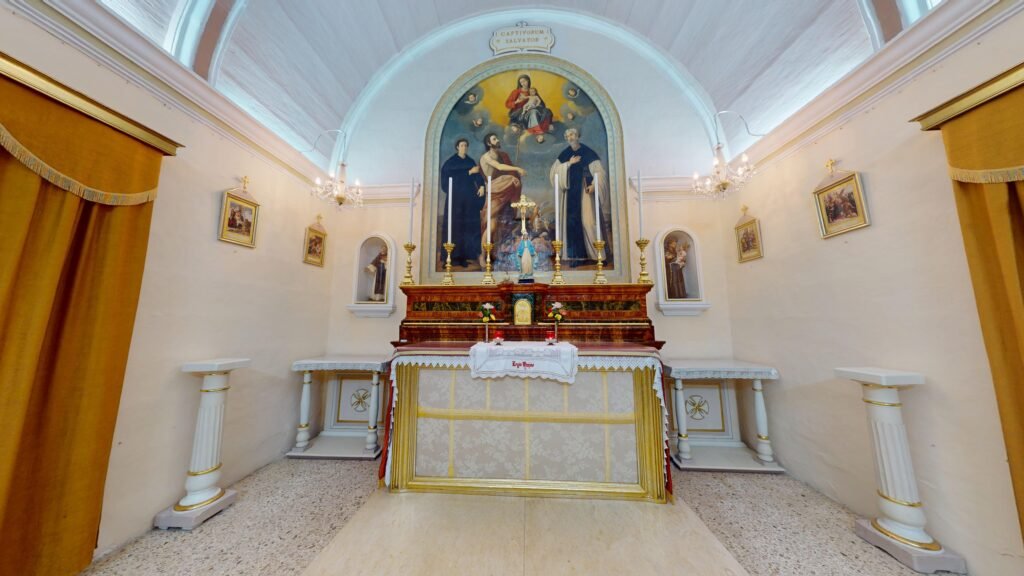
Chapel of St Leonard, Mosta, Malta
Historical Background
The Chapel of St Leonard, locally known as San Leonardu, is one of the lesser-known rural chapels in the outskirts of Mosta. Its origins are believed to date back to the late medieval or early modern period, most likely the 16th century, when small devotional structures were commonly erected to serve dispersed agricultural communities. The chapel was dedicated to St Leonard, a saint associated with the liberation of prisoners and protection of livestock, reflecting the agrarian character of the surrounding land. While precise documentation of its patron is limited, such chapels were typically funded by local landowners or benefactors seeking spiritual merit and community standing.
Construction Details
The chapel follows a simple vernacular Maltese architectural style. Built using locally quarried limestone, it features a modest rectangular plan with a single nave and a plain façade. The structure was likely constructed by local masons rather than a named architect, which was typical for minor rural chapels of this period. Construction would have relied on skilled stoneworkers and artisans familiar with traditional building methods. There are no recorded major incidents during its construction, though its simplicity suggests it was built efficiently and with limited financial resources. The restrained design reflects both economic considerations and the practical needs of a rural congregation.
Cultural and Religious Significance
The chapel historically served as a focal point for farmers and residents in the surrounding countryside, offering a place for prayer, small gatherings, and occasional liturgical celebrations. Dedication to St Leonard indicates a protective role over animals and agricultural life, aligning with local beliefs and practices. Though not a major pilgrimage site, it contributed to the network of devotional spaces that shaped Maltese rural spirituality. Such chapels reinforced communal identity and continuity of faith across generations.
Present-Day Context
Today, the Chapel of St Leonard remains a quiet historical landmark within Mosta’s expanding landscape. While not regularly used for active worship, it is recognised for its heritage value. The structure has undergone periodic maintenance to preserve its fabric, although it retains much of its original character. It stands as a testament to the rural past of Mosta, contrasting with the urban development that now surrounds it.
Unique Stories or Legends
Local oral tradition suggests that chapels dedicated to St Leonard were invoked for protection against misfortune, particularly involving livestock. While no specific legend is uniquely tied to this chapel, its dedication implies a long-standing belief in the saint’s intercessory power within the farming community.
Visual and Artistic Features
The exterior is understated, characterised by clean limestone lines and minimal ornamentation. Inside, the chapel typically features a simple altar and may house a modest titular painting or statue of St Leonard. Decorative elements are restrained, focusing attention on devotion rather than grandeur. The overall aesthetic reflects humility and function, hallmarks of Malta’s rural ecclesiastical heritage.
St Leonard of Noblac – The Patron of Prisoners and the Forgotten Saint of Freedom
The Story That Defined Him
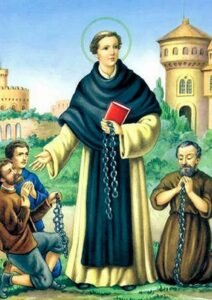 Leonard’s enduring legacy is rooted in a powerful act of mercy. Tradition tells that while travelling through the countryside, he encountered a queen struggling in childbirth. Through prayer, Leonard is said to have ensured the safe delivery of the child. In gratitude, the king granted him the right to free prisoners at his request.
From that moment, Leonard became known as a liberator. Prisoners who called upon his name were believed to be miraculously released from their chains. Over time, he became the patron saint of captives, prisoners of war, and those unjustly detained. His symbol, chains broken open, reflects this defining mission.
Growth of Devotion
After his death, likely around 559 AD, Leonard’s tomb at Noblac became one of the most important pilgrimage sites in medieval Europe. Devotion to him spread rapidly across France, Germany, Italy, and beyond. Hundreds of churches were dedicated to him, particularly along major pilgrimage routes such as those leading to Santiago de Compostela.
Knights, soldiers, and even monarchs sought his intercession, especially during times of war when captivity was a real threat. His cult was particularly strong during the Crusades, when the fear of imprisonment made his protection deeply sought after.
Connection to Malta
While no direct historical record places St Leonard in Malta, his influence reached the island through the wider spread of European devotion. Under the rule of the Order of St John, Malta became a crossroads of religious traditions, particularly those linked to pilgrimage, warfare, and captivity.
Given Leonard’s role as protector of prisoners, his significance would have resonated strongly with the Knights, whose mission included caring for captives and the sick. It is likely that his veneration was known among them, especially during periods of conflict with Ottoman forces when imprisonment and ransom were common realities. Some minor altars and references to his cult have been noted in broader Mediterranean devotional practices, suggesting an indirect but meaningful presence.
A Saint of Quiet Strength
Unlike many saints associated with dramatic martyrdom, Leonard’s story is one of quiet resistance and compassion. He stood for freedom in a literal sense, offering hope to those physically bound, but also in a spiritual sense, representing release from suffering and injustice.
Today, he remains a symbol of mercy, justice, and liberation. Though less widely known in modern times, his story continues to speak to themes that remain deeply relevant: dignity, compassion, and the enduring human longing for freedom.
