
Chapel of the Visitation
(Please allow a few seconds for the video to load)
Welcome to
“The Chapel of the Visitation” digital experience where history and technology intertwine to bring you an immersive experience.
Explore the Chapel
Below, you will find a ‘Paywall’ feature, requesting you to make a donation to be able to enter the page.
Once you are in, you will find
Support a Mission, Explore a Treasure
Your entry helps Missio Malta continue their vital work in missionary lands overseas. By donating, you directly support communities in need while gaining 24-hour full access to this chapel's 3D experience and history.
Learn more about Missio's workAccess is valid for 1 Chapel for 24 hours from the time of donation
OR
360° Panorama
Zoom to full screen to view
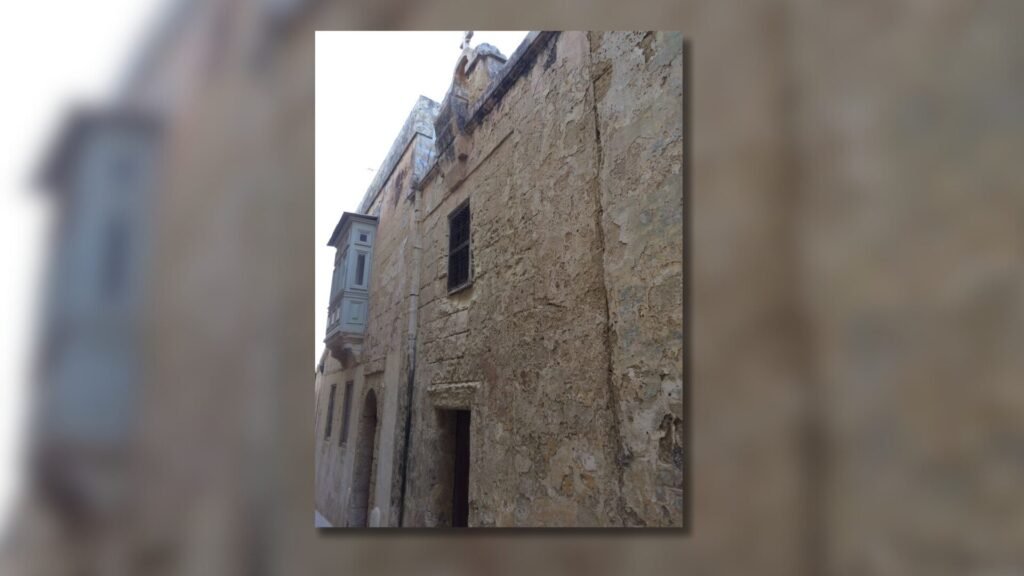
The Chapel of the Visitation: A Forgotten Gem of Mdina’s Sacred Heritage
The Chapel of the Visitation, known locally as Il-Kappella tal-Vizitazzjoni, stands quietly on Triq Inguanez within Mdina’s historic core. Modest in scale and long overshadowed by the city’s grander churches, it remains one of the lesser-known yet historically significant chapels of the Silent City.
Historical Background
The origins of the chapel reach back to the late medieval period. A bell still associated with the building is dated 1451, making it one of the oldest surviving bells in Malta. By the 16th century the chapel was already named in official records, and it is known to have housed a painting of the Visitation – the meeting of the Virgin Mary and St Elizabeth – which by the 17th century was described as “already very old.” These details confirm that devotion at this site has a long and continuous history.
Alterations and Architectural Development
Like much of Mdina, the chapel has undergone multiple structural changes. Records note that it was “not endowed with benefits,” indicating its modest financial means and relative obscurity when compared to better-funded foundations. Its present form likely reflects interventions around 1720, a period when many churches in Mdina were repaired or rebuilt following the devastating earthquake of 1693. While details of the architect, craftsmen, or patrons are unknown, the chapel’s survival suggests a resilient community presence even without wealthy sponsorship.
Cultural Role
The dedication to the Visitation highlights the chapel’s Marian focus, which would have resonated strongly with the devotional life of Mdina’s residents. Small urban chapels such as this one played an important role in daily religious practice, providing accessible spaces for prayer and local gatherings. Though it never ranked among the city’s major institutions, its continuity across centuries demonstrates its quiet but enduring place in Mdina’s sacred landscape.
Present-Day Context
Today the Chapel of the Visitation is described as “small and forgotten.” It is not assigned regular Mass times, and some of its original decorations are no longer in place. Nevertheless, the structure still stands, a reminder of Mdina’s layered ecclesiastical past. Its location on Triq Inguanez, lined with noble houses and historic palaces, underlines the chapel’s integration into the fabric of the old city.
Notable Features
The chapel’s bell of 1451 remains its most remarkable feature, ranking among the earliest bells still associated with their original site in Malta. The titular painting of the Visitation, once housed here, is no longer visible, and its fate remains uncertain. Architecturally, the building reflects simple Mdina limestone construction, with Baroque modifications likely dating to the early 18th century.
The Visitation of Mary to Elizabeth
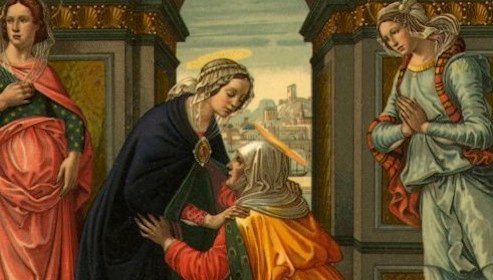
The Visitation is a pivotal moment in the Gospel of Luke, rich in both human warmth and theological meaning. After the Annunciation, when the angel Gabriel revealed to her that she would conceive the Son of God, Mary set out “into the hill country, to a city of Judah” (Luke 1:39). She went in haste to visit her kinswoman Elizabeth, who, though advanced in years, was six months pregnant with John the Baptist through God’s promise (Luke 1:36).
The exact location of Elizabeth’s home is not given, though Christian tradition associates it with Ein Karem, west of Jerusalem, while other possibilities include Hebron further south. The journey from Nazareth would have covered at least 130 kilometres in a direct line, and considerably more by the roads of the time—an arduous journey for a young woman in the early stages of pregnancy.
When Mary arrived and greeted Elizabeth, Scripture records a profound moment: “the child leapt in her womb” (Luke 1:41). Filled with the Holy Spirit, Elizabeth exclaimed, “Blessed are you among women, and blessed is the fruit of your womb!” (Luke 1:42). Her words echo and expand upon the greeting of Gabriel at the Annunciation, and they form the second part of the prayer now known as the Hail Mary.
Mary, in turn, responds with her great hymn of praise, the Magnificat (Luke 1:46–55). In it she magnifies the Lord, proclaiming His mercy and the reversal of worldly fortunes: “He has brought down the mighty from their thrones and lifted up the lowly.” The Magnificat has since become one of the most cherished prayers of the Church, repeated daily in the Liturgy of the Hours.
Mary remained with Elizabeth for about three months, most likely staying until the birth of John the Baptist (Luke 1:56). Some traditions suggest that Joseph may have accompanied Mary at the start of her journey to ensure her safety, returning later to bring her back to Nazareth. It may have been during this period that Joseph’s doubts were resolved by the angel’s reassurance in a dream (Matthew 1:19–25), affirming the divine nature of Mary’s maternity.
The Visitation thus stands not only as a tender encounter between two expectant mothers, but also as a moment of revelation: John, still in the womb, recognises the presence of Christ, and Mary, in her hymn, announces God’s saving work. It is a scene of faith, humility, and joy that continues to resonate deeply in Christian devotion.
