
Chapel of St. Rocco (Madonna tad-Dawl)
(Please allow a few seconds for the video to load)
Welcome to
“The Chapel of St. Rocco” digital experience where history and technology intertwine to bring you an immersive experience.
Explore the Chapel
Below, you will find a ‘Paywall’ feature, requesting you to make a donation to be able to enter the page.
Once you are in, you will find
Support a Mission, Explore a Treasure
Your entry helps Missio Malta continue their vital work in missionary lands overseas. By donating, you directly support communities in need while gaining 24-hour full access to this chapel's 3D experience and history.
Learn more about Missio's workAccess is valid for 1 Chapel for 24 hours from the time of donation
OR
360° Panorama
Zoom to full screen to view
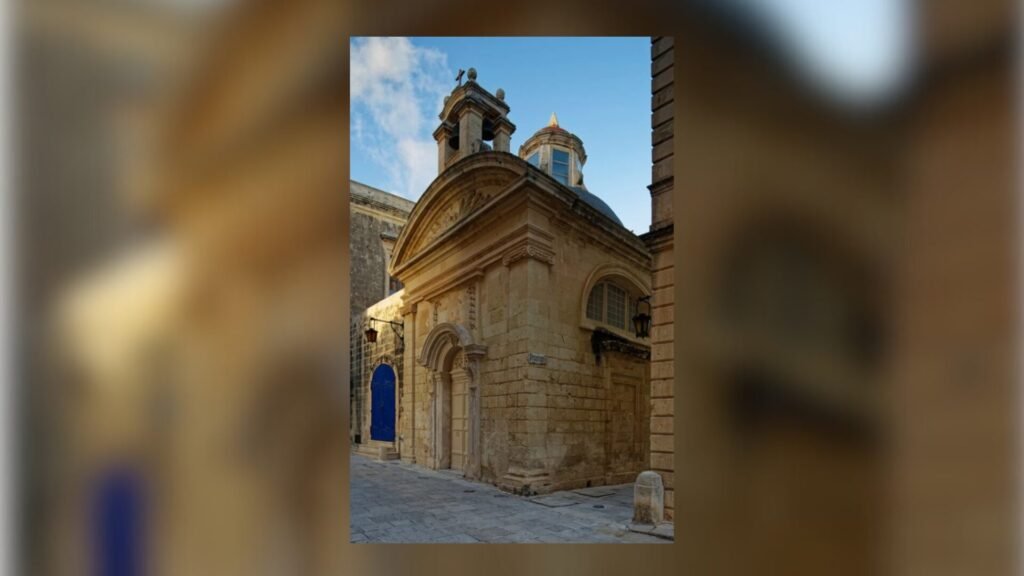
Chapel of St. Rocco
The Chapel of St Rocco—affectionately known as the Chapel of Our Lady of Light (Madonna tad-Dawl)—stands on Triq Villegaignon in Mdina. Its story begins at the city’s medieval gate, where a small shrine is recorded as early as 1398 under the title of the Holy Cross, and where another gate-side chapel, Santa Maria della Porta (St Mary of the Gate), also served the townspeople. In 1546, the latter briefly hosted a grammar school and became associated with a notorious heresy case involving a schoolmaster named Gesualdus, who was executed in Mdina’s main square—the island’s only recorded death sentence for a religious crime.
During the 1592–93 plague, devotion at the gate shifted decisively to St Rocco (St Roque), protector against epidemics, and the chapel took his name. This tiny sanctuary proved vital again after the devastating 1693 Sicily earthquake damaged Mdina Cathedral: for about two months, the gate-chapel functioned as the townspeople’s temporary place of worship, a poignant episode that cemented its reputation as a house of refuge in crisis.
The chapel’s present form dates to the sweeping Baroque remodelling of Mdina in the 1720s, commissioned by Grand Master António Manoel de Vilhena and executed by the French military architect Charles François de Mondion. As part of the grand redesign— which also produced the Mdina Gate (1724) and Palazzo Vilhena—the old gate-side chapel was demolished and rebuilt within the city walls on today’s site. Completed around 1728 (often cited within a broader c.1726–1732 campaign), the new St Rocco/Our Lady of Light chapel was conceived as an elegant Baroque accent along Mdina’s processional spine.
Architecturally, the church is a compact Baroque jewel: an octagonal nave surmounted by an oval dome, leading to a deep chancel framed by a finely carved reredos. Historical descriptions note a central Golgotha scene flanked by two oval medallions depicting St Paul and St John the Baptist. The popular Marian devotion that gives the chapel its local name—Madonna tad-Dawl, “Our Lady of Light”—grew around a beloved image of the Virgin that once adorned the altar. For conservation reasons, this titular painting is now kept at the Mdina Cathedral Museum, while the chapel preserves the devotional memory associated with it.
In heritage terms, the Chapel of St Rocco is listed on the National Inventory of the Cultural Property of the Maltese Islands (NICPMI, ID 02198) and belongs to the Cathedral Chapter. It benefited from restoration works in the mid-2000s under the Mdina Rehabilitation Project, supported by private sponsorship, which stabilised and refreshed its Baroque fabric. Although it does not keep a regular Mass schedule, the chapel is opened occasionally for liturgical functions and cultural events, and has even served as a Mdina Biennale venue—quietly continuing its centuries-old role in the city’s spiritual and cultural life.
Today, the Chapel of St Rocco (Our Lady of Light) remains a concise chronicle of Mdina itself: medieval devotion at the gate; resilience in the face of plague and earthquake; and the 18th-century vision of Vilhena and Mondion that gave the Silent City its present silhouette. Modest in scale yet rich in memory, it stands as an elegant waypoint between Mdina Gate, Palazzo Vilhena and the Cathedral Museum—an intimate space where architecture, history and devotion meet.
The legacy of St Roque in Maltese sacred architecture
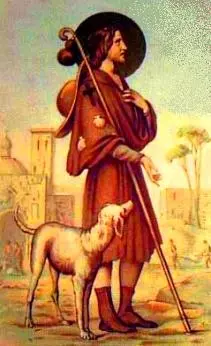
The veneration of Saint Roch (Santu Rokku) is woven into Malta’s ecclesiastical landscape. When plague ravaged the islands in 1592–93 and again in 1675–76, communities turned to this French pilgrim saint, known for ministering to plague victims. Their gratitude and petitions translated into stone: by the end of the 17th century, a network of chapels and churches to St Roch existed across Malta.
The earliest surviving dedication is the Chapel of St Roch in Żebbuġ, built in 1592 by Tumas Vassallo and his wife to thank the saint for sparing their family. Its modest 8‑×‑7‑metre interior and single‑arched bell‑cot are characteristic of rural Maltese chapels. Most other chapels were later rebuilt or rededicated; the Church of St Roch in Valletta, begun in 1680 as a vow after the 1593 plague, now hosts the Romanian Orthodox parish. In Mdina a church dedicated to St Roch, commonly called Our Lady of Light, was rebuilt when the city’s gate was redesigned in 1728.
Balzan and Birkirkara each built churches to St Roch during the 1593 plague, and both rebuilt them after the 1676 epidemic. Attard’s late‑1670s chapel, also dedicated to St Anne, honours St Roch at its main altar, while Pietà’s cemetery church originally bore his name before being rededicated to Our Lady. In Żurrieq’s hamlet of Bubaqra two St Roch chapels were merged into one church after 1676, preserving a 1599 votive painting. Although only a few St Roch churches remain intact, the saint’s presence endures in Maltese place‑names, niches and collective memory, reflecting a history of resilience against plague.
St Roch (Saint Roque) Churches and Chapels in Malta
Mdina – Church of St Roch/Our Lady of Light
An early church dedicated to the Holy Cross stood near Mdina’s entrance. A chapel dedicated to St Roch was built there in 1598, and when the city’s main gate was rebuilt in the early 18th century the church was reconstructed; the present baroque church dates from 1728. It is also known as Our Lady of Light because the titular painting of the Virgin of Light once hung here.
Valletta – Church of St Roque
Valletta’s 17th‑century baroque Church of St Roque stands near Fort St Elmo. It was built as a vow during the 1593 plague and enlarged after the 1676 epidemic. Work began under architect Lorenzo Gafà in 1680 and the church was blessed on 12 August 1681. Today it serves the Romanian Orthodox community.
Balzan – St Roque’s Church
In Balzan’s Three Churches Street a small church dedicated to St Roque was built in 1593 during a plague outbreak; victims were buried there and the main painting shows St Roque flanked by St Paul and St Sebastian. Balzan still honours the saint with a niche and street named after him.
Birkirkara – St Roch Church
The original chapel was built at Triq Santu Rokku in 1593 after the plague; it was deconsecrated in 1659 but rebuilt in 1676 after the plague of 1675–76. A larger neoclassical church replaced it in 1863; the altarpiece depicts the Virgin Mary with St Roch and St Sebastian.
Żebbuġ – Chapel of St Roch
The only surviving 16th‑century St Roque chapel. Tumas Vassallo and his wife Katarin built it in 1592 as thanks after the plague. The small limestone chapel (8 m×7 m) has a single arched belfry and an early‑seventeenth‑century painting of St Roque. It is now cared for by Din l‑Art Ħelwa and hosts an exhibition about Zebbuġ patriots.
Ħ’Attard – Chapel of St Roch (St Anne)
After the 1676 plague the Attard community replaced a chapel of St Nicholas with one dedicated to St Roque (also called St Anne). Built in the late 1670s, it has three altars—the main one honouring St Roch—and a painting showing the Virgin with St Roque and St Nicholas.
Pietà – Church of Our Lady of Sorrows
This church near Msida Creek originated as a plague cemetery chapel in the late 16th or early 17th century. It was initially dedicated to St Roch but later rededicated to Our Lady of Sorrows; side chapels still honour St Roch.
Bubaqra (Żurrieq) – Church of the Assumption
In Bubaqra two chapels dedicated to St Roque and St Sebastian were closed in 1658. After the Great Plague of 1676 they were rebuilt as one church dedicated to the Assumption of Our Lady; the church preserves a 1599 painting of St Roch as a votive offering.
