
Chapel of Our Lady of Consolation
(Please allow a few seconds for the video to load)
Welcome to
“The Chapel of Our Lady of Consolation” digital experience where history and technology intertwine to bring you something that is immersive and entertaining.
Explore the Chapel
Below, you will find a ‘Paywall’ feature, requesting you to make a donation to be able to enter the page.
Once you are in, you will find
Support a Mission, Explore a Treasure
Your entry helps Missio Malta continue their vital work in missionary lands overseas. By donating, you directly support communities in need while gaining 24-hour full access to this chapel's 3D experience and history.
Learn more about Missio's workAccess is valid for 1 Chapel for 24 hours from the time of donation
OR
360° Panorama
Zoom to full screen to view
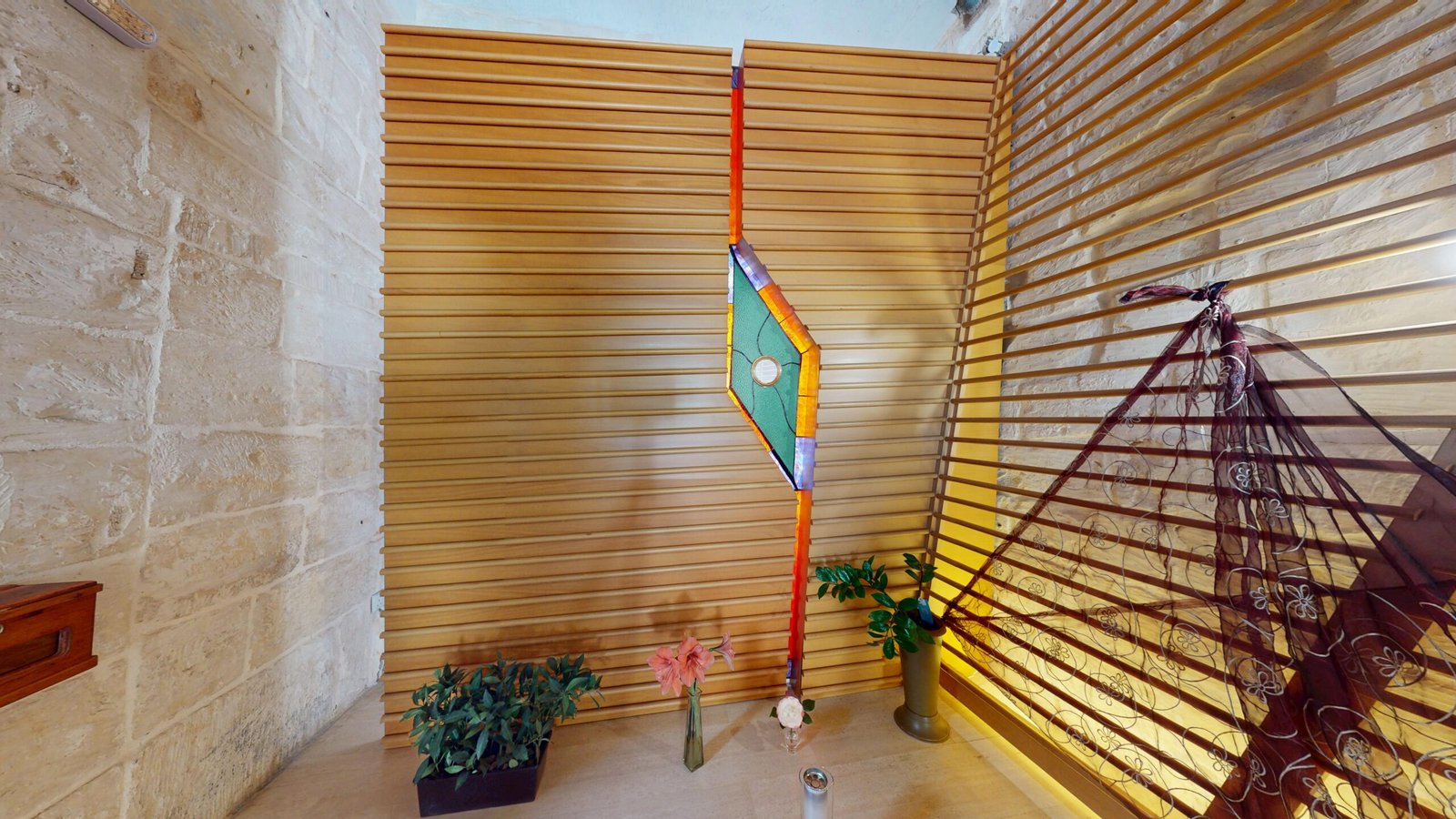
Chapel of Our Lady of Consolation (Tal-Markiza)
At the beginning of the 19th century, there was little construction in the area of Wied il-Għajn (Marsaskala), except for various fortifications built by the Knights of the Order of St John in previous centuries. The only other structures present were farmhouses and shelters for people who earned their living from farming and fishing. During the time of the Order, some noble families had built private towers on their land to encourage farmers to work the fields they owned. As a result, there were people who chose to live in the area of Wied il-Għajn, close to their cultivated lands, especially when the fear of the Turks and the Barbary corsairs had significantly decreased.
Permission to Build a Small Church in Wied il-Għajn
On the 15th of July 1812, a request was submitted at the Bishop’s Palace by Don Giuseppe Marchesan, Doctor of Civil and Canon Law (J.U.D.), to build a small church dedicated to Our Lady of Consolation. In this petition, he mentioned that he had permission from the government to build a house near the shore of Wied il-Għajn, on land he owned, where the ruined structure known as the Briconet Redoubt stood, adjacent to buildings belonging to Count Manduca and Antonio Abela. Marchesan requested that a church be built within the boundaries of the house he intended to construct.
He wished to dedicate this small church to the Virgin Mary under the title of Our Lady of Consolation due to his personal devotion to the Virgin Mary under this title. The church was intended to serve the spiritual needs of his family as well as the local community. Marchesan planned for this church to have an entrance facing the road and requested to be granted the right of lay patronage, committing himself to celebrating solemn feasts there.
The petition was presented to the Bishop’s Tribunal to decide on this request. The Tribunal recommended approving the petition to build the chapel, reasoning that a small community lived nearby and had no easy access to the nearest parish or church where Mass was celebrated. It acknowledged that for many of these people, it was a considerable burden to attend obligatory Masses at distant churches. Additionally, the Tribunal noted that soldiers from the nearby fortifications could also benefit from the services of this church. The design submitted with the petition was reviewed and deemed satisfactory for the construction of the chapel. Councillor Don Giovanni Schembri presented the Tribunal’s decision to Bishop Mattei, who approved it on the 20th of May 1814. The Bishop formally approved the request three days later.
On the 27th of May 1814, the petition and its approval were recorded in the Register of Supplications by Chancellor Don Fortunat Dalli.
Historical Operations of the Chapel
The chapel was operational by the 17th of November 1817, as noted during a pastoral visit to the parish of Żabbar by Canon Salvator Susano, acting as delegate for Bishop Ferdinando Mattei (1761–1829).
On the main door, an inscription reads: “Monsignor Archbishop Bishop Francesco Saverio Caruana grants forty days of indulgence to anyone who devoutly recites a Salve Regina before the image of the Blessed Virgin Mary under the title of Consolation, as per his decree of 17 August 1832, for the repose of the souls of the Founders.” Inside the chapel, there is also a commemorative marble plaque honouring some English individuals. The titular painting is currently housed in the Parish Church of Wied il-Għajn.
Restoration and Present Use
In 2009, this chapel began to be used by the Parish of Wied il-Għajn as a Chapel of Adoration and is now open daily. The chapel is currently well-maintained, and its use continues to bring people closer to God, fulfilling the vision of its founder, Don Giuseppe Marchesan. The valuable work of volunteers who care for its decor, embellishments, and cleanliness is commendable. Although the interior design follows a modern style, it respects the Mystery of the Eucharist and fosters a sense of devotion.
Our Lady of Consolation: A Timeless Devotion of Comfort and Hope
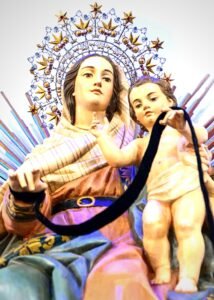 The title “Our Lady of Consolation” (Latin: Consolatrix Afflictorum) is one of the earliest honours given to the Virgin Mary, dating back to the second century. This devotion emphasises Mary’s role in offering comfort and solace to the afflicted.
A significant development in this devotion occurred in 1436 in Bologna, Italy, with the establishment of the Confraternity of the Holy Cincture of Our Lady of Consolation. This confraternity was associated with the Augustinian Order and highlighted the symbolic belt or cincture of the Virgin Mary, believed to provide protection and consolation to the faithful.
The devotion spread globally, leading to the construction of numerous churches and shrines dedicated to Our Lady of Consolation. In the United States, the Basilica and National Shrine of Our Lady of Consolation in Carey, Ohio, stands as a testament to this widespread veneration. Established in 1875, it became a pilgrimage site after reports of miraculous healings during a procession of the statue of Our Lady of Consolation.
In Malta, the devotion to Our Lady of Consolation holds a special place. The Feast of Our Lady of Consolation, also known as ‘Il-Madonna taċ-Ċintura’, is celebrated in the town of Gudja on the last Sunday of October. This event underscores the deep-rooted veneration of the Virgin Mary in Maltese culture.
The iconography associated with Our Lady of Consolation often depicts Mary holding the infant Jesus, both adorned in elaborate vestments. Mary’s mantle typically features a prominent star, and her tunic is secured with a black cincture, reflecting the Augustinian connection.
This enduring devotion highlights the universal appeal of Mary as a source of comfort and hope, bridging various cultures and centuries.
