
Chapel of Santa Marija ta’ Ċeppuna
(Please allow a few seconds for the video to load)
Welcome to
“The Chapel of Santa Marija ta’ Ċeppuna” digital experience where history and technology intertwine to bring you something that is immersive and entertaining.
Explore the Chapel
Below, you will find a ‘Paywall’ feature, requesting you to make a donation to be able to enter the page.
Once you are in, you will find
Support a Mission, Explore a Treasure
Your entry helps Missio Malta continue their vital work in missionary lands overseas. By donating, you directly support communities in need while gaining 24-hour full access to this chapel's 3D experience and history.
Learn more about Missio's workAccess is valid for 1 Chapel for 24 hours from the time of donation
OR
360° Panorama
Zoom to full screen to view
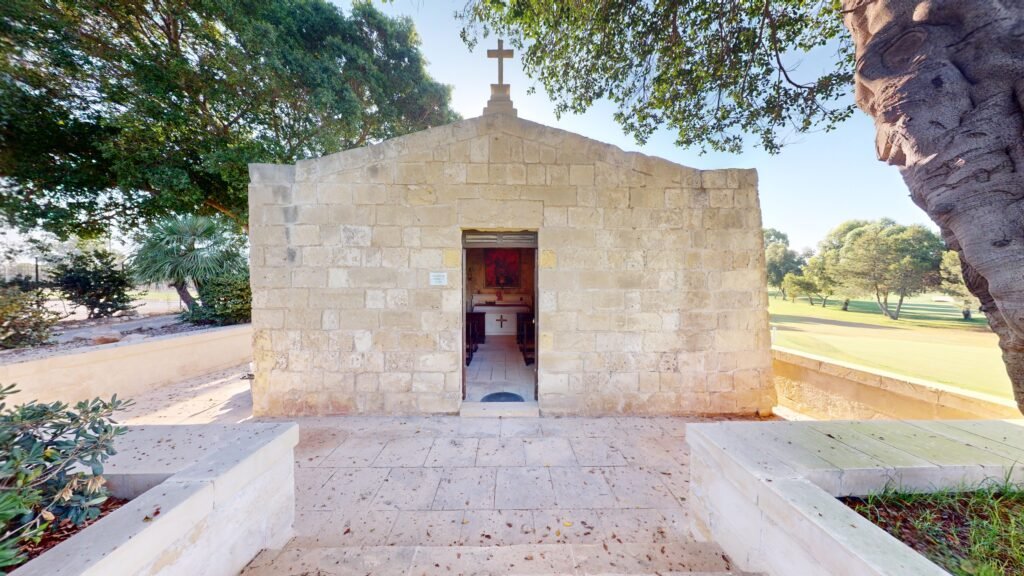
Chapel of Santa Marija ta’Ċeppuna
The Chapel of Santa Marija ta’ Ċeppuna, originally known as the Chapel of Our Lady of the Assumption, is a significant historical and religious landmark situated within the Marsa Sports Club in Marsa, Malta. Believed to have been constructed in the late 15th century, this chapel exemplifies the austere architectural style characteristic of late medieval Maltese ecclesiastical structures. Its unadorned cubic form encloses a single cell, divided into bays by two pointed arches rising from wall piers, with a slightly pitched roof facilitating rainwater run-off through traditional water spouts.
The exact origins of the chapel remain uncertain; however, stylistic analyses suggest its construction during the late 15th century. It is speculated that the chapel may have been established by a wealthy proprietor as a place where hunting parties could attend Mass before engaging in their activities.
A notable historical event associated with the chapel occurred following the death of Grand Master Philippe Villiers de l’Isle Adam on August 26, 1534. His funeral procession departed from the convent of Santa Maria del Gesù near Mdina and paused at the Ċeppuna chapel, where his body was kept overnight. The next day, the procession continued to Birgu, culminating in his interment at the Church of St. Anne in Fort St. Angelo.
In 1565, Apostolic Visitor Mgr. Pietro Dusina inspected the chapel, recording its dedication to the Assumption of the Virgin and noting that it was adequately furnished for divine services. He also documented that the chapel stood on lands belonging to the Grand Master.
The chapel remained in a fair state of preservation until World War II, during which it suffered considerable damage. Subsequent repairs included the near-total reconstruction of the west front. However, in the following years, the chapel fell into neglect and became a target for vandalism, leading to its derelict state. Its survival was uncertain until the Marsa Sports Club’s Main Committee, in collaboration with Din l-Art Ħelwa, undertook sensitive restoration efforts in the mid-1990s, preserving this relic of Malta’s late medieval past.
Today, the Chapel of Santa Marija ta’ Ċeppuna is integrated into the grounds of the Marsa Sports Club, situated behind the clubhouse and adjacent to the main car park. Its presence within the club’s premises adds a historical dimension to the recreational environment, serving as a tangible link to Malta’s rich cultural and religious heritage. The chapel stands as a testament to the island’s architectural and spiritual history, offering visitors and club members alike a glimpse into the past amidst the modern amenities of the sports club.
Pietro Dusina: The Vatican’s Reformer in 16th-Century Malta
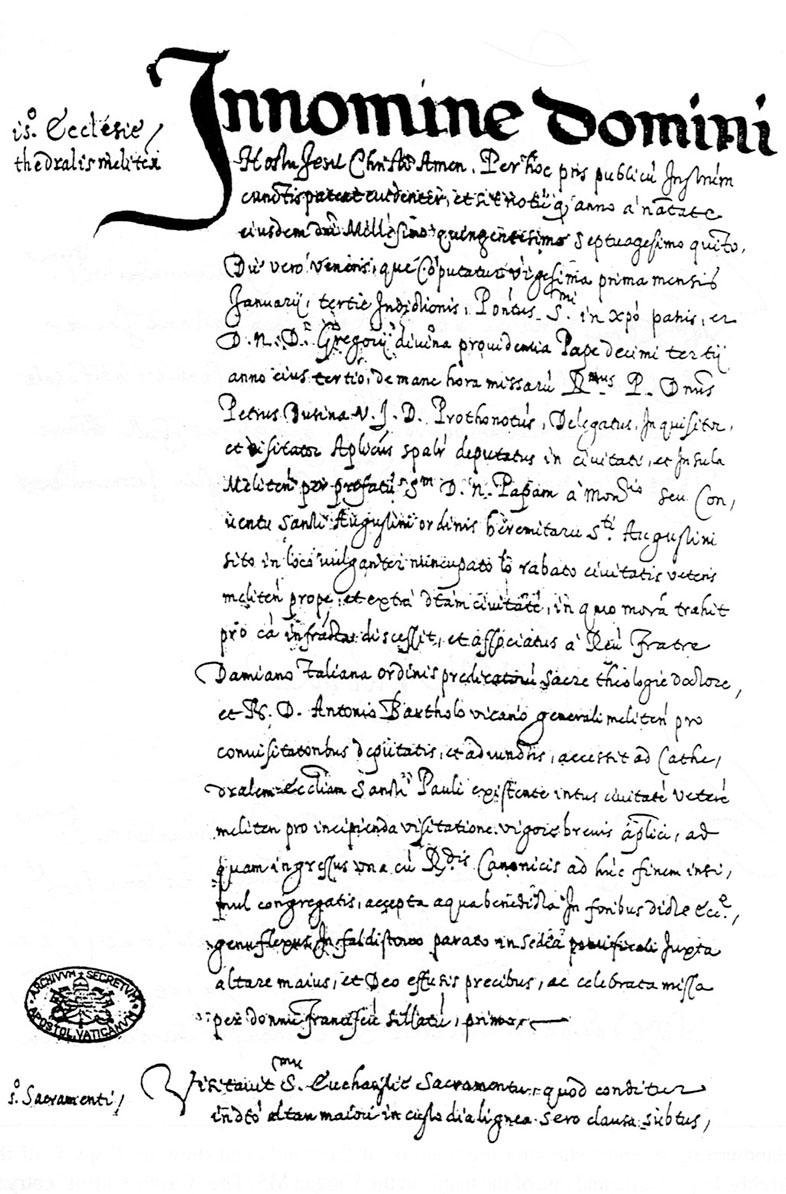 Monsignor Pietro Dusina is a fascinating historical figure with a unique connection to Malta, particularly in the late 16th century. He is remembered as the first Apostolic Delegate sent by Pope Gregory XIII to oversee the spiritual and administrative reform of the Church in Malta. His tenure in Malta is closely tied to the tumultuous religious and political landscape of the time, marked by efforts to counter the Protestant Reformation and strengthen Catholic orthodoxy.
Life and Career
Monsignor Pietro Dusina was a priest from Brescia, in northern Italy, with a reputation for piety and administrative skill. He was appointed Apostolic Delegate to Malta in 1575, a time when the Catholic Church was actively implementing the reforms of the Council of Trent (1545–1563).
Dusina’s mission was twofold: to reform the local clergy and religious institutions and to ensure that the Maltese population adhered to Catholic practices.
Connection to Malta
Church Reform: Dusina arrived in Malta in early 1575, accompanied by notaries, assistants, and translators. His role was to assess and reform the Church’s organisation, clergy, and practices on the islands of Malta and Gozo.
Visitation Reports: Dusina conducted a detailed apostolic visitation, during which he inspected every parish, church, and chapel on the islands. His findings were meticulously recorded, providing one of the earliest comprehensive accounts of the Maltese Church and society.
Findings: Dusina discovered widespread neglect among the clergy. Many priests were poorly educated, some were living openly scandalous lives, and others neglected their pastoral duties. He also noted that some churches were in a state of disrepair.
Discipline Enforcement: He implemented strict reforms, dismissing unworthy clergy, urging proper maintenance of churches, and promoting the education of priests. His efforts had a lasting impact on the structure and discipline of the Maltese Church.
Challenges
Dusina faced resistance from some local clergy and laypeople who were unaccustomed to such rigorous oversight. Despite this, he pressed on, firmly enforcing the Council of Trent’s decrees. His strictness and determination made him both respected and controversial. Some saw him as a reformer safeguarding the Church’s integrity, while others resented his interference.
Legacy
Dusina’s reports (known as “Dusina’s Apostolic Visitation”) are invaluable historical documents that provide detailed insights into the religious, social, and cultural conditions of Malta in the late 16th century. His work helped lay the foundation for a more disciplined and structured Church in Malta, aligning it more closely with Roman Catholic orthodoxy.
Dusina’s name is etched in Maltese ecclesiastical history, symbolising the Catholic Reformation’s local impact.
Interesting Aspects
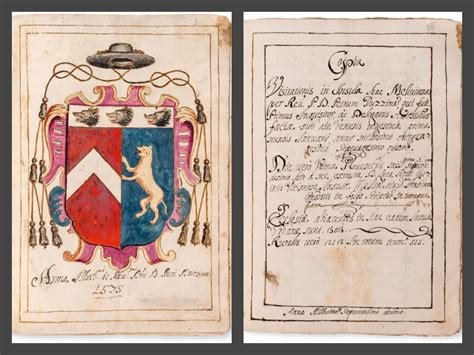
Unique Snapshot of 16th-Century Malta: His visitation records paint a vivid picture of daily life in Malta during a period of transition and reform. They reveal not only religious practices but also details about architecture, social norms, and local customs.
Conflict with Local Culture: Dusina’s mission placed him at odds with some deeply ingrained Maltese traditions. His enforcement of reforms often clashed with the islanders’ way of life, creating an intriguing dynamic between an outsider and a proud, isolated community.
Historical Importance: His records provide a rare lens into the post-Council of Trent period in a small but strategically significant Mediterranean territory.
Connection to the Knights of St. John: While his mission was ecclesiastical, it coincided with the rule of the Knights of St. John, who were also striving to fortify Malta spiritually and militarily as a bulwark against Ottoman expansion.
Dusina’s time in Malta is a compelling story of religious reform, cultural confrontation, and the challenges of implementing sweeping change in a complex society. His legacy is not only in the changes he instituted but also in the rich historical documentation he left behind, offering a unique window into Malta’s past.
