
Our Lady of Loreto
(Please allow a few seconds for the video to load)
Welcome to
“The Church of Our Lady of Loreto” digital experience where history and technology intertwine to bring you an immersive experience.
Explore the Church
Below, you will find a ‘Paywall’ feature, requesting you to make a donation to be able to enter the page.
Once you are in, you will find
Support a Mission, Explore a Treasure
Your entry helps Missio Malta continue their vital work in missionary lands overseas. By donating, you directly support communities in need while gaining 24-hour full access to this chapel's 3D experience and history.
Learn more about Missio's workAccess is valid for 1 Chapel for 24 hours from the time of donation
OR
360° Panorama
Zoom to full screen to view
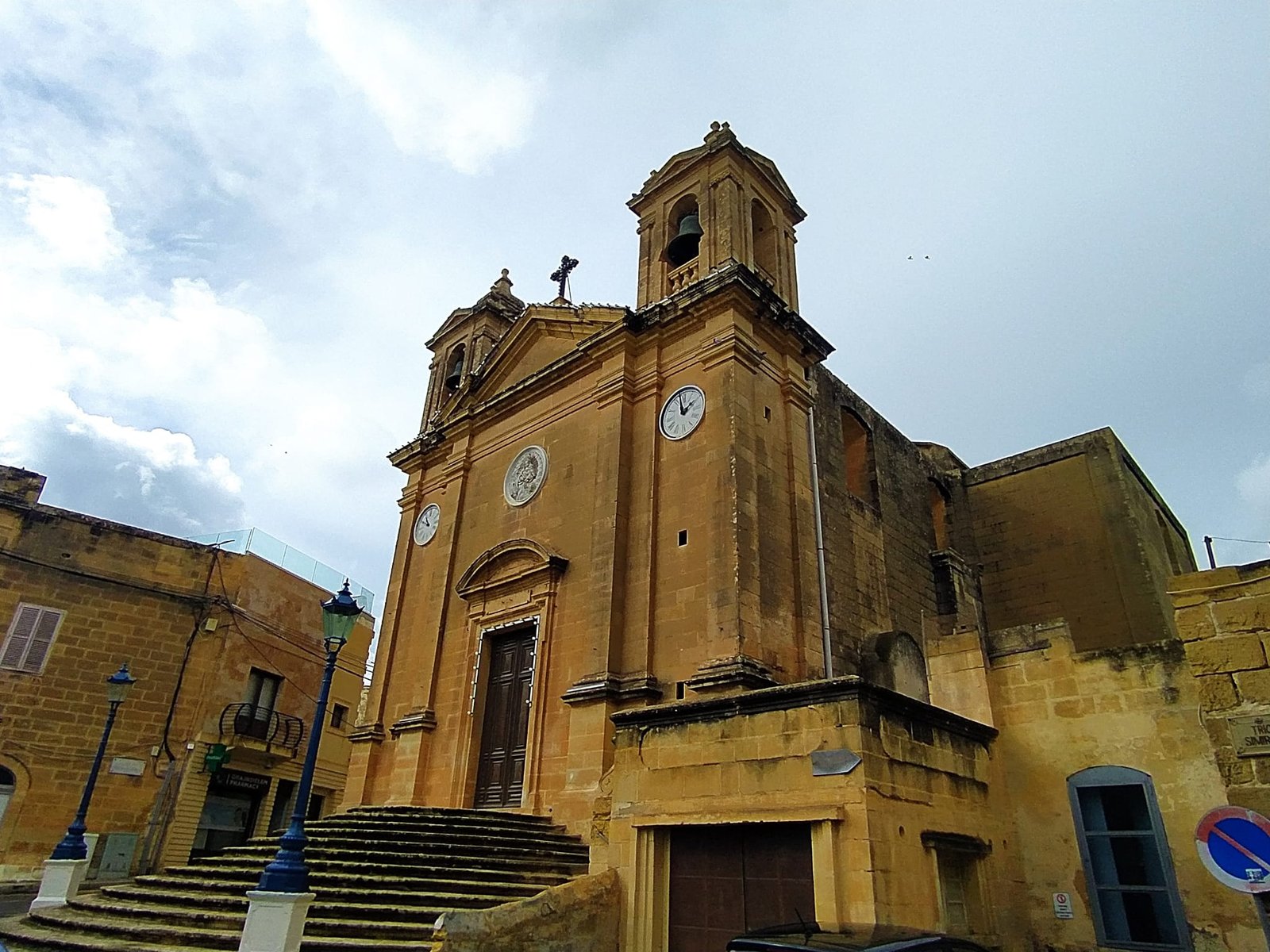
A local farmer named Anglu, known as ‘Tax-Xini’, took his sheep and goats to the spring daily. He prayed and sought shade behind a carob tree while the flock satisfied its thirst. He saw a vision across the spring. A stunning white woman invited him to erect a statue in her honour on a nearby cliff.
Anglu realised that a shrine would help him pray and inspire other farmers to pray. He told his farmer friends, and in weeks they built a stone plinth, sculpted a big statue of the Blessed Virgin of Loreto, and hoisted it onto the plinth. Since there was no chapel nearby, farmers and their families recited the Holy Rosary around the statue every evening. At this time, Ghajnsielem was in Nadur’s parish. The niche inspired the Nadur Parish priest to conduct an annual apparition procession. That day, the parish priest and Nadur clergy sang vespers and preached.
 The locals quickly got permission from Nadur parish priest Dun Frangisk Sapiano to establish a tiny chapel. Indri Xuereb and Frangisk Mercieca led the community in building a modest chapel nearby in 1810. The Nadur archpriest lay the first stone on a Sunday in 1810 in the village centre. Frangisk Gafa, chief mason, built it. The locals volunteered free work every day, so work went quickly. In 1820, the church was finished. It was dedicated to Loreto’s Virgin Mary. Their little chapel was the inhabitants’ spiritual centre.
About 800 individuals lived in Ghajnsielem by the mid-19th century. People had trouble getting to Nadur parish church to attend mass and fulfil their spiritual requirements. Despite having their own chapel, they lacked the spiritual support a burgeoning population would need.
Dun Guzepp Xerri was the first vicar, followed by Dun Frangisk Xkembri and Dun Anton Cauchi from Rabat in 1842. He convinced Archbishop Publios Sant to build a new parish church. On January 1, 1854, the region became vice parish and the parish-formation process began. Ghajnsielem became a parish on January 26, 1855.
Due to Ghajnsielem’s rising population, the chapel was expanded twice. Initial construction began in 1867, but the church was finished in 1877. The old church houses a Michael Busuttil picture of Our Lady of Loreto and four Guiseppe Cali masterpieces. The inhabitants of Ghajnsielem commissioned the statue of Our Lady of Loreto from Marseilles in France in 1866 as a thank you for escaping the plague that hit Malta in 1865.
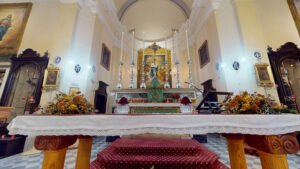
Pacifico e Figli (Rome, 1906) made the loft organ and G. Bonetti (Pietrasanta, 1900) made the white and coloured marble high altar. Child Jesus of Prague, Saint Domenico Savio, Saint Anthony of Padua (Lyons 1903) and Saint Julian Martyr (Wistin Camilleri, Rabat Gozo, 1906) are in niches around the church.
The story of Our Lady of Loreto
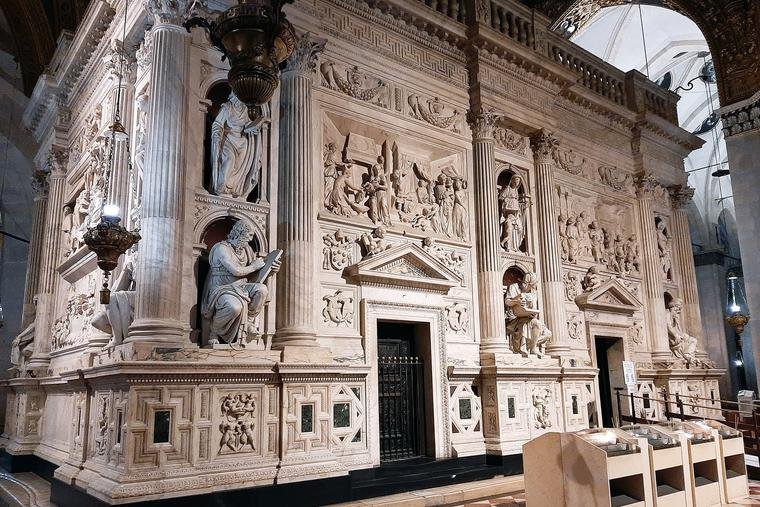
Unlike most other Marian feast days, Our Lady of Loreto doesn’t refer to an apparition or a Marian title. It refers to a building. Specifically, it refers to the humble home in which Mary grew up and the extraordinary measures God took to preserve it.
The story of Our Lady of Loreto is steeped in legend and historical significance. According to tradition, the Holy House of Loreto is believed to be the very home where the Annunciation took place, where the Angel Gabriel visited Mary and announced that she would conceive Jesus. The house is said to have been transported miraculously from Nazareth to Loreto, Italy, to protect it from destruction.
Historical records suggest that the Holy House originally stood in Nazareth, where it was a place of veneration for early Christians. However, during the Crusades in the 13th century, the Holy Land faced considerable turmoil, leading to the relocation of significant religious sites. It’s during this time that the belief in the transportation of the Holy House gained traction.
The House’s alleged journey from Nazareth to Loreto is a fascinating aspect of this legend. The accounts tell of angels moving the structure first to a hill in Croatia (then part of the Kingdom of Hungary) called Recanati, and then miraculously to its current location in Loreto, Italy, in 1291. This incredible migration, as per tradition, was witnessed by several people along its route.
The phenomenon of the Holy House of Loreto drew pilgrims and believers from various parts of Europe, contributing to Loreto becoming a significant pilgrimage site. Popes over centuries have affirmed its authenticity, and it became a focal point for Marian devotion. Pope Clement VII declared Loreto a holy city in 1510, and subsequent popes further promoted its veneration.
The Basilica of the Holy House in Loreto was constructed around the Holy House itself, providing a place for worship and pilgrimage. The architectural marvel of the basilica, designed by renowned architects like Donato Bramante and Andrea Sansovino, stands as a testament to the reverence attached to this revered dwelling.
While historical evidence regarding the actual transportation of the Holy House remains inconclusive, the devotion and significance attached to Our Lady of Loreto have endured through centuries. The story represents a deep reverence for the life of the Virgin Mary and the pivotal role she plays in Christianity. Today, pilgrims from around the world continue to visit Loreto, making it a testament to enduring faith and devotion.
