
Chapel of The Holy Family
(Please allow a few seconds for the video to load)
Welcome to
“The Chapel of The Holy Family” digital experience where history and technology intertwine to bring you something that is immersive and entertaining.
Explore the Chapel
Below, you will find a ‘Paywall’ feature, requesting you to make a donation to be able to enter the page.
Once you are in, you will find
Support a Mission, Explore a Treasure
Your entry helps Missio Malta continue their vital work in missionary lands overseas. By donating, you directly support communities in need while gaining 24-hour full access to this chapel's 3D experience and history.
Learn more about Missio's workAccess is valid for 1 Chapel for 24 hours from the time of donation
OR
360° Panorama
Zoom to full screen to view
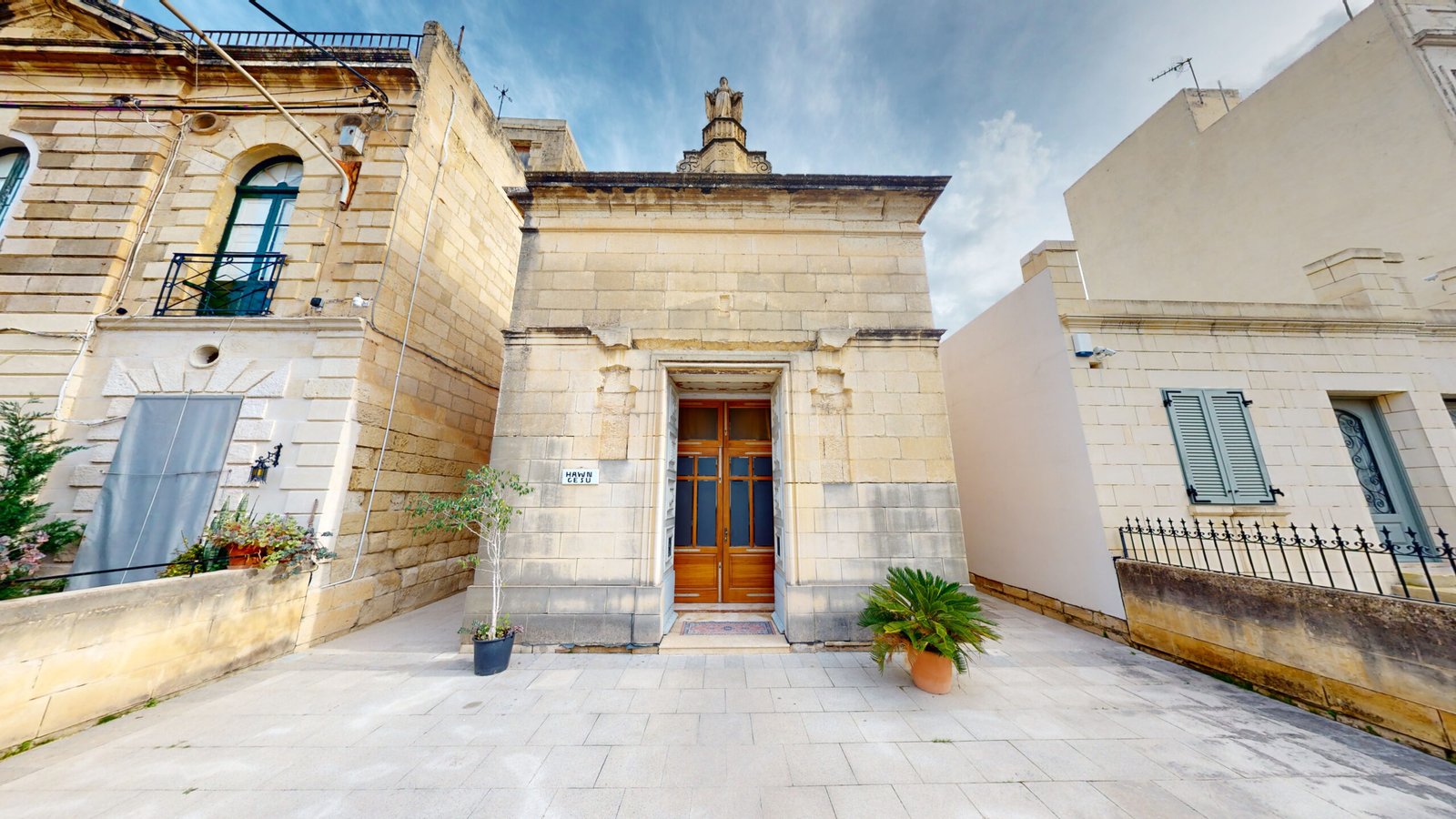
In the quaint town of Birżebbuġa, Malta, there stands a hidden gem with a story to tell – the Chapel of the Holy Family, locally known as Sagra Familja. This sacred sanctuary carries a rich history and unique features that whisper tales of devotion and architectural brilliance.
The narrative began on a crisp February day in 1864 when Dun Antonio Albanese and the skilled architect, Luigi Ovidio Doublet, penned a request to the Ecclesiastical authorities. Their vision was to build a chapel that would cater to the growing needs of Birżebbuġa’s burgeoning population. Seeking permission for it to be a lay patronage, they embarked on a journey that would weave their names into the fabric of the town’s spiritual landscape.
Fueling the dream was the sponsorship of the construction by the parish priest of Gudja, the venerable Dun Giovanni Batta Żammit. His dedication was not merely spiritual; he contributed five scudi annually from his own parish, adding a tangible commitment to the endeavor. The first stone, a symbol of beginnings and aspirations, was laid on a momentous day – June 29, 1865, under the watchful eyes of Dun Antonio Albanese, a representative of the esteemed Bishop Gaetano Pace Forno.
Architect Luigi Ovidio Doublet, a mastermind in his own right, crafted the chapel in the shape of a Roman cross. Adorned initially with a picturesque portico supported by eight columns, the exterior boasted two bell towers framing a statue of Our Lady of the Miraculous Medal. However, the passage of time and the cruel hands of neglect led to the dismantling of these elements in 1978, leaving the chapel with a different, albeit still enchanting, facade.
Stepping inside, one would discover the artistic treasures that adorned the sacred space. A stone altar, standing as a symbol of steadfastness, held court within the chapel. The pièce de résistance, a magnificent painting of the Holy Family, graced the walls, though the identity of its creator and the date of its inception remained veiled in mystery.
Over time, inevitable changes took place. The portico and bell towers, once standing proudly, met their fate in 1978, dismantled by government workmen due to the passage of time and the weight of neglect.
As the details unfold, the Chapel of the Holy Family emerges not just as a physical structure but as a living testament to the dreams and devotion of those who sought to build a haven for their community. The mysterious painting of the Holy Family and the altar hold secrets that perhaps only time and a curious heart willing to explore the chapel’s depths can reveal.
The Holy Family
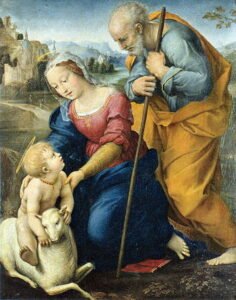 The Holy Family, comprising Jesus, Mary, and Joseph, holds profound historical and religious significance in Christian tradition. The Bible provides glimpses of the Holy Family’s earthly life, particularly in the Gospels of Matthew and Luke. Historically, the Holy Family represents the archetype of a Christian family, emphasizing values of love, unity, and devotion. Their humble existence in Nazareth serves as a model for familial virtues and solidarity.
Religiously, the Holy Family is integral to the Christian narrative. Jesus, as the Son of God, chose to be born into a human family, experiencing the joys and challenges of earthly life. Mary, recognized as the Mother of God, and Joseph, as Jesus’ earthly father, contribute to the theological understanding of the Incarnation.
The Feast of the Holy Family, celebrated in various Christian denominations, highlights the sanctity of family life and encourages believers to emulate the virtues embodied by Jesus, Mary, and Joseph. Artistic representations, such as paintings and sculptures, often depict the Holy Family as a symbol of divine love and familial harmony. Overall, the Holy Family holds a central place in Christianity, embodying the sacredness of familial bonds and providing a spiritual model for believers throughout history.
