
Chapel of Saint Anne
(Please allow a few seconds for the video to load)
Welcome to
“The Chapel of Saint Anne” digital experience where history and technology intertwine to bring you an immersive experience.
Explore the Chapel
Below, you will find a ‘Paywall’ feature, requesting you to make a donation to be able to enter the page.
Once you are in, you will find
Support a Mission, Explore a Treasure
Your entry helps Missio Malta continue their vital work in missionary lands overseas. By donating, you directly support communities in need while gaining 24-hour full access to this chapel's 3D experience and history.
Learn more about Missio's workAccess is valid for 1 Chapel for 24 hours from the time of donation
OR
360° Panorama
Zoom to full screen to view
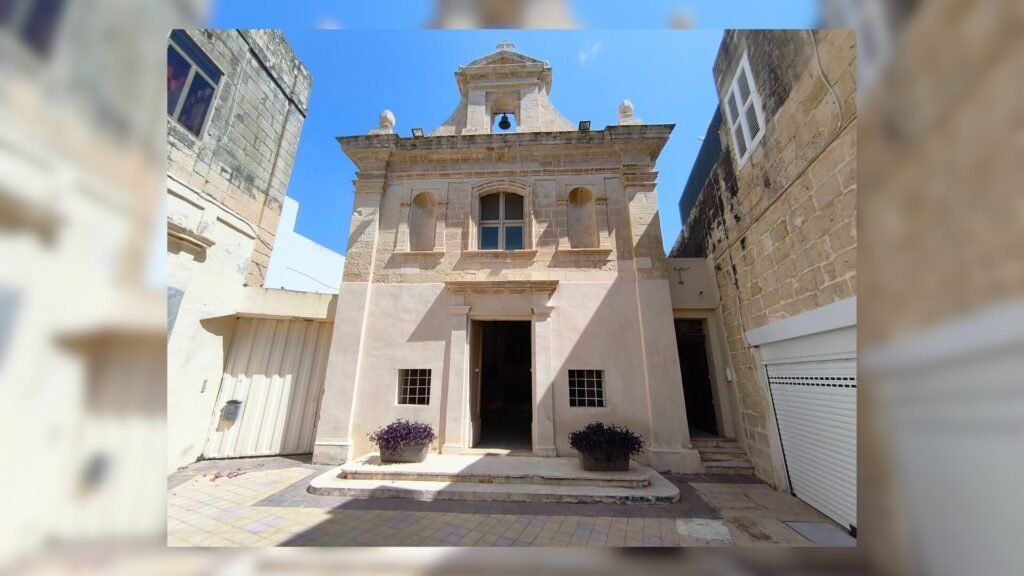
Locally known as Sant’Anna – the Chapel stands as a cherished symbol of Malta’s enduring faith, resilience, and cultural heritage. This 17th-century chapel is a modest yet historically rich building with deep roots in the community’s spiritual and social life.
The chapel was constructed in the wake of the devastating plague of 1676, which claimed over 100 lives in Attard alone. As the epidemic subsided, the town’s survivors made a solemn vow to build a chapel in gratitude for their deliverance. Erected on the site of an earlier ruined chapel dedicated to St. Nicholas, the new building was officially dedicated to St. Roque, the patron saint invoked during plagues. However, over time, it became popularly known as St. Anne’s Chapel, inspired by a beloved painting of the saint housed within.
Construction likely began between 1677 and 1680. Though no records exist of prominent architects or master builders, the design reflects Baroque and Renaissance influences common in 17th-century Malta. The chapel’s golden limestone façade features a central arched doorway, a small rectangular window above it, and two niches that once may have held statues.
The single-nave interior boasts a barrel-vaulted ceiling with elegant coffered panels, a rare and refined architectural feature for a chapel of its size. Originally, it housed an altarpiece by Suor Maria de Dominici, one of Malta’s earliest known female artists. The painting, now preserved in the parish museum, depicted St. Nicholas and St. Roque pleading to the Virgin Mary, with St. Anne believed to be watching over the scene.
A Quiet Beacon of Faith Through the Centuries
For generations, the chapel served as a place of prayer, devotion, and community gatherings. Beyond its initial role as a votive offering for survival, it became a central point of faith for neighbourhood residents. Locals would visit to mark feast days such as St. Anne’s (26 July) and St. Roque’s (16 August) with private devotions or simple commemorations.
In 1968, the chapel took on a new role when it was entrusted to the Society of Christian Doctrine (M.U.S.E.U.M.), who continue to use it for religious instruction for boys in the area. This transition allowed the chapel to remain active and relevant in modern times, becoming a foundational element in the spiritual education of Attard’s youth.
Protected, Restored, and Still Revered
By the early 21st century, the chapel had begun to show signs of weathering. A major restoration project was completed in 2022, led by Malta’s Restoration Directorate. The works involved cleaning and stabilising the limestone façade, repairing the roof, and safeguarding the building’s historic features, including its distinctive bell-cot.
Today, the chapel is in excellent condition. Though not regularly open to the public, it remains in active use by the M.U.S.E.U.M. and under the care of the Attard parish. It also occasionally features in local heritage trails and guided cultural tours.
The Life and Times of Saint Anne
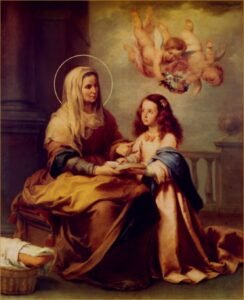 Saint Anne is traditionally recognised as the mother of the Virgin Mary and grandmother of Jesus Christ. Although not mentioned in the Bible itself, her story comes from early Christian writings such as the Protoevangelium of James, believed to have been written around 150 AD.
According to these accounts, Anne was married to Joachim, and they were a devout Jewish couple who lived in Jerusalem. They struggled with childlessness for many years, which was seen at the time as a source of shame and misfortune. In their old age, both Anne and Joachim were visited separately by an angel who told them that they would have a child. This child would be special—blessed by God—and her name would be Mary.
True to the angel’s message, Anne gave birth to Mary. When Mary was just three years old, Anne and Joachim brought her to the Temple in Jerusalem and dedicated her to God’s service. This was an act of great devotion and sacrifice, reflecting how deeply they honoured the promise made to them.
Saint Anne’s story spread widely in the Christian world. Her name began to be honoured first in the Eastern Church, where a church in Constantinople was dedicated to her as early as the 6th century. In the West, devotion to Saint Anne became widespread by the 13th century. Over time, she became known as the patron saint of mothers, grandmothers, women in labour, and educators. The Catholic Church celebrates her feast day on 26th July.
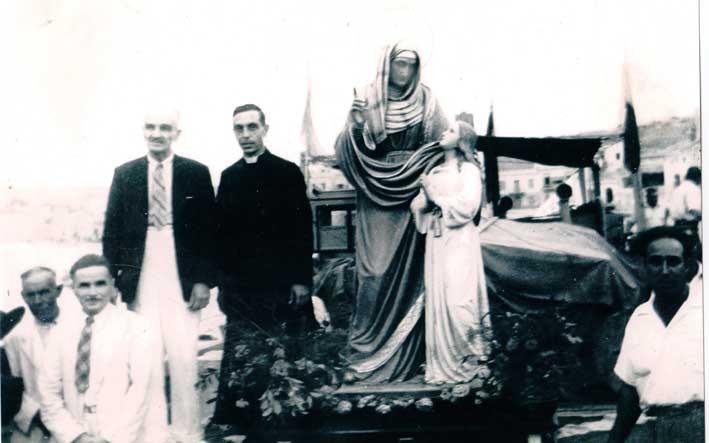
Marsascala Parish commemorating 70 years with a statuew of St. Anne and Child
Saint Anne and Malta
Malta has several chapels and sites dedicated to Saint Anne, some with centuries of history:
- Chapel of St Anne, Fort St Angelo (Birgu)
This chapel is among the oldest religious buildings in Malta, with records going back to 1274. Originally dedicated to Saint Angelo, it was later renamed in honour of Saint Anne. In 1532, it was enlarged by the Knights of St John and served as a private place of worship for the Grand Masters. After falling into disuse and being repurposed several times, the chapel has since been restored and is now managed by the Sovereign Military Order of Malta. - Chapel of St Anne, Fort St Elmo (Valletta)
First documented in 1488, this chapel predates the construction of Fort St Elmo. It was incorporated into the fort by the Knights and became a key part of the defences during the Great Siege of 1565. A notable feature of the chapel is a 15th-century icon of the Madonna and Child, believed to have been brought to Malta after the Battle of Lepanto. - St Anne’s Chapel, Qrendi
Built in the late 1500s, this chapel was originally dedicated to the Nativity of Mary. In 1796, its dedication was changed to Saint Anne, likely because of a painting featuring her. The chapel still stands today, well-maintained and used for services and local religious events. - Chapel of Saint Anne, Dwejra (Gozo)
This modern chapel, blessed in 1963, has a simple, contemporary design that contrasts with Malta’s older churches. Inside, the main painting shows young Mary being taught by her mother Anne—a rare artistic depiction that highlights Anne’s role in shaping Mary’s character and faith.
