
Church of St. Rocco
(Please allow a few seconds for the video to load)
Welcome to
“The Church of St. Rocco” digital experience where history and technology intertwine to bring you an immersive experience.
Explore the Chapel
Below, you will find a ‘Paywall’ feature, requesting you to make a donation to be able to enter the page.
Once you are in, you will find
Support a Mission, Explore a Treasure
Your entry helps Missio Malta continue their vital work in missionary lands overseas. By donating, you directly support communities in need while gaining 24-hour full access to this chapel's 3D experience and history.
Learn more about Missio's workAccess is valid for 1 Chapel for 24 hours from the time of donation
OR
360° Panorama
Zoom to full screen to view
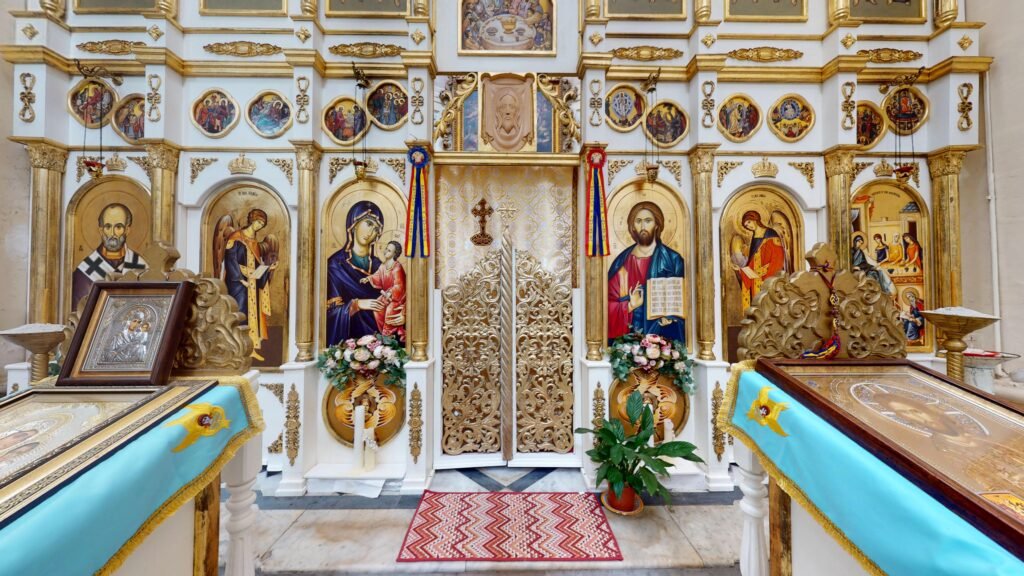
Church of St Rocco, Valletta: A Plague-Vow Church in the Heart of the Capital
Historical Background
The Church of St Rocco, or St Roque, in St Ursula Street is closely tied to Malta’s experience of plague. An earlier church was erected following the 1592–93 epidemic as fulfilment of a vow for deliverance. After the devastating plague of 1675–76, a further vow led to its rebuilding and enlargement. Work began around 1680 and the completed church was blessed by Vicar General Ludovico Famucelli on 12 August 1681. Grand Master Gregorio Carafa contributed towards the expense, a fact commemorated by an inscription above the entrance.
Construction and Architecture
The 1681 church is attributed to French military engineer and architect Mederico Blondel des Croisettes, while Lorenzo Gafà is recorded as supervising the works. No dependable total construction cost or detailed labour account has yet been identified, and no major building accident is documented.
Architecturally, it is a compact centrally planned church with a dome above the crossing, an apsed sanctuary, narrow sacristies and shallow transepts. The restrained façade combines Baroque and Mannerist characteristics, including Corinthian pilasters, segmental pediments, a central bell-cot and a concave entrance composition.
Artistic Features
The church contains three altars. Its principal painting, by Stefano Erardi, depicts the Immaculate Conception with St Rocco, St Angelo and plague victims, directly linking the interior with the church’s origins. Erardi also painted St Stephen for a side altar, while the other side altar carries a representation of the Holy Trinity attributed to Palombi.
Religious and Cultural Significance
St Rocco was traditionally invoked against contagious disease, making this church a permanent monument to Malta’s repeated encounters with epidemic illness. Its strongest story is therefore not folklore but collective memory: two plague crises transformed thanksgiving and fear into a lasting place of worship. The church was scheduled as a Grade 1 national monument in 2008.
Present Day
The building remains owned by the Roman Catholic Archdiocese of Malta but is now used by the Romanian Orthodox Parish of the Birth of St John the Baptist, established in Malta in 2014. Regular Orthodox Sunday worship resumed in 2019, and the interior has been adapted for Byzantine liturgical use while retaining its historic character. A €50,000 public grant was awarded in 2018 for restoration. Today St Rocco’s is both a Maltese plague memorial and a living expression of Catholic-Orthodox hospitality in Valletta.
Malta Between Rome and Constantinople
The Orthodox Christian Story of the Maltese Islands
 Malta is usually described as one of Europe’s most strongly Roman Catholic countries, yet beneath its familiar Baroque churches lies another Christian story. For centuries the Maltese Islands have stood between the Latin West and the Greek-speaking Christian East. Byzantine emperors, Greek priests, Rhodian refugees, ancient icons and modern Orthodox communities have all left their mark.
Malta in the Byzantine Christian World
Malta became part of the Byzantine Empire during the sixth century. By approximately the middle of the eighth century, its Church appears to have come under the ecclesiastical influence or jurisdiction of Constantinople. Greek became important in worship and Malta shared many of the religious traditions of Byzantine Sicily.
This period predates the formal separation between the Roman Catholic and Eastern Orthodox Churches traditionally associated with the Great Schism of 1054. It is therefore misleading simply to call Byzantine Malta “Orthodox” in the modern denominational sense. What can be said is that Malta once worshipped within the Greek-speaking Byzantine Christian world.
Archaeological remains, early churches and surviving religious customs suggest that Byzantine Christianity left deeper traces than might first appear.
The Muslim conquest of about 870 disrupted this world. How completely Christianity disappeared remains debated. Evidence suggests that Christian continuity may have survived more strongly on Gozo, while later Norman rule restored Malta firmly to the Christian European sphere.
Greeks Arrive with the Knights of St John
A new chapter began in 1530 when the Order of St John arrived in Malta after losing Rhodes to the Ottoman Empire. Hundreds of Rhodians accompanied the Knights, including Greek-speaking Christian families, merchants, sailors and clergy.
Birgu became the heart of this community. Greek Christians were provided with churches in which they could celebrate according to the Byzantine rite.
The religious identity of these communities requires care. Sixteenth-century references to “Greeks” do not always mean Eastern Orthodox in today’s sense. Some were Orthodox, while others followed the Byzantine rite but remained in communion with Rome. Historical documents show both traditions existing alongside one another, sometimes with questions of jurisdiction becoming complicated.
Records from the 1570s describe Greek priests in Birgu baptising, marrying, burying the dead and teaching children according to Greek liturgical books.
The Great Siege and the Greek Community
The Greek population was not detached from Maltese life. During the Great Siege of 1565, Greeks living around Birgu participated in the defence of Malta alongside Maltese and the Knights.
After Valletta was founded, much of the community’s religious life gradually shifted towards the new city.
One of its most important treasures was the ancient icon of Our Lady of Damascus, brought from Rhodes. Another was the Eleimonitria, the Virgin of Mercy. These icons became objects of devotion not merely for Greek Christians but also for Maltese Catholics, creating an unusual meeting point between Eastern and Western Christianity.
The Church of Our Lady of Damascus was completed in Valletta in 1580, and the famous icon was transferred there ceremonially in 1587. Although the church belongs to the Greek Catholic tradition rather than Eastern Orthodoxy, it remains one of Malta’s clearest surviving links with Byzantine Christianity.
The Remarkable Story of St Nicholas
The Church of St Nicholas in Valletta provides an excellent example of Malta’s complicated Eastern Christian history.
In 1569, Angelino and Emmanuele Metaxi obtained a site for a church serving Malta’s Greek Byzantine Christian community, with construction following during the early years of Valletta. It is safest not to describe that community categorically as either Orthodox or Greek Catholic, since the historical evidence and terminology are more complex.
Centuries later, the story came full circle. In 2021, St Nicholas became a centre of the Ecumenical Patriarchate of Constantinople and today serves Greek and Ukrainian Orthodox Christians. The Holy Patriarchal Exarchate of Malta now operates from the church.
Orthodox Christianity in Malta Today
Malta’s Orthodox population has expanded dramatically through modern migration. The 2021 Census recorded 16,457 residents aged 15 and over identifying with the Orthodox religion.
Greek Orthodox Christianity remains represented in Valletta, while Ukrainian Orthodox worship is also celebrated at St Nicholas.
The Romanian Orthodox community has developed particularly strongly. Its Parish of the Nativity of St John the Baptist was established in 2014 and now worships in the historic Church of St Rocco in St Ursula Street. Regular Sunday services resumed in 2019, transforming this seventeenth-century Catholic plague church into another remarkable bridge between Malta’s Western heritage and Eastern Christian worship.
Serbian Orthodox Christians also worship in Malta, while Russian, Bulgarian and other Orthodox believers have established communities or use churches made available to them. Romanian Orthodox services are also celebrated periodically on Gozo.
Malta additionally hosts Coptic, Ethiopian, Eritrean and Armenian Christians. These belong principally to the Oriental Orthodox family rather than the Eastern Orthodox communion, an important theological distinction, but together they broaden Malta’s Eastern Christian landscape.
St Paul, a Saint Shared by East and West
Perhaps the strongest spiritual connection is St Paul himself.
The Acts of the Apostles records Paul’s shipwreck on Malta during his journey to Rome. Roman Catholics and Orthodox Christians alike honour the Apostle. Malta’s churches, traditions, place names and national feast surrounding the shipwreck therefore provide common ground between the Christian East and West.
St Nicholas offers another connection. The fourth-century Bishop of Myra is among the most beloved saints of Eastern Christianity and has also enjoyed centuries of devotion in Malta.
Malta as a Meeting Place
Today, an Orthodox Divine Liturgy in Valletta may include incense, Byzantine chant, icons and an iconostasis within a church built from Maltese limestone and surrounded by the Baroque architecture of the Knights.
That scene captures Malta’s Orthodox story perfectly. It is not simply the history of a foreign community. It is part of Malta’s own Mediterranean identity, stretching from Byzantine rule and Rhodian migration to the multicultural Christian communities worshipping on the islands today.
