
Chapels of St. Basil & St. Michael
(Please allow a few seconds for the video to load)
Welcome to
“The Chapel of St. Basil & St. Michael” digital experience where history and technology intertwine to bring you an immersive experience.
Explore the Chapel
Below, you will find a ‘Paywall’ feature, requesting you to make a donation to be able to enter the page.
Once you are in, you will find
Support a Mission, Explore a Treasure
Your entry helps Missio Malta continue their vital work in missionary lands overseas. By donating, you directly support communities in need while gaining 24-hour full access to this chapel's 3D experience and history.
Learn more about Missio's workAccess is valid for 1 Chapel for 24 hours from the time of donation
OR
360° Panorama
Zoom to full screen to view
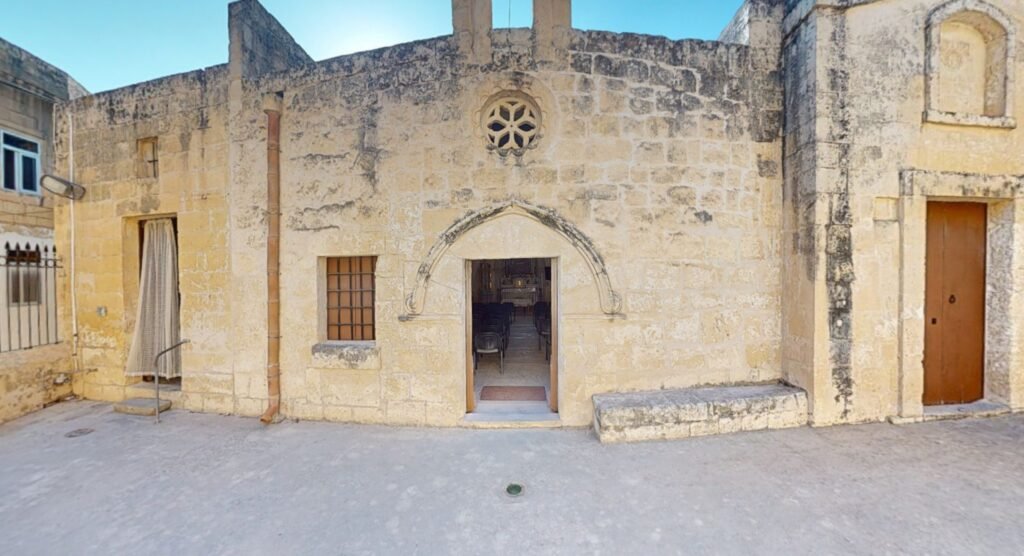
Chapel of St Basil and the Adjoining Chapel of St Michael, Mqabba
The Chapel of St Basil, with its adjoining Chapel of St Michael, forms one of the oldest religious sites in Mqabba. The origins of the complex are believed to date back to the late medieval period, with references suggesting a chapel dedicated to St Basil existed by the 15th century. The dedication itself is uncommon in Malta and points to early Eastern Christian influences or devotion brought through Mediterranean contact.
The Chapel of St Michael appears to have been added later, possibly during the 16th or early 17th century, reflecting the growing importance of the Archangel in Maltese devotion, especially during the time of the Order of St John. These chapels were likely funded by local benefactors or landowners, serving the rural community before the development of a central parish structure.
Both chapels are constructed in traditional Maltese limestone and reflect a simple rural architectural style. The original Chapel of St Basil is modest in scale, with thick load bearing walls and a plain façade, typical of early ecclesiastical buildings. The adjoining Chapel of St Michael is integrated into the same structure, forming a rare dual chapel arrangement.
There are no surviving detailed records of construction costs or named architects. The work would have been carried out by local masons and craftsmen, using traditional building techniques. The architectural style shows restrained Baroque influence in later alterations, particularly in the interior altars. The main challenge in such rural builds would have been resource availability and structural durability over time.
The dual dedication is significant. St Basil represents early Christian theology and monastic tradition, while St Michael symbolises protection and spiritual defence. Together, they reflect a blend of contemplative and protective devotion within Maltese religious life.
The chapels served as focal points for local worship, particularly before the establishment of larger parish churches. They would have hosted small feast celebrations, devotional prayers, and seasonal gatherings. Their presence contributed to the spiritual landscape of Mqabba, reinforcing community identity rooted in faith and tradition.
Today, the chapels remain an important part of Mqabba’s heritage. Though not in regular daily use, they are preserved as historical religious sites and occasionally opened for specific liturgical functions or cultural visits. Conservation efforts have focused on maintaining the structural integrity of the ‘tal-franka’ limestone and preserving original features.
They stand as a reminder of the village’s early religious foundations, complementing the later parish church that now serves the main community.
Local tradition suggests that the Chapel of St Michael was invoked for protection against unseen dangers, particularly during times of hardship or illness. The pairing with St Basil has led to interpretations of the site as both a place of spiritual learning and divine guardianship. Though formal legends are limited, the dual dedication itself is considered unusual and has long attracted quiet curiosity.
Externally, the chapels are understated, with simple façades and minimal ornamentation. The adjoining layout is the most distinctive feature. Inside, each chapel contains its own altar. The altar of St Basil is typically centred on a titular painting reflecting his episcopal identity, while St Michael is depicted in the traditional form as a warrior archangel.
Interior decoration is modest, with subtle Baroque touches added over time. The atmosphere remains intimate, reflecting the chapels’ origins as rural places of worship.
St Basil and St Michael: Faith, Power and Protection Across the Ages
St Basil the Great: Life, Thought and Influence
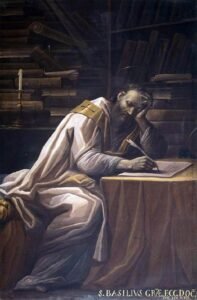 Basil the Great, also known as St Basil, was born around 329 AD in Caesarea in Cappadocia, in modern-day Turkey. Raised in a deeply Christian family, he received a classical education in Athens, where he formed a lifelong friendship with Gregory of Nazianzus.
Basil became one of the most influential figures of early Christianity. As Bishop of Caesarea, he defended orthodox belief during a time of theological division, particularly against Arianism. His writings shaped Christian doctrine and monastic life, laying the foundation for Eastern monastic traditions still followed today.
He was also known for his practical charity. He established one of the earliest organised centres for the poor, often described as a proto-hospital complex, reflecting his belief that faith must be lived through action. Basil died in 379 AD, leaving a legacy as a theologian, reformer and protector of the vulnerable.
St Michael the Archangel: Warrior and Protector
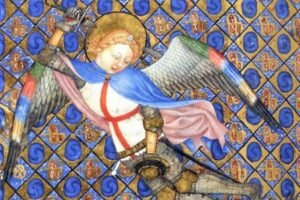 Michael the Archangel is not a historical figure in the same sense as Basil, but a central spiritual presence in Christian, Jewish and Islamic tradition. His name means “Who is like God?” and he is portrayed as the leader of the heavenly armies.
In the Book of Revelation, Michael defeats the forces of evil, casting Satan from heaven. This image of triumph made him a powerful symbol of protection, justice and divine strength. Throughout the centuries, he has been invoked by soldiers, sailors and communities seeking defence from danger.
Churches dedicated to St Michael are often found in elevated or strategic locations, reinforcing his role as a guardian watching over the land.
Connections Between St Basil and St Michael
Though they lived in very different contexts, St Basil and St Michael are united through the spiritual themes of defence and protection. Basil defended the faith intellectually and pastorally, while Michael represents its defence in the spiritual realm.
In Eastern Christianity, where Basil’s influence is strongest, devotion to St Michael is also deeply rooted. Both are honoured within the same liturgical tradition, reflecting a balance between theological wisdom and divine protection.
Links to Malta
Malta has a long-standing devotion to St Michael, with several chapels and churches dedicated to him, including sites in Mdina and Rabat. His role as protector resonates strongly with Malta’s history as a fortified island frequently under threat.
While St Basil is less prominently represented in Maltese dedications, his influence is still present through the wider traditions of the universal Church. His writings helped shape the theological framework that reached Malta through centuries of Christian continuity.
Together, these figures reflect two sides of the same heritage: intellectual depth and spiritual guardianship, both deeply embedded in the island’s religious identity.
Enduring Legacy
St Basil remains a model of leadership grounded in compassion and intellect, while St Michael continues to symbolise courage and protection. Their stories, though different in nature, converge in a shared message of steadfast faith, resilience and service.
