
The Return of The Holy Family from Egypt
(Please allow a few seconds for the video to load)
Welcome to
“The Chapel of The Return of The Holy Family from Egypt” digital experience where history and technology intertwine to bring you an immersive experience.
Explore the Chapel
Below, you will find a ‘Paywall’ feature, requesting you to make a donation to be able to enter the page.
Once you are in, you will find
Support a Mission, Explore a Treasure
Your entry helps Missio Malta continue their vital work in missionary lands overseas. By donating, you directly support communities in need while gaining 24-hour full access to this chapel's 3D experience and history.
Learn more about Missio's workAccess is valid for 1 Chapel for 24 hours from the time of donation
OR
360° Panorama
Zoom to full screen to view
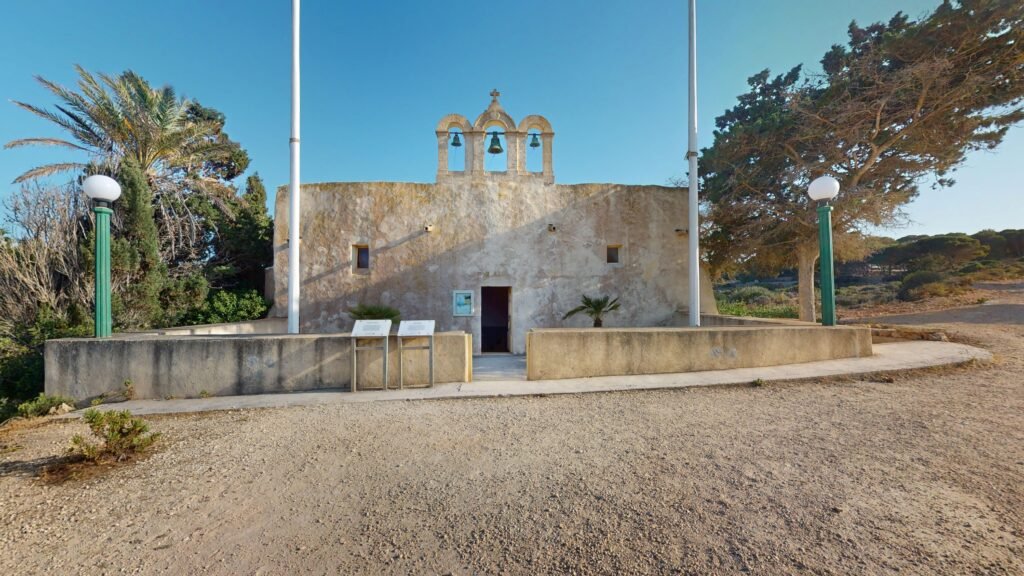
Chapel of the Return of the Holy Family from Egypt, Comino
The Chapel of the Return of the Holy Family from Egypt stands near Santa Marija Bay on Comino, Malta’s smallest inhabited island. The present structure dates to the early 17th century, most commonly attributed to around 1618 during the period when Comino was administered by the Order of St John. It was likely commissioned to serve both the small resident population and the soldiers stationed nearby at Santa Marija Tower, built shortly after in 1618. The dedication reflects themes of refuge and safe return, resonating with the island’s role as a waypoint between Malta and Gozo.
Construction Details
The chapel is a modest rural structure built in traditional Maltese limestone. Like many chapels of the period, it was constructed using local labour under the supervision of military or ecclesiastical authorities rather than a named architect. Its simple rectangular plan, slightly elevated façade, and restrained decorative elements align with early Baroque influences adapted to local building practices.
There are no surviving records of construction cost, but the scale suggests a low-budget utilitarian build. The chapel was designed for durability against coastal exposure, with thick walls and minimal openings. Its proximity to the garrison area indicates practical considerations rather than monumental ambition.
Cultural and Religious Significance
Despite its isolation, the chapel played an important role in sustaining religious life on Comino. It provided a place of worship for soldiers, farmers, and occasional inhabitants, reinforcing Catholic identity in a remote setting. The dedication to the Holy Family’s return from Egypt symbolises protection, pilgrimage, and divine guidance, themes that resonated strongly with seafarers and travellers.
Over time, the chapel became associated with seasonal feasts and occasional liturgical gatherings, particularly during periods when Comino had a slightly larger population.
Present-Day Context
Today, the chapel remains one of Comino’s key heritage landmarks. It is not in regular daily use but is occasionally opened for religious services, particularly on its feast day. The structure has undergone conservation efforts to stabilise the masonry and preserve its historic character. Managed under ecclesiastical and heritage oversight, it forms part of the cultural landscape experienced by visitors exploring the island beyond the Blue Lagoon.
Unique Stories or Legends
Local tradition suggests that the chapel’s dedication was chosen to reflect Comino’s historical use as a refuge for those fleeing danger, echoing the Holy Family’s biblical journey. Another enduring anecdote links the chapel to sailors who would stop to pray for safe passage between Malta and Gozo, reinforcing its symbolic role as a place of protection and return.
Visual and Artistic Features
The exterior is austere, with a plain façade, small bell gable, and central doorway framed by simple stone mouldings. Inside, the chapel is intimate, with a single nave and a modest altar. The titular painting depicting the Holy Family’s return from Egypt serves as the focal point, typically rendered in a restrained Baroque style. Decorative elements are minimal, reflecting the chapel’s functional origins and remote location.
The Return from Egypt: Faith, Journey and Quiet Echoes in Malta
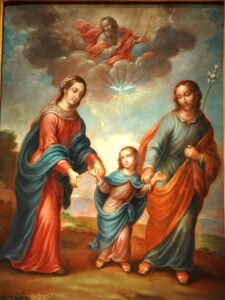 The Return of the Holy Family from Egypt tells of a moment after danger had passed. According to the Gospel of Matthew, Joseph was warned in a dream to flee with Mary and the infant Jesus to Egypt, escaping King Herod’s order to kill young children. After Herod’s death, Joseph received another message that it was safe to return.
This return journey marks a shift from fear to safety. It reflects trust, obedience, and protection. In Christian thought, it also carries a deeper meaning. Egypt, once a place of refuge, becomes part of a wider story of exile and homecoming that runs through scripture. The Holy Family’s return symbolises restoration and the quiet fulfilment of divine promise.
Life and Times Behind the Story
The events are set in the early 1st century, when Judea was under Roman rule. King Herod, a client ruler of Rome, governed with authority but also fear. His reign was marked by political tension, and the biblical account reflects this atmosphere.
Egypt at the time was a Roman province with established Jewish communities, especially in Alexandria. It offered a natural place of refuge for those fleeing danger from Judea. Travel would have been long and difficult, likely following coastal or inland trade routes used by caravans.
The return journey, though less dramatic than the flight itself, would still have required endurance and faith. It was not simply a homecoming but a step into an uncertain future, settling again in Nazareth.
Artistic and Cultural Legacy
The Return from Egypt has inspired artists for centuries. While the flight into Egypt is more commonly depicted, the return appears in Renaissance and Baroque works as a quieter scene.
Artists often show the Holy Family travelling through open landscapes, sometimes with a donkey, guided by calm light rather than urgency.
The mood is reflective. Mary is often shown in a composed state, Joseph leading with quiet determination, and the child symbolising hope. These images focus less on drama and more on peace after hardship.
Connections to Malta
The theme of return and refuge found a natural place in Malta’s religious life. Across the islands, chapels were often dedicated to moments of protection, safe passage, and divine guidance. On Comino, the Chapel of the Return of the Holy Family from Egypt reflects this directly.
Built during the time of the Order of St John, the chapel stood near a military outpost and served both soldiers and travellers. Its dedication would have held clear meaning for seafarers crossing between Malta and Gozo, many of whom faced unpredictable conditions at sea.
Malta itself has long been a crossroads of movement. Traders, pilgrims, and refugees passed through its harbours. The story of a family seeking safety and later returning home would have resonated deeply with those living on or passing through the islands.
A Story That Endures
The Return from Egypt is not a grand or dramatic moment. It is quiet, steady, and deeply human. It speaks of survival, trust, and the simple act of going home after uncertainty.
In places like Comino, where isolation and exposure shape daily life, that message carries particular weight. The chapel dedicated to this moment stands as a reminder that even the most remote corners of Malta are tied to a wider story of faith, movement, and hope.
