
Chapel of The Birth of Our Lady
(Please allow a few seconds for the video to load)
Welcome to
“The Chapel of The Birth of Our Lady” digital experience where history and technology intertwine to bring you an immersive experience.
Explore the Chapel
Below, you will find a ‘Paywall’ feature, requesting you to make a donation to be able to enter the page.
Once you are in, you will find
Support a Mission, Explore a Treasure
Your entry helps Missio Malta continue their vital work in missionary lands overseas. By donating, you directly support communities in need while gaining 24-hour full access to this chapel's 3D experience and history.
Learn more about Missio's workAccess is valid for 1 Chapel for 24 hours from the time of donation
OR
360° Panorama
Zoom to full screen to view
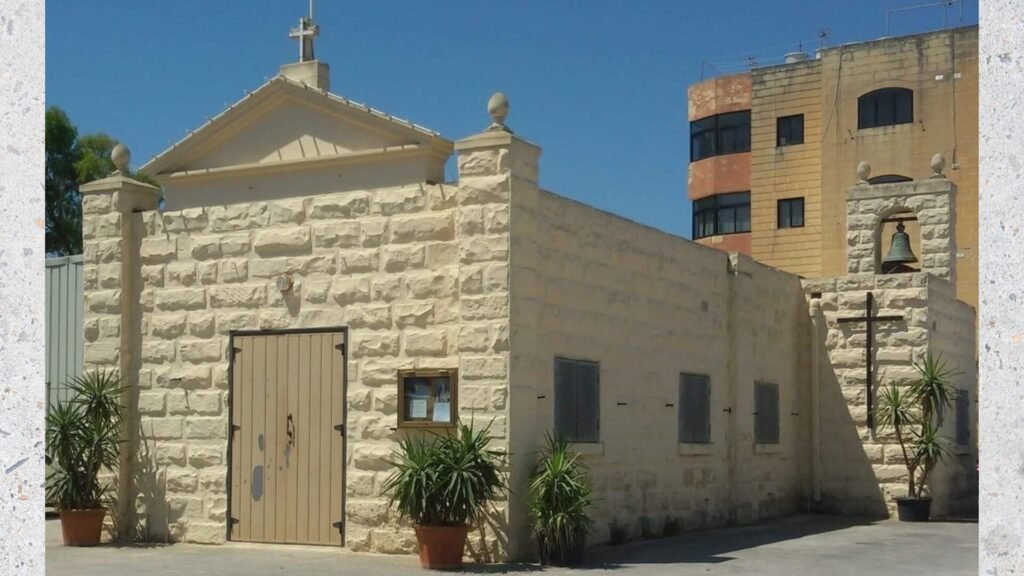
Chapel of The Birth of Our Lady
The origins of religious devotion in the area of Ħal Farruġ date back several centuries, with early records confirming the presence of a church dedicated to the Nativity of the Blessed Virgin Mary as far back as the 15th century. This early structure stood in a prominent position overlooking what was known as the Great Valley, serving as a spiritual focal point for the rural community that once occupied the surrounding land.
During the important Pastoral Visit of 1575, Monsignor Pietro Dusina documented the existence of this church, noting both its dedication and its physical characteristics. The building featured a centrally positioned bell tower, flanked by statues of St Peter and St Paul, an architectural detail that reflected both artistic ambition and religious symbolism. Beneath the bell tower stood a clock crafted by the renowned Maltese clockmaker Mikelanġ Sapiano, adding both function and prestige to the structure.
At the time, the church was under the care of procurator Salvu Baldacchino, who is believed to have personally financed improvements, including the construction of a new façade. His contribution highlights the deep sense of personal responsibility and devotion that local patrons often showed towards their parish churches.
Over time, the church also became associated with the title Our Lady of Victory, a dedication deeply rooted in Maltese religious identity following the events of the Great Siege of 1565. For centuries, the church remained an active place of worship, quietly serving the local population.
However, the course of history brought significant change. The church continued to exist until the early 1940s, most likely around 1941–1942, during the period of rapid military expansion in Malta under British rule. With the development of what is now Malta International Airport, the area of Ħal Farruġ became strategically important. The planned construction of a runway directly affected the site of the church.
At the request of Governor Sir William Dobbie, and with the agreement of Archbishop Dom Mauro Caruana, the difficult decision was taken to demolish the historic building. This marked the end of a centuries-old place of worship, sacrificed in the context of wartime necessity and national defence.
For several decades afterwards, the area remained without a dedicated church. It was not until the late 20th century—particularly during the 1980s—that Ħal Farruġ began to experience residential growth. As new families settled in the area, the need for a local place of worship once again became evident.
Initially, a modest hall was constructed to serve the spiritual needs of the growing community. This temporary solution gradually evolved into something more permanent. On 25th September 1992, the Chaplain of Ħal Luqa, Rev. Alfred Vella, officially inaugurated and blessed the structural works of the new church complex. Significantly, it was once again dedicated to the Nativity of the Blessed Virgin Mary, preserving the historical and spiritual continuity of the original chapel.
Inside the present chapel, the titular painting of the Virgin Mary is the work of Maltese artist Richard Caruana, adding a contemporary artistic contribution to the space while maintaining traditional devotional themes.
Further improvements were carried out in 2007 under the direction of rector Rev. David Farrugia. These works enhanced the chapel’s appearance and functionality, ensuring it remained a dignified place of worship. A new altar and tabernacle were installed, crafted by Twanny Zammit, reflecting both craftsmanship and reverence.
Today, the chapel continues to play an active role in the life of the community. It hosts regular Mass, formation meetings, and celebrations, including the annual feast of the Nativity of the Virgin Mary in September. Though the original church no longer stands, its legacy lives on, rebuilt not in stone alone, but in the faith and continuity of the people it continues to serve.
The Birth of Our Lady: From Ancient Tradition to Malta’s Living Devotion
Origins of the Feast
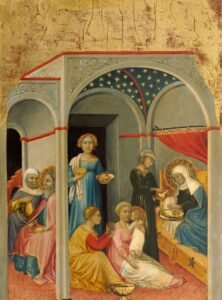 The Birth of Our Lady, formally known as the Nativity of the Blessed Virgin Mary, is one of the oldest Marian feasts in the Christian calendar. While the Gospels do not record the birth of Mary, the story is preserved through early Christian tradition, particularly in a text known as the Protoevangelium of James, dating to the 2nd century.
According to this account, Mary was born to Saint Anne and Saint Joachim after years of childlessness. Their story mirrors other biblical narratives, where long-awaited births are seen as signs of divine favour. Mary’s birth is therefore not simply a family event—it is understood as the beginning of a much greater story that would ultimately lead to the birth of Christ.
By the 5th and 6th centuries, the feast had become established in the Eastern Church, particularly in Jerusalem, where a church was dedicated to Saint Anne, believed to stand on the site of Mary’s birth. From there, the celebration spread westward, becoming part of the liturgical calendar of the wider Christian world.
Meaning and Symbolism
The Nativity of Mary is unique among saints’ feast days. Most saints are commemorated on the day of their death, marking their entry into eternal life. Mary, however, is one of the few whose birth is celebrated—alongside Christ and John the Baptist—because her life is seen as central to salvation history.
The feast, observed annually on 8th September, symbolises hope, renewal, and the quiet unfolding of divine purpose. Mary’s birth represents the dawn before the sunrise—the moment before the arrival of Christ.
Artists across centuries have depicted the scene with warmth and intimacy: Saint Anne resting after childbirth, attendants caring for the infant Mary, and a sense of calm joy filling the space. These images emphasise not grandeur, but humility—an ordinary beginning that carries extraordinary meaning.
The Birth of Our Lady in Malta
In Malta, the Birth of Our Lady is far more than a liturgical date—it is woven into the identity of the islands. The feast, known locally as Il-Bambina, holds both religious and historical significance.
Most notably, 8th September also marks the anniversary of the end of the Great Siege of Malta. The lifting of the siege was attributed to divine intervention, strengthening devotion to the Virgin Mary under the title of Our Lady of Victory.
This dual meaning—religious and national—gives the feast a unique character in Malta. It is celebrated with exceptional intensity in several localities, including Senglea, Mellieħa, Naxxar, and Xagħra.
In these towns and villages, the feast is marked by vibrant celebrations—band marches, fireworks, street decorations, and solemn liturgical ceremonies. Statues of the young Virgin Mary are carried through the streets, accompanied by music and prayer, blending faith with a strong sense of community.
The Maltese devotion to the Nativity of Mary reflects a broader cultural pattern, where religious feasts are deeply integrated into daily life. Here, tradition is not preserved in silence but lived openly and collectively.
A Story That Continues
The Birth of Our Lady is ultimately a story of beginnings. It speaks of patience rewarded, of quiet faith, and of the belief that even the smallest moments can carry lasting significance.
From early Christian writings to grand artistic interpretations, and from ancient Jerusalem to the festas of Malta, the narrative has endured across centuries. It remains a celebration not only of Mary’s birth, but of hope itself—renewed each year, carried forward by generations who continue to mark the day with devotion and joy.
