
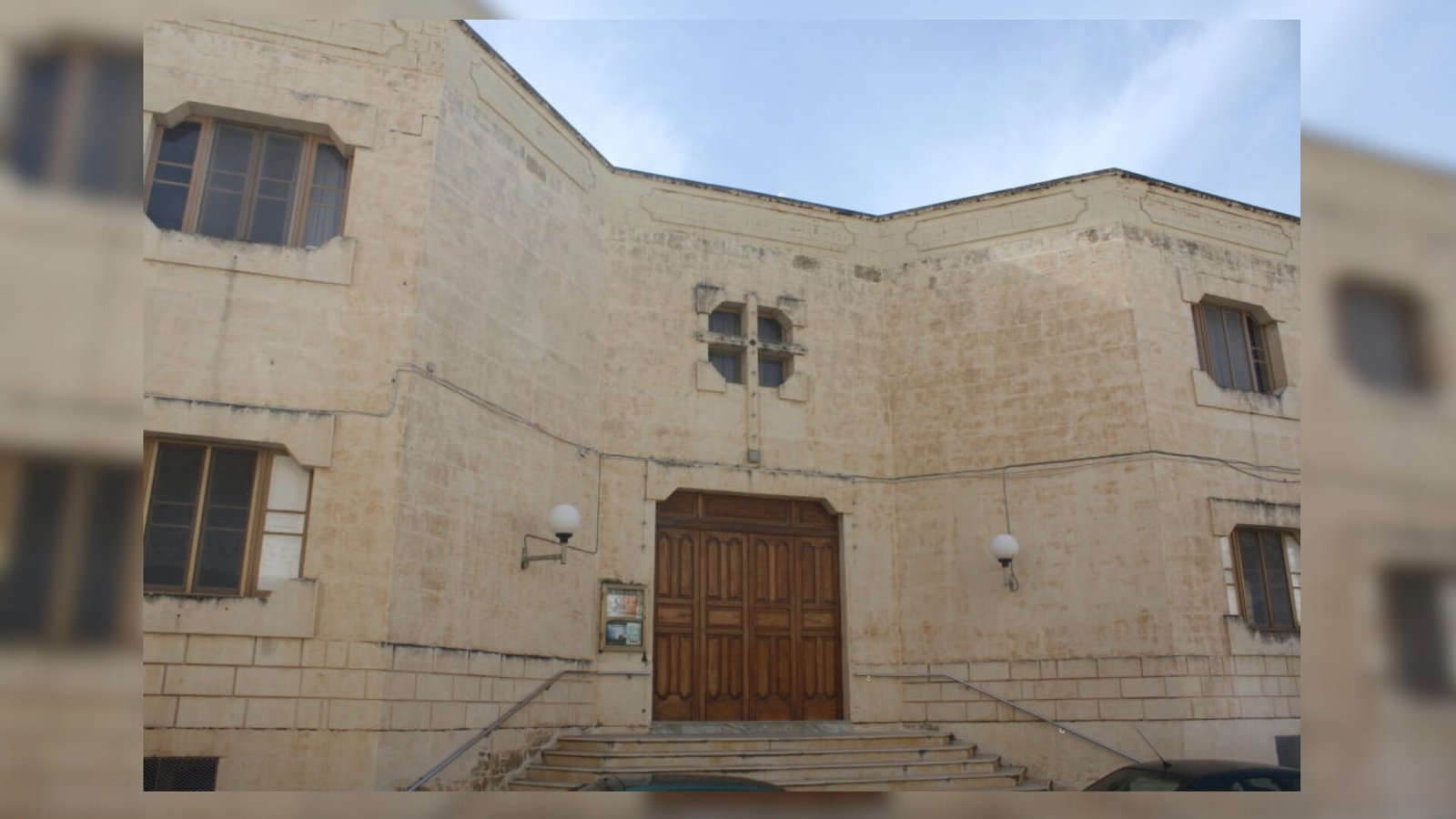
Church of The Good Shepherd
The Church of the Good Shepherd in Victoria, Gozo – locally known as Knisja tar-Ragħaj it-Tajjeb – has its origins in the latter half of the 20th century. It was established to serve a growing community in the Taċ-Ċawla area of Victoria (also called Rabat by locals), at a time when new housing developments were springing up. Gozo’s Bishop Nikol Joseph Cauchi was a driving force behind its creation, envisioning both a place of worship and a community hub for the young families settling in the area. In fact, Bishop Cauchi was instrumental not only in building the chapel but also in facilitating an affordable housing scheme for those families – a holistic approach that addressed both physical and spiritual needs.
Construction of the chapel began in the late 1970s, on land at the corner of Triq il-31 ta’ Marzu 1979 and Triq Sir Pawlu Boffa on the outskirts of Victoria. The project was commissioned by the Gozo Diocese as a response to the rapid development of Taċ-Ċawla, which until then had been mostly open fields. The original purpose of the structure was to function as a pastoral centre or chapel-of-ease – essentially a satellite church to cater for residents of the new estate who might otherwise have had to walk into the old town for Mass. It was intended from the outset as a community-oriented chapel rather than a grand parish church, reflecting a humble dedication to Christ as the “Good Shepherd” caring for his flock in this new neighbourhood.
The chapel’s early administration was entrusted to a rector rather than a parish priest, since it was not immediately erected as an independent parish. The first rector appointed was Fr. (later Mgr.) Tarcisio Camilleri, who took charge of the fledgling community’s spiritual needs around the time of the chapel’s opening. Under his guidance, regular services and catechism classes started in the new building, and the chapel quickly became a focal point of daily life in Taċ-Ċawla. The Good Shepherd chapel was officially blessed and opened for worship in 1981, when Bishop Cauchi consecrated it on May 10 of that year. This consecration marked the culmination of years of planning and building, and it coincided with the formation of an active faith community around the chapel. The timing was significant – by the early 1980s, enough families were living in the area to support a vibrant congregation.
Though modest in scale, the Church of the Good Shepherd holds an important place in Gozo’s ecclesiastical history as a product of post-war social foresight. It exemplifies how the Maltese Church responded to shifting demographics in Gozo: rather than expecting new residents to commute to distant churches, the diocese brought the church to the people. The chapel’s original purpose – to provide convenient local worship and community space – has been fulfilled since day one, and it continues to serve that mission decades later.
Construction Details
The Church of the Good Shepherd was built with simplicity and functionality in mind. Its construction was a collaborative effort involving notable architects and local craftsmen. The design was entrusted to Architects Arthur Stuart Mortimer and Roger de Giorgio, a duo well-known in Malta for blending traditional touches with modern trends. Mortimer and de Giorgio adopted a simple modern design for this chapel. Unlike Gozo’s older baroque parish churches, the Good Shepherd’s architecture is unadorned and streamlined, reflecting the liturgical reforms of the 1960s and a contemporary aesthetic.
In keeping with modern church design principles, the layout emphasises visibility and participation. The building was constructed as a single, open-plan space with the altar positioned to allow the congregation to gather closely around it. This reflects the influence of the Second Vatican Council, encouraging more engagement between celebrant and faithful. The architects opted for a modest Romanesque influence in the facade – for example, the main doorway is set in a simple rectangular frame with a slight arch motif, and above it sits a relief of a cross-shaped window. The overall structure is likely built in the shape of a broad rectangle or slight fan shape, with angled frontage walls that give the entrance a subtle prominence.
Local Maltese limestone was used for the walls, as is typical for buildings in Gozo. The pale honey-coloured stone of the exterior allows the structure to blend with the island’s traditional architecture, even as its form is decidedly 20th-century. The construction process involved local builders and artisans under the supervision of the diocesan authorities. While exact construction costs were not publicised, the project would have been funded by the Gozo Diocese with contributions from the community. Bishop Cauchi’s commitment meant that resources were allocated to ensure the project’s completion, although it was done economically without extravagant features.
One interesting aspect of construction is the absence of a bell tower. Unlike most Maltese churches that boast bell-towers or belfries, the Good Shepherd chapel was built without a traditional tower – a reflection of its smaller scale and modern style. Instead, a simple metal cross adorns the roofline, and for many years the chapel used an electronic bell system to chime the hours and call to Mass. This digital bell, installed by the rector in lieu of actual bells, was among the first of its kind in Gozo and signified a pragmatic approach during construction (avoiding the expense of casting and mounting heavy bells).
The building process proceeded relatively smoothly, with the main structure completed by the early 1980s. There are no recorded major incidents or setbacks during construction – in part thanks to the straightforward design and the small scale of the chapel. By 1981, the edifice was ready for consecration. On the day of consecration, Bishop Cauchi anointed the altar and walls, and the chapel was dedicated to the Good Shepherd in a solemn ceremony attended by the new residents of Taċ-Ċawla. From a construction perspective, the Church of the Good Shepherd stands as a product of its era: a no-frills, community-built chapel reflecting both the modernist influences of its architects and the pastoral priorities of the Gozo Diocese at that time.
Cultural and Religious Significance
Though modest, this chapel has played a significant role in Maltese religious life on Gozo. Culturally, the Church of the Good Shepherd symbolizes the Church’s presence in what was essentially a new town within a town. In the 1980s, as Victoria expanded beyond its historic centre, the chapel became a cornerstone of the Taċ-Ċawla community. It provided a space not only for daily Mass and sacraments but also for social and educational activities. Generations of children in the neighbourhood have attended catechism classes and received their First Holy Communion in this chapel. For the local Catholic faithful, having a church in their midst reinforced their identity as a community and saved them a trek to the parish churches in central Victoria.
Religiously, the Good Shepherd chapel holds deep significance due to its dedication. The figure of the Good Shepherd (Jesus Christ as the caring shepherd) is a beloved image in Christian spirituality, representing guidance, protection, and pastoral care. The choice of this dedication was very fitting: it underscored the mission of the church to care for the people of the new suburb as a shepherd cares for sheep. This theme resonated in the chapel’s activities – the clergy here focused on tending to the spiritual welfare of a “flock” that was literally newly gathered. The feast of the Good Shepherd (traditionally the Fourth Sunday of Easter) is marked in the chapel’s liturgical calendar with special devotion, even though the chapel does not have its own external festa with band marches like a parish would. In a sense, the chapel’s very existence is an embodiment of pastoral outreach, bringing the sacraments to where people live.
Over the decades, the Church of the Good Shepherd has been the venue for countless baptisms, marriages, and funeral masses of local residents. Even though it was not a standalone parish, the community treated it as their parish church in practice. For a long time, however, certain sacraments (like weddings or larger ceremonies) officially had to be done in one of Victoria’s main parishes (either St George’s Basilica or the Cathedral), due to diocesan rules. This changed in recent years: as of 2024, church authorities have allowed chapels like the Good Shepherd to celebrate baptisms, weddings, and funerals on-site, recognising the practical importance of such chapels in people’s lives. This development underscores the chapel’s growing status in local religious practice, effectively acknowledging it as an integral part of the pastoral structure of Victoria.
The Good Shepherd chapel also contributes to the cultural fabric through community events. It often hosts special Masses and gatherings beyond its routine schedule. For instance, local Scouts and youth groups have held celebrations here, and the chapel’s choir (the Good Shepherd Chapel Choir) participates in both liturgical services and town events. In November 2020, the then-Cardinal-elect (now Cardinal) Mario Grech – a Gozitan prelate – chose to celebrate All Saints’ Day Mass at the Taċ-Ċawla Good Shepherd chapel. Such occasions, covered in national media, highlight the chapel’s role beyond just a neighbourhood church; it sometimes serves as a symbolic venue for the wider Gozitan Catholic community.
From a historical perspective, the Church of the Good Shepherd is also significant as one of Gozo’s earliest purpose-built modern chapels. Unlike centuries-old chapels scattered around Gozo (often tied to older legends or rural traditions), this one was born out of contemporary social need. It thereby represents a shift in Maltese cultural heritage – the heritage of community-building in the late 20th century. Its inclusion in the National Inventory of Cultural Property (NICPMI) with an official monument number affirms that the chapel is now recognized as part of Malta’s cultural patrimony. The listing implies that authorities see value in preserving this site for future generations, not necessarily for grand artistic merit, but for its community significance and unique story in the tapestry of Maltese church history.
Present-Day Context
Today, the Church of the Good Shepherd remains an active and cherished institution in Taċ-Ċawla, Victoria. The area around the chapel has fully developed into a residential zone, and the chapel is tucked amid apartment buildings and family homes, easily accessible to locals. Externally, the building shows the patina of Malta’s weather: the once-bright limestone has aged to a mellow hue, and one can spot the wear that decades of sun and occasional rain have left. Overall, however, the structure is in good condition, thanks to ongoing maintenance by the Diocese of Gozo. Any necessary restorations over the years have been modest and focused on upkeep (such as repairing stonework, refreshing paint, and updating electrical systems). The simple architecture means there are fewer areas prone to damage as compared to ornate churches.
Importantly, the chapel and its surrounding facilities have grown into more than just a place for Mass. Adjoining the church is the Good Shepherd Pastoral Centre, a multi-purpose complex that was part of the original vision. In recent years, significant enhancements have been made to this pastoral centre to better serve the community. In 2012, a project was undertaken to create the Bishop Cauchi Eco-Family Park and Sports Facilities on the grounds. This involved building a small recreational park space and a synthetic turf football pitch next to the church, reflecting the community’s social needs. Eco-friendly initiatives were incorporated as well – a large rainwater reservoir was constructed to harvest runoff for use in the centre’s facilities, and energy-efficient floodlighting was installed for the sports pitch. These improvements, supported by grants under the Eco-Gozo scheme, have effectively turned the church area into a mini community center for both spiritual and physical wellness. It’s not every day that one finds a church complex with its own five-a-side football ground, but here the idea is to keep youth engaged and foster family activities, all in the shadow of the chapel.
The chapel’s day-to-day operations are managed by a resident priest-in-charge (Rector). As of the latest information, Rev. Eddie Zammit serves in this role, continuing the line of dedicated rectors who care for the Taċ-Ċawla faithful. Mass is celebrated daily, with multiple services in the morning and evening to accommodate people’s schedules. On Sundays, the chapel holds at least two Masses and a Vigil on Saturday evening, often filling its benches with the local congregation. Despite not being a formal parish, the community feels a strong sense of ownership and belonging to this church. Parish-level events like Lenten talks, Advent preparations, and Eucharistic adoration take place here, sometimes in coordination with the main parishes of Victoria.
In the present day, the Church of the Good Shepherd is regarded with affection by locals. Many residents who grew up attending services here have stayed in the area and now bring their own children. The continuity of community through the chapel is a point of pride. The church’s role during trying times has further cemented its importance – for example, during the COVID-19 pandemic, when churches in Malta had restrictions, the Good Shepherd chapel was among those that adapted by streaming services online and serving as a focal point for community solidarity (residents would ring the chapel’s electronic bell and light candles as signs of hope).
The chapel enjoys a somewhat quieter profile compared to Gozo’s tourist-frequented churches, but visitors who venture into the Taċ-Ċawla neighbourhood are welcomed warmly. The diocese sometimes organises events here precisely to draw attention to the pastoral work in “peripheries” of the town. This aligns well with Pope Francis’s vision of reaching out to the margins – and indeed, what started as a peripheral chapel is now central to the life of its quarter. In summary, the present context of the Good Shepherd Church is that of a well-integrated, well-utilised community church. It stands as a testament that even a relatively new church (just around 40 years old) can acquire the patina of tradition and become a beloved landmark when it faithfully serves its people.
Unique Stories or Legends
As a modern chapel, the Church of the Good Shepherd does not have centuries-old legends or miraculous tales associated with it (unlike many older rural chapels in Gozo which often come with folklore). However, the very founding of this church is wrapped in what one might call a “modern legend” of pastoral foresight. The story often told in local circles is how Bishop Nikol Cauchi, upon seeing the need for housing in Gozo during the 1970s, championed a new housing estate at Taċ-Ċawla and simultaneously ensured a church would be at its heart. This story, though entirely true, has almost taken on a legendary quality – it’s not common for a bishop to be credited with initiating a housing project. Locals recount how Bishop Cauchi wanted to ensure the new residents “would not lack a shepherd.” Thus, the narrative of the “bishop who built a neighbourhood and gave it a church” has become an inspiring tale passed among Gozo’s clergy and laity. It highlights the Good Shepherd ethos in action: providing for both material and spiritual well-being.
There are also small anecdotes that give the chapel character. One such story is about the electronic bell installed at the chapel. In the 1980s, when the chapel was still new, it lacked a bell tower to ring out the Angelus or call the faithful. The then-rector decided to invest in an electronic bell system – a set of loudspeakers that play bell chimes at set times. This was quite novel in Gozo at the time. Many locals remember the first time they heard the synthetic bell sounds; some thought it odd or even jarring compared to traditional church bells. Over time it became a quirky part of the neighbourhood’s soundscape. In fact, a long-time Victoria resident humorously wrote that he “could never get used to” the electronic bell at Taċ-Ċawla as a counterpart to the classic bells of other churches. This light-hearted grievance, published in a local news outlet, shows how the Good Shepherd chapel figures even in public discourse – endearingly criticized for its modern bell, yet undeniably part of the daily rhythm of life. (Notably, the same writer lamented new electronic bells elsewhere that played “The Battle Hymn of the Republic” at high volume, so in comparison the Good Shepherd’s simple chimes might have been quite tame!)
Another anecdote revolves around the chapel’s community spirit. In the early years, before the pastoral centre was fully equipped, the church hall doubled as a makeshift sports area. It’s said that youth from the area would gather to play table tennis and billiards in a side room of the chapel, under the supervision of the rector. While this might seem secular activity for church property, it was encouraged to keep young people close to the church and out of trouble. Those who grew up in the 1980s fondly recall these evenings – they’d have a table tennis tournament and then attend a short prayer service or catechism lesson. Such stories underscore the innovative, sometimes unconventional ways the Good Shepherd chapel fulfilled its mission as a pastoral centre in truth.
In terms of folklore or legend, one might argue the name “Taċ-Ċawla” itself carries a bit of intrigue. Some residents have tried to trace what Ċawla means. A popular explanation is that it comes from a family nickname or an old field name in the area. There’s no consensus, but this curiosity has led to minor “legends” about a farmer nicknamed Il-Ċawlu who once owned that land. While not directly tied to the chapel, it adds an aura of local color to the place where the church stands.
Finally, a touching human story: on the 40th anniversary of the church’s consecration in 2021, many of the original community members gathered for a thanksgiving Mass led by the current bishop. Among them was an elderly couple who had been the first to marry at the Good Shepherd chapel decades ago (their wedding in the early 1980s had special permission to be held there). They shared with younger attendees how they insisted on marrying in their own neighbourhood church rather than the grand basilica downtown, because this humble chapel was a symbol of their new life and community. Such personal stories, while not legends in the mythical sense, are legendary in the hearts of the people – they weave the Church of the Good Shepherd into the life story of ordinary Gozitans in extraordinary ways.
Visual and Artistic Features
The Church of the Good Shepherd’s design is characterized by simplicity and functionality, yet it has its own quiet aesthetic that merits appreciation. Externally, the chapel presents a plain, geometric facade typical of mid-20th-century ecclesiastical architecture. The front elevation is divided into three subtle panels: a central section with the main door and two flanking wall sections that are slightly angled inward, creating a gentle semi-octagonal frontage. The main doorway is crafted from solid wood with simple carved panels, and above it lies the chapel’s most distinctive external feature – a sculpted stone cross fixed onto the wall. This cross motif also functions as a small window; its openings allow light into the choir loft or front part of the nave, forming a cross-shaped illumination from inside when the sun shines through. The lack of ornate decoration on the facade draws the eye to this cross, symbolically emphasizing the chapel’s dedication to Christ the Good Shepherd. Two spherical white light fixtures on metal brackets adorn the sides of the entrance, providing illumination to the entrance steps in the evening.
One will notice the absence of a steeple or dome. Instead, the roofline is flat and modest in height. On the roof, a simple metal crucifix stands tall, silhouetted against the sky – this is the nearest thing the chapel has to a bell tower cross. The walls are unbroken by the elaborate pilasters or cornices seen on older churches; instead, a plain moulded cornice runs along the top, giving a minimal nod to traditional Maltese architecture. The building’s corners are slightly raised, almost like gentle bastions, adding some depth to an otherwise flat exterior. The overall impression from outside is one of reserved modernity – it’s clearly a church, but one that reflects 20th-century modesty rather than baroque grandeur.
Moving inside, the interior of the Good Shepherd chapel continues the theme of simplicity. The space is essentially one medium-sized hall (nave) with a sanctuary at one end. High plain walls in light neutral tones create an atmosphere of brightness and openness. The altar is the focal point: a simple stone altar table (mensa) likely stands on a slightly raised platform. Above or behind the altar, there is usually a representation of the Good Shepherd. While the exact artwork can vary over time, typically one would find either a painting or a sculpture depicting Jesus carrying a lamb on His shoulders, or tending to his sheep – the iconic image that gives the church its name. It would not be surprising if a modern statue of the Good Shepherd is present, possibly positioned in the sanctuary or a niche.
In many Maltese chapels, even modern ones, traditional elements persist. The Good Shepherd chapel likely has a tabernacle to the side or behind the altar (for reserving the Eucharist), possibly set in a minimalist reredos. Any stained glass windows are minimal; if present at all, they might be small abstract coloured panes rather than narrative stained glass. The same cross-shaped window seen from the facade creates a natural light effect inside, casting a cruciform pattern of light and shadow that is, in itself, a piece of devotional art. The floor is probably laid with simple tiles or marble, kept uncarpeted to maintain a clean look. Wooden pews provide seating for the faithful, and these too are plain, functional benches without ornate carvings – yet polished and cared for by the community over the years.
The interior does contain a few adornments that add character. Statues of saints are common in almost every Catholic church in Malta, so one will find at least a couple here. A statue of the Virgin Mary (Our Lady) and possibly a statue of St. Joseph or another popular saint might flank the nave on pedestals. These statues could have been donated by parishioners; for instance, a parishioner might have given a statue of the Madonna and Child that now stands in a side alcove with candles lit by devotees. There is also typically the Way of the Cross (Via Crucis) plaques – a set of fourteen simple framed images or reliefs on the walls, depicting Christ’s passion – enabling the Lenten devotion to be practiced inside the chapel.
One notable artistic feature to look out for is the use of Maltese stone in the interior detailing. The sanctuary’s backdrop might be made of the same limestone, possibly sculpted into a minimalist altarpiece. It’s not uncommon for a modern chapel to incorporate an artistic mosaic or mural; if the Good Shepherd has one, it could be a mosaic behind the altar showing Christ the Good Shepherd among his flock, rendered in a contemporary style. However, given the lack of references to any specific artwork in literature, any such feature must be subtle.
The ceiling of the chapel is likely plain and flat, possibly with acoustic tiles or simple plaster. Some modern churches of that era had interesting ceiling designs (like wooden beams or dropped light fixtures), so an observer might notice if the ceiling has any pattern. The lighting inside is provided by unobtrusive fixtures – perhaps a series of pendant lights or wall-mounted fixtures that complement the overall simplicity.
In summary, the visual and artistic presentation of the Church of the Good Shepherd is one of humble elegance. It doesn’t overwhelm with art, but what is there is meaningful. The architecture itself – the shape of the space and the cross-lit facade – serves as the primary artwork, creating a worship environment that is uncluttered and focuses the mind on prayer. The sculptures and images that are present (the Good Shepherd depiction, Our Lady’s statue, etc.) are there to aid devotion without distracting from the liturgy. In many ways, this chapel’s aesthetic is a blend of the old and new: modern in structure and restraint, yet still adorned with the timeless symbols of Catholic faith. Its beauty lies in its unassuming simplicity, which allows the faithful of Taċ-Ċawla to feel at home in a sacred space that is truly theirs.