
Chapel of Christ The Redeemer
(Please allow a few seconds for the video to load)
Welcome to
“The Chapel of Christ The Redeemer” digital experience where history and technology intertwine to bring you something that is immersive and entertaining.
Explore the Chapel
Below, you will find a ‘Paywall’ feature, requesting you to make a donation to be able to enter the page.
Once you are in, you will find
Support a Mission, Explore a Treasure
Your entry helps Missio Malta continue their vital work in missionary lands overseas. By donating, you directly support communities in need while gaining 24-hour full access to this chapel's 3D experience and history.
Learn more about Missio's workAccess is valid for 1 Chapel for 24 hours from the time of donation
OR
360° Panorama
Zoom to full screen to view
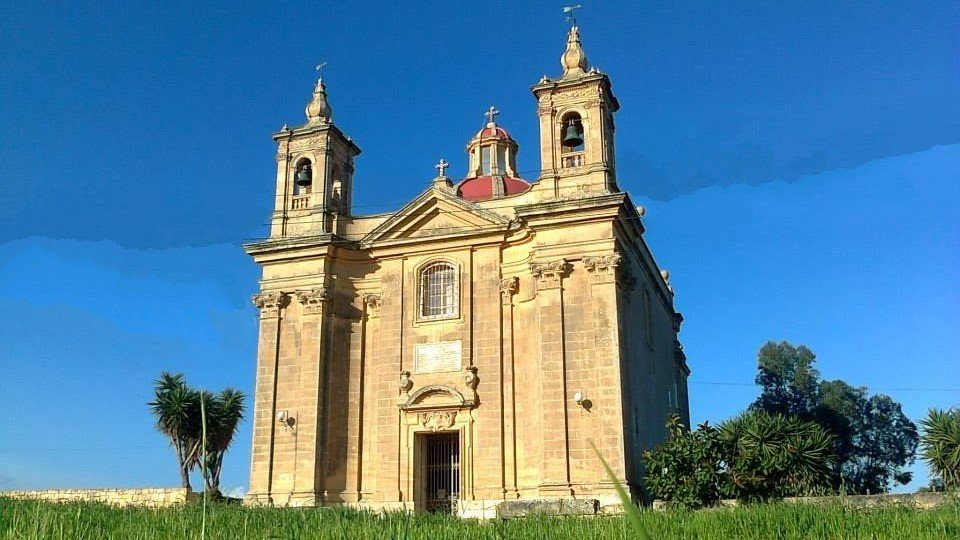
Chapel of Christ The Redeemer
The Chapel of Christ the Redeemer, known locally as Santu Kristu, is a significant religious landmark situated on the outskirts of Ħal Għaxaq. This chapel, completed in 1859, stands as a testament to the deep-rooted faith and communal spirit of the local inhabitants.
Historical Background
The origins of the chapel trace back to a wayside shrine that occupied its current site. Recognising the growing devotion among the faithful, Reverend Joseph Demicoli spearheaded the initiative to construct a more substantial place of worship. Construction commenced in 1852 and reached completion in 1859. The primary purpose of the chapel was to serve as a focal point for the spiritual needs of the local community, providing a dedicated space for worship and reflection.
Construction Details
The construction of the chapel was a community endeavour, with the residents of Ħal Għaxaq contributing through collected donations. While specific financial details and the identities of the architects or artisans involved remain undocumented, the architectural style of the chapel reflects the Baroque influences prevalent during that era. This is evident in its ornate façade and intricate design elements.
Cultural and Religious Significance
Over the years, the Chapel of Christ the Redeemer has played a pivotal role in the religious life of Ħal Għaxaq. It has been the site of numerous religious ceremonies, community gatherings, and traditional events, reinforcing its status as a cornerstone of local heritage. The chapel’s dedication to Christ the Redeemer resonates deeply with the villagers, symbolising hope, redemption, and communal unity.
Present-Day Context
As of recent reports, the chapel continues to function as an active place of worship, maintaining its historical charm and significance. In 2019, plans were announced for its restoration, aiming to preserve its structural integrity and historical features for future generations. This initiative underscores the community’s commitment to safeguarding their cultural and religious heritage.
Unique Stories or Legends
While specific legends or folklore directly associated with the chapel are not well-documented, its establishment and enduring presence are a testament to the collective devotion and perseverance of the Ħal Għaxaq community. The chapel stands as a symbol of the villagers’ shared faith and their dedication to creating a lasting spiritual legacy.
Visual and Artistic Features
Architecturally, the chapel exhibits characteristics of the Baroque style, as seen in its elaborate façade and decorative elements. Inside, the chapel houses various religious artifacts and artworks that enhance its spiritual ambiance. Notably, the interior walls feature ship graffiti, including depictions of steamers with masts, rigging, smokestacks, and flags. These engravings, likely dating back to the 19th century, offer a glimpse into the maritime culture of the time and add a unique historical dimension to the chapel’s interior.
In summary, the Chapel of Christ the Redeemer in Ħal Għaxaq stands as a monument of historical, cultural, and religious importance. Its rich history, architectural beauty, and the enduring faith of the community continue to make it a cherished landmark in Malta.
Christ the Redeemer on tas-Salvatur Hill: A Legacy of Faith and Tradition in Gozo
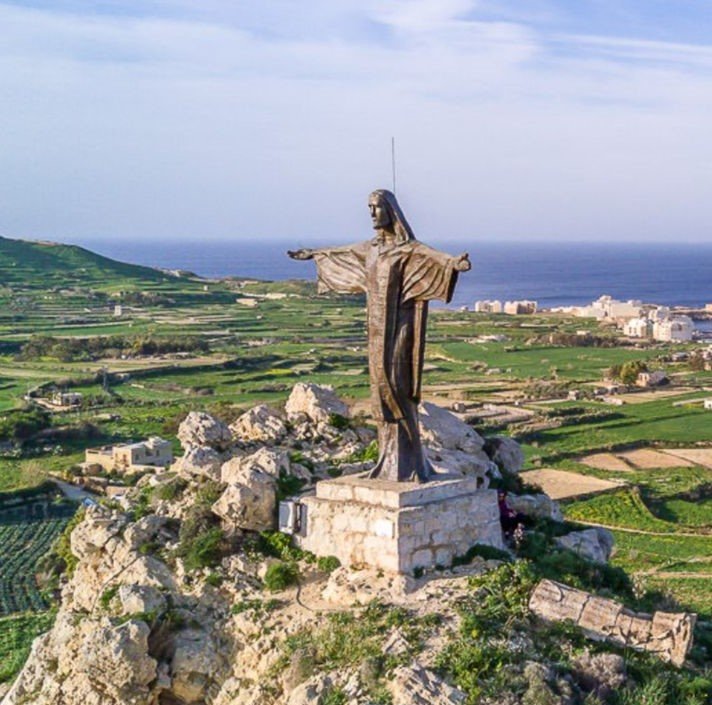
The Christ the Redeemer statue on Tas-Salvatur Hill near Marsalforn in Gozo, has a rich history intertwined with local faith and traditions.
Origins and Early Structures
In 1901, local farmers erected a wooden cross atop the hill, serving as a beacon of hope and protection for fishermen navigating Marsalforn Bay. By 1904, this was replaced with a stone statue of Jesus holding a large wooden cross, crafted by Liberat Borg from Birgu, Malta. This statue, however, suffered from exposure to the elements and was eventually replaced.
Subsequent Statues and Challenges
In 1960, a new concrete statue, designed by esteemed Gozitan sculptor Chev. Wistin Camilleri, was erected, depicting Christ holding his cross. Unfortunately, this statue was struck by lightning during a violent thunderstorm in 1973, leading to its deterioration. The hill remained without a statue until the late 1970s.
Current Statue and Restoration Efforts
The present statue, installed in the late 1970s, was constructed by dividing the outer shell into six parts, assembling them on a pedestal, and then filling the structure with concrete to form a solid monument. Over the years, it has undergone restorations, including repairs after lightning damage, the installation of solar lighting, and the application of a protective gel coating to shield it from weathering.
Folklore and Significance
Local folklore adds depth to the hill’s significance. One tale speaks of a farmer in 1870 who, during a severe drought, promised to erect a statue in gratitude for rain. Following a torrential storm, he fulfilled his vow by placing a stone statue of Our Saviour on the hill. Another legend suggests that the hill’s original name, Tal-Merżuq (meaning “ray of light”), originated from an event where, after three days of darkness, a ray of light was seen emanating from the hilltop.
Today, the Christ the Redeemer statue stands as a symbol of faith and resilience, reflecting the enduring devotion of the Gozitan people.
